GS 3: Science & TechnologyGS 2: GovernancePrelims
Immunity booster industry is selling hope, not science, Pg17
Expert debunks 'immunity boosters' as marketing fraud, not science; advocates proven vaccines and healthy lifestyles over unregulated, potentially dangerous supplements.
Practice MCQs
811 Students attempted
Key Highlights:
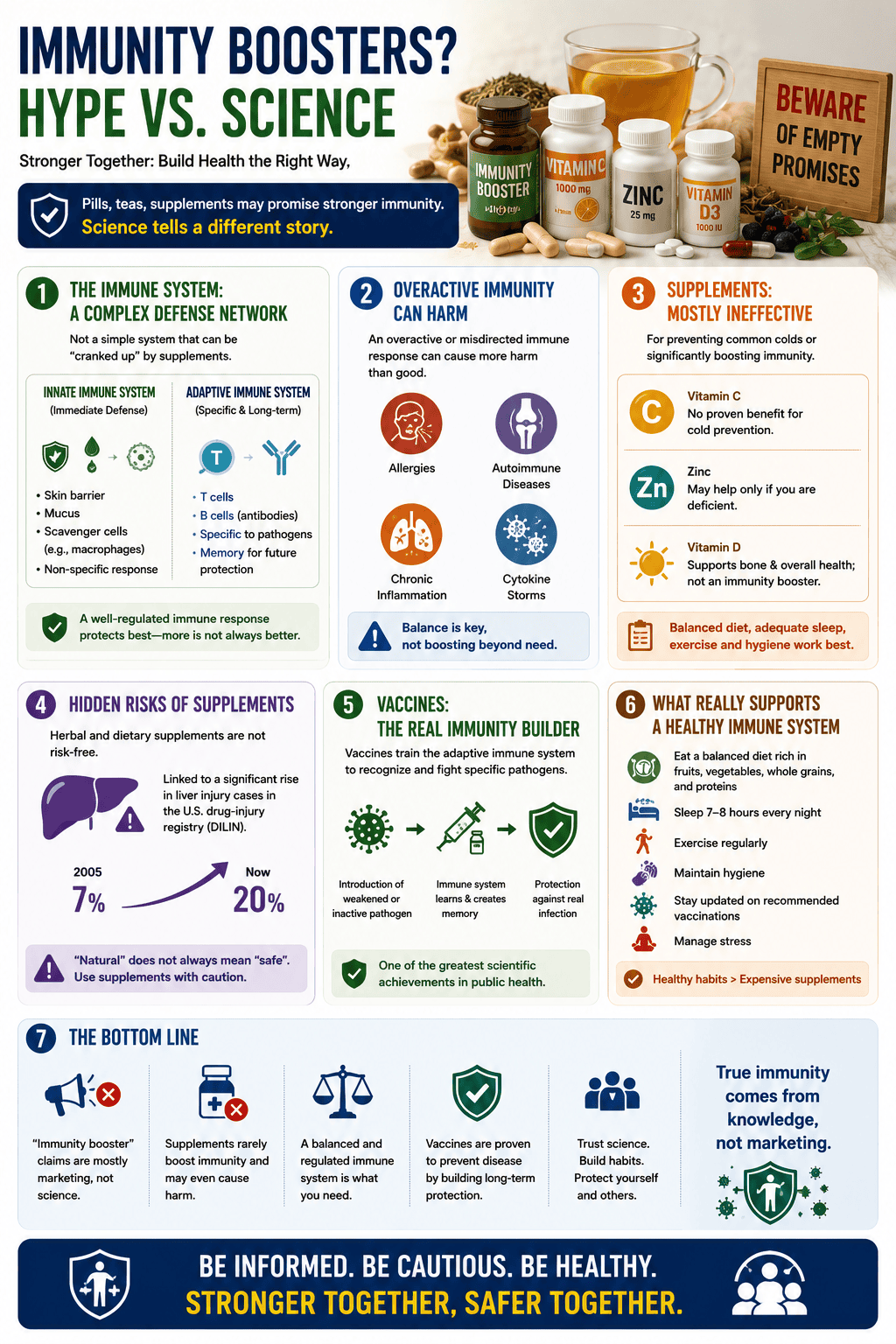
- The "immunity booster" industry markets products like pills, teas, and supplements without scientific backing, promising to enhance immunity.
- The human immune system is a complex, two-part defense network, not a simple system that can be "cranked up" by supplements.
- An overactive immune system can be detrimental, leading to conditions like allergies, autoimmune diseases, and cytokine storms.
- Supplements such as Vitamin C, Zinc, and Vitamin D are largely ineffective for preventing common colds or significantly boosting immunity.
- Herbal and dietary supplements have been linked to a significant rise in liver injury cases, increasing from 7% in 2005 to 20% currently in America's drug-injury registry.
- Vaccines are the scientifically proven method to teach the adaptive immune system to recognize and combat specific pathogens effectively.
Immunity boosters.png
Detailed Insights:
- The immune system comprises the innate immune system (skin, mucus, scavenger cells for immediate, non-specific defense) and the adaptive immune system (T and B cells for specific, long-term memory).
- Marketing claims of "boosting" the entire immune system are misleading, as a well-regulated immune response is more beneficial than an overactive one.
- The cytokine storm is a severe and potentially fatal immune overreaction, often seen in severe infections, where the body's own defense mechanisms cause harm.
- Many "immunity booster" products are unregulated, mislabelled, or contaminated, posing health risks to consumers.
- A false sense of security from consuming these supplements can lead to neglecting proven health practices.
- Vaccines work by safely exposing the adaptive immune system to parts of a pathogen, enabling it to develop specific antibodies and memory cells without causing disease.
- Historical successes of vaccination include the global eradication of smallpox and significant reduction of diseases like polio, measles, and diphtheria.
- Declining vaccination rates, as seen in the US with measles, demonstrate the population-level impact of reduced immunity and the resurgence of preventable diseases.
- Maintaining immune health is best achieved through adequate sleep, a balanced diet of whole foods, regular aerobic activity, avoiding tobacco and alcohol, and timely vaccinations.
Scientific/Technical Concepts Involved:
- Immune System: The body's complex network of cells, tissues, and organs that work together to protect it from pathogens and other harmful substances.
- Innate Immunity: The body's first line of defense, providing immediate, non-specific protection against a wide range of pathogens.
- Adaptive Immunity: A specific and long-lasting immune response that targets particular pathogens and develops immunological memory.
- Cytokine Storm: A severe and potentially life-threatening systemic inflammatory response characterized by the rapid overproduction of immune cells and their signaling molecules (cytokines).
- Vaccines: Biological preparations that provide active acquired immunity to a particular infectious disease by stimulating the immune system to produce antibodies.

SuperKalam is your personal mentor for UPSC preparation, guiding you at every step of the exam journey.
Download the App


STUDY RESOURCES
CONTACT US
ⓒ Snapstack Technologies Private Limited