GS 2: PolityGS 2: GovernanceGS 2: Social JusticePrelims
Island administration plans to introduce polls as in rest of the nation to Nicobarese, Pg13
Andaman & Nicobar proposes elections for Nicobarese tribal councils, sparking fierce debate over traditional governance and alleged Centre's influence on Great Nicobar project.
Practice MCQs
804 Students attempted
Key Highlights:
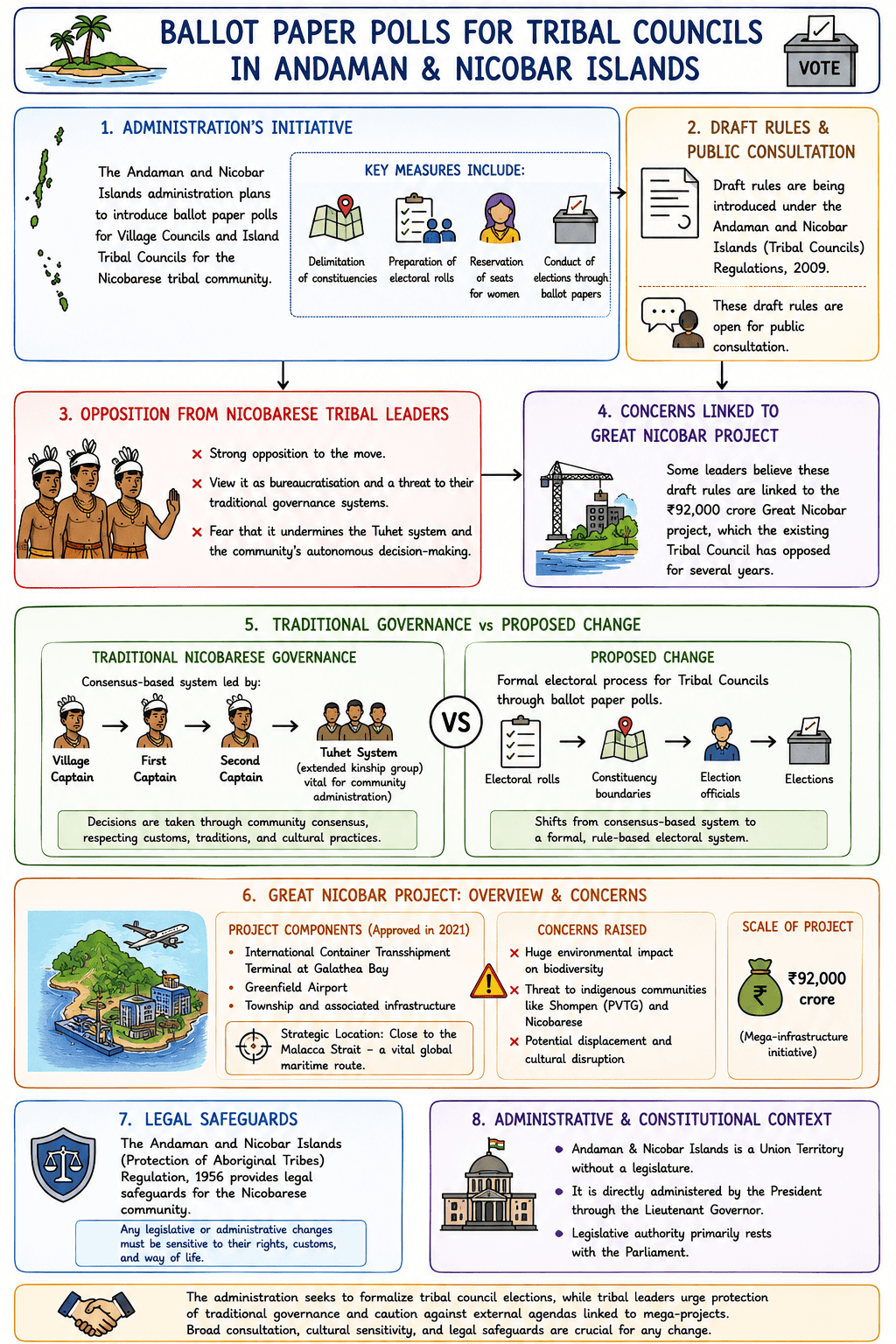
- The Andaman and Nicobar Islands administration plans to introduce ballot paper polls for Village Councils and Island Tribal Councils for the Nicobarese tribal community.
- This initiative includes measures such as delimitation of constituencies, preparation of electoral rolls, and reserving seats for women.
- The draft rules are being introduced under the Andaman and Nicobar Islands (Tribal Councils) Regulations, 2009, and are open for public consultation.
- Some Nicobarese tribal leaders express strong opposition, viewing the move as bureaucratisation and a threat to their traditional governance systems, including the Tuhet system.
- Concerns have been raised that these draft rules might be linked to the ₹92,000 crore Great Nicobar project, which the existing Tribal Council has opposed for several years.
Paper Rolls.png
Detailed Insights:
- The proposed Andaman and Nicobar Islands Tribal Councils (Preparation of Electoral Rolls and Conduct of Elections) Rules, 2026, aim to formalize the electoral process for tribal bodies.
- These rules detail how the Election Commission and the administration will prepare electoral rolls, define constituency boundaries, and appoint election officials.
- Historically, Nicobarese traditional governance has relied on consensus-based leadership through Village Captains, First Captains, Second Captains, and the Tuhet system, which is an extended kinship group vital for community administration.
- The Great Nicobar project, approved in 2021, is a mega-infrastructure initiative comprising an International Container Transshipment Terminal at Galathea Bay, a greenfield airport, and a township.
- This project is strategically significant due to its proximity to the Malacca Strait, but it faces criticism for its potential environmental impact on biodiversity and the displacement of indigenous communities like the Shompen (a Particularly Vulnerable Tribal Group) and Nicobarese.
- The Andaman and Nicobar Islands (Protection of Aboriginal Tribes) Regulation, 1956, provides legal safeguards for the Nicobarese community, emphasizing the need for sensitive legislative changes.
- As a Union Territory without a legislature, the Andaman and Nicobar Islands are directly administered by the President through a Lieutenant Governor, with legislative authority primarily resting with the Parliament.
Key Concepts Involved:
- Delimitation: The process of fixing the boundaries of territorial constituencies for elections.
- Electoral Rolls: A comprehensive list of all eligible voters within a specific constituency.
- Traditional Governance: Indigenous systems of self-rule based on customary laws, practices, and community consensus, often predating formal state structures.
- Tuhet System: The traditional matrilineal clan-based social organization of the Nicobarese, fundamental to their community administration and decision-making.
- Great Nicobar Project: A large-scale infrastructure development initiative on Great Nicobar Island, strategically important but controversial due to environmental and tribal impacts.
Previous10/10

SuperKalam is your personal mentor for UPSC preparation, guiding you at every step of the exam journey.
Download the App


STUDY RESOURCES
CONTACT US
ⓒ Snapstack Technologies Private Limited