GS 3: EconomyPrelims
Differential rates on deposits beyond RBI norms not acceptable, says Governor, Pg1
RBI Governor mandates deposit rate transparency; MPC holds rates, unveils capital inflow boost to counter inflation, CAD, and global uncertainties.
Practice MCQs
804 Students attempted
Key Highlights:
- RBI Governor Sanjay Malhotra stated that undisclosed preferential interest rates on deposits are unacceptable, while differential rates for categories like senior citizens are permitted.
- The Monetary Policy Committee (MPC) maintained a status quo on policy rates and stance in its second bi-monthly meeting for the year.
- The MPC revised FY2027 real GDP growth projection downwards to 6.6 percent from 6.9 percent and raised CPI inflation projection to 5.1 percent from 4.6 percent.
- The Reserve Bank of India (RBI) announced measures to attract foreign capital inflows, including expanding the Fully Accessible Route (FAR) for Government Securities (G-secs) and increasing limits for NRI/OCI equity investments.
Detailed Insights:
- The RBI permits differential deposit rates based on categories like senior citizens or tenure, emphasizing transparency in rate display.
- The MPC's hawkish tone was influenced by the West Asia conflict, potential El Niño development, and sub-par monsoons.
- Despite lower growth projections, the MPC anticipates continued momentum in urban consumption, investment activity, and services exports.
- Risks to growth include elevated energy prices, geopolitical uncertainty, weak monsoon forecast, and potential fiscal slippage.
- Inflation risks remain tilted to the upside due to sub-par monsoon and global supply-chain disruptions.
- The MPC noted upside risks to inflation and downside risks to growth for the second consecutive policy review.
- A future rate hike is likely, with its timing dependent on geopolitical and macro developments, including El Niño's severity.
- The weakness in the rupee and projected doubling of the Current Account Deficit (CAD) to 2 percent of GDP in FY2027 necessitated capital inflow measures.
- RBI's measures include exempting Foreign Portfolio Investors (FPIs) from capital gains tax on G-secs and removing various limits for FPIs under the general route.
- Other steps include increasing investment limits for NRIs and OCIs in equity instruments and introducing a concessional forex swap facility for FCNR (B) deposits.
- These measures could facilitate the inclusion of Indian G-secs in the Bloomberg Bond Index and support India's balance of payments.
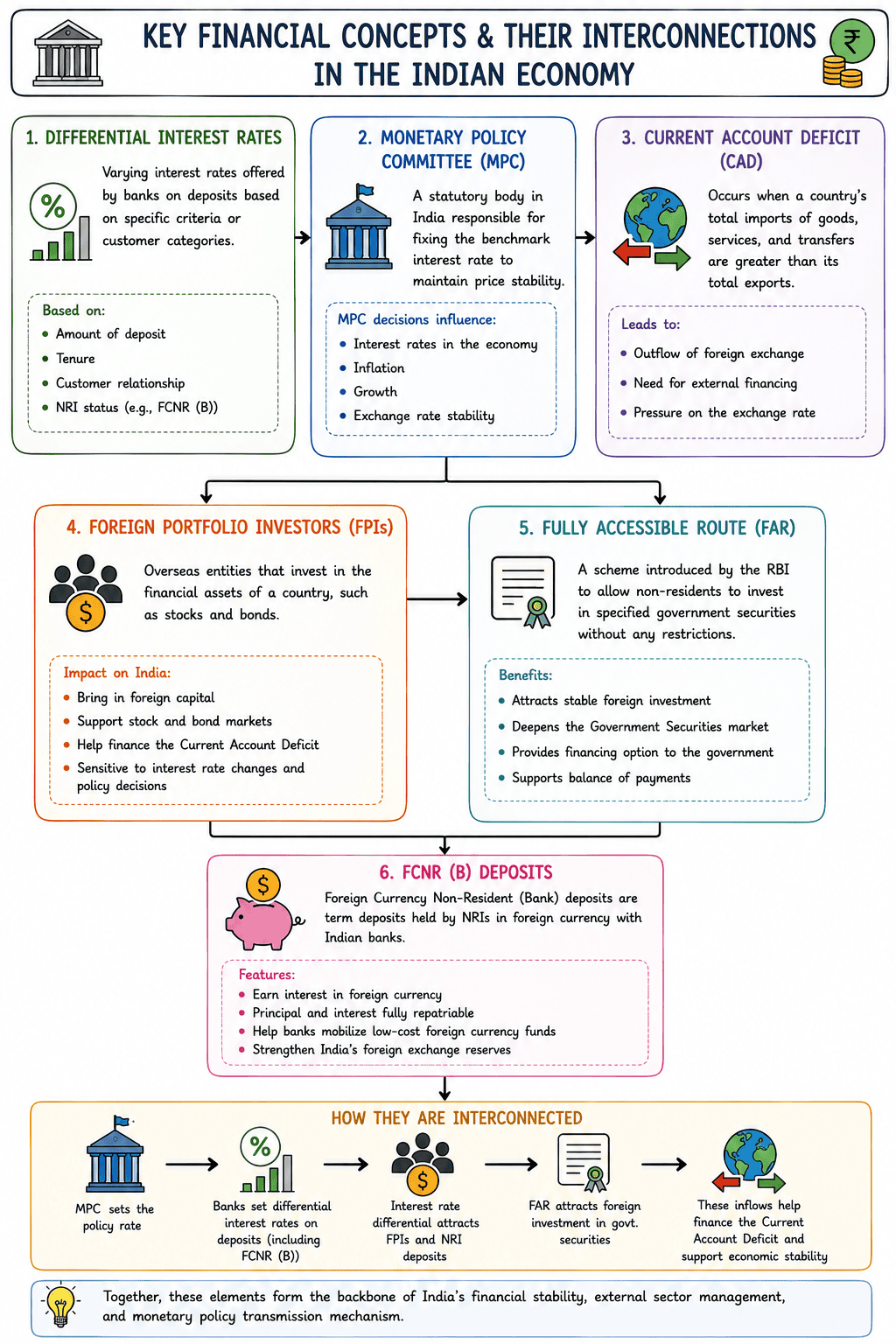
Financial Concepts.png

SuperKalam is your personal mentor for UPSC preparation, guiding you at every step of the exam journey.
Download the App


STUDY RESOURCES
CONTACT US
ⓒ Snapstack Technologies Private Limited