GS 2: International RelationsGS 3: Economy
The World Trade Organization is flailing, Pg6
WTO's MC14 fails to reach consensus, raising concerns about trade multilateralism and the future of global trade rules.
Practice MCQs
790 Students attempted
Key Highlights:
- The WTO's MC14 in Yaoundé, Cameroon (March 2026) failed to achieve consensus on key issues, including extending the moratorium on customs duties on electronic commerce.
- A separate e-commerce agreement (ECA) was signed by 66 WTO members, prohibiting customs duties on digital trade, creating two legal frameworks.
- The conference also failed to extend the moratorium on non-violation complaints under the TRIPS Agreement.
- Inclusion of the plurilateral Investment Facilitation for Development (IFD) agreement into the WTO Agreement was blocked due to opposition.
Detailed Insights:
- The lapse of the moratorium on e-commerce duties allows countries to impose tariffs on digital trade, potentially benefiting developing countries but burdening consumers and businesses.
- The e-commerce agreement (ECA), though not part of the WTO rulebook, establishes a separate legal framework, potentially fragmenting global trade regulations.
- The moratorium on non-violation complaints under the TRIPS Agreement aimed to protect developing nations' public health measures from challenges related to intellectual property rights.
- Opposition to the IFD Agreement's inclusion in the WTO Agreement stemmed from concerns about the absence of legal safeguards for incorporating plurilateral agreements.
- The failure of MC14 to provide a clear road map for WTO reforms has postponed critical issues like reviving the appellate function of the dispute settlement system.
- The current situation mirrors the early 1970s, where stalled GATT negotiations led to increased American unilateralism, highlighting the importance of a functional multilateral trading system.
- To maintain relevance, the WTO needs innovative solutions like plurilateralising agreements, with India playing a key role in developing legal guardrails for their adoption.
Key Concepts Involved:
- Most-Favoured Nation (MFN): A principle requiring a country to provide any concessions, privileges, or immunities granted to one nation in a trade agreement to all other nations.
- TRIPS Agreement: An international legal agreement between all the member nations of the WTO that establishes minimum standards of intellectual property regulation.
- Plurilateral Agreement: Trade agreements between some, but not all, WTO members, addressing specific issues and creating opportunities for cooperation.
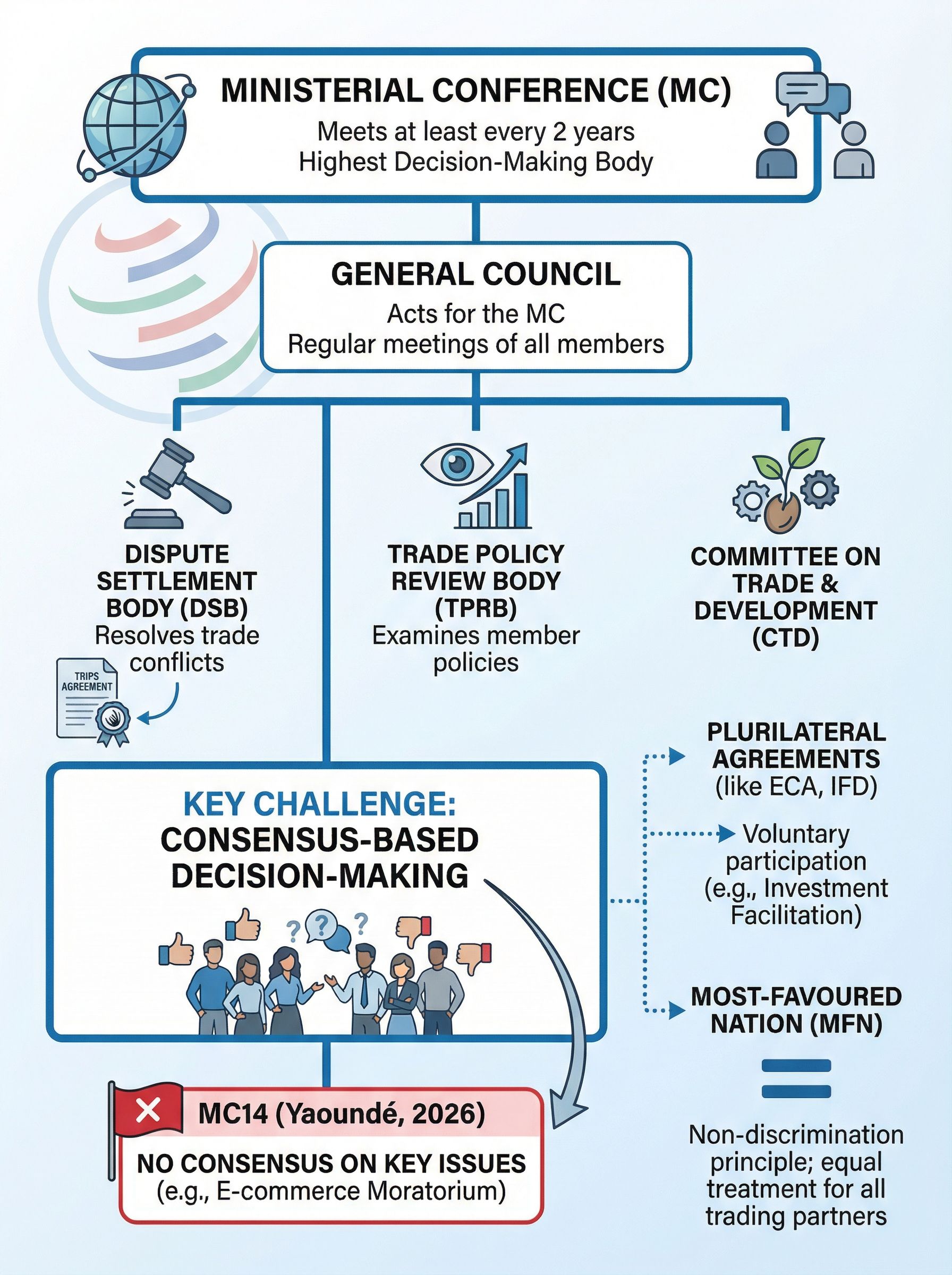
WTO decision-making hierarchy

SuperKalam is your personal mentor for UPSC preparation, guiding you at every step of the exam journey.
Download the App


STUDY RESOURCES
CONTACT US
ⓒ Snapstack Technologies Private Limited