GS 1: Indian GeographyGS 3: Environment & EcologyGS 3: EconomyPrelims
Monsoon sets in over Kerala three days late, Pg1
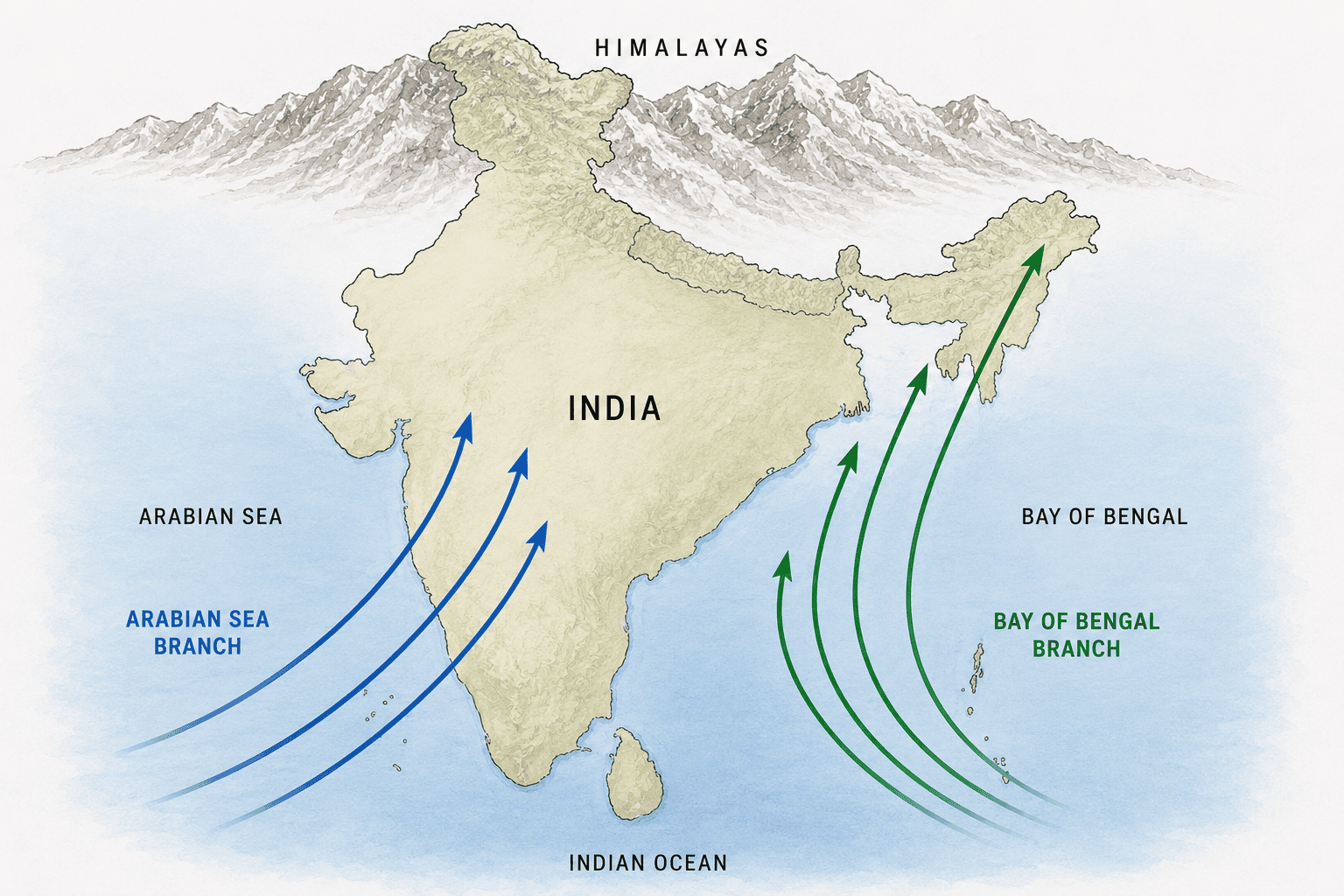
Southwest Monsoon finally hits Kerala three days late, sparking El Nino fears and potential strain on India's rain-fed kharif agriculture.
Practice MCQs
797 Students attempted
Key Highlights:
- The Southwest Monsoon commenced over Kerala on Thursday, three days later than its normal onset date of June 1.
- The India Meteorological Department (IMD) had initially forecast an earlier arrival around May 26, missing its prediction window by five days.
- The onset occurs amidst concerns of a strengthening El Nino, with the World Meteorological Organisation estimating an 80% chance of its development during July and August.
- The IMD has projected a below-normal monsoon season at 90% of the Long-Period Average (LPA).
- A weak monsoon could severely impact kharif sowing, reservoir levels, and groundwater recharge, straining the rain-fed agricultural sector.
Monsoon.png
Detailed Insights:
- The Southwest Monsoon is crucial for India, accounting for approximately 75% of the country's annual rainfall and significantly impacting agriculture, water supply, and the economy.
- The IMD declares monsoon onset based on specific criteria including rainfall (at least 60% of 14 designated stations reporting 2.5 mm or more for two consecutive days after May 10), wind field (westerly winds up to 4.5 km above mean sea level at 20-25 knots), and convective cloudiness.
- El Nino typically leads to a weakened Southwest Monsoon in India, resulting in below-normal rainfall and increased chances of drought.
- The kharif season, also known as the monsoon crop season, runs from June to October, with crops sown at the onset of the monsoon and harvested at its end.
- Major kharif crops like rice, maize, and pulses are highly dependent on adequate monsoon rainfall.
- This marks the first time since 2015 that the IMD's operational forecast for monsoon onset has deviated beyond its error margin.
Key Concepts Involved:
- Southwest Monsoon: Seasonal winds bringing significant rainfall to India from June to September, vital for agriculture and water resources.
- El Nino: A climate phenomenon characterized by the warming of sea surface temperatures in the central and eastern Pacific Ocean, often leading to weaker Indian monsoons.
- Kharif Sowing: The agricultural period from June to October when crops dependent on monsoon rains are sown and cultivated.
- Long-Period Average (LPA): A benchmark average rainfall figure used by the IMD to classify monsoon performance over a long duration, typically 50 years.

SuperKalam is your personal mentor for UPSC preparation, guiding you at every step of the exam journey.
Download the App


STUDY RESOURCES
CONTACT US
ⓒ Snapstack Technologies Private Limited