GS 1: Indian SocietyGS 2: Governance
The quiet demographic revolution unfolding in India, pg9
India has transitioned from a high-fertility society to one at or below replacement level, shifting national concerns from population growth to the management of an aging population, internal migration, and regional economic disparities.
Practice MCQs
775 Students attempted
Key Highlights:
- Fertility Transition: India’s Total Fertility Rate (TFR) has dropped from nearly 4.0 in the 1990s to approximately 2.0 (NFHS-5), which is below the replacement level of 2.1.
- Regional Convergence: While southern states led the decline, northern and northeastern states like Uttar Pradesh, Rajasthan, and Haryana have recently shown the highest rates of decline, indicating a nationwide shift toward low-fertility norms.
- Socio-Economic Drivers: Key factors include rising women's education, delayed marriage, improved child survival rates, and the increasing monetization of childcare and education.
- New Policy Imperatives: The focus is shifting from population control to building institutional support for a low-fertility society, including pension systems, geriatric healthcare, and labor-absorbing industrialization.
Detailed Insights:
- End of the "Population Bomb": The rapid fertility decline has effectively neutralized 20th-century anxieties regarding unchecked population growth outpacing resources, though it introduces new structural challenges.
- The Opportunity Cost of Parenting: As schooling and housing become more expensive, children are viewed less as household contributors and more as "intensive investment projects," leading families to prefer fewer children to ensure upward mobility.
- Demographic Divergence: Southern and Western states are aging faster than the North and East. This imbalance is expected to drive significant internal migration, as younger workers move to aging regions to sustain the economy.
- Political Economy Risks: The divergence in fertility rates poses challenges for fiscal transfers and political representation, as aging states may face different economic needs compared to those with a larger youth bulge.
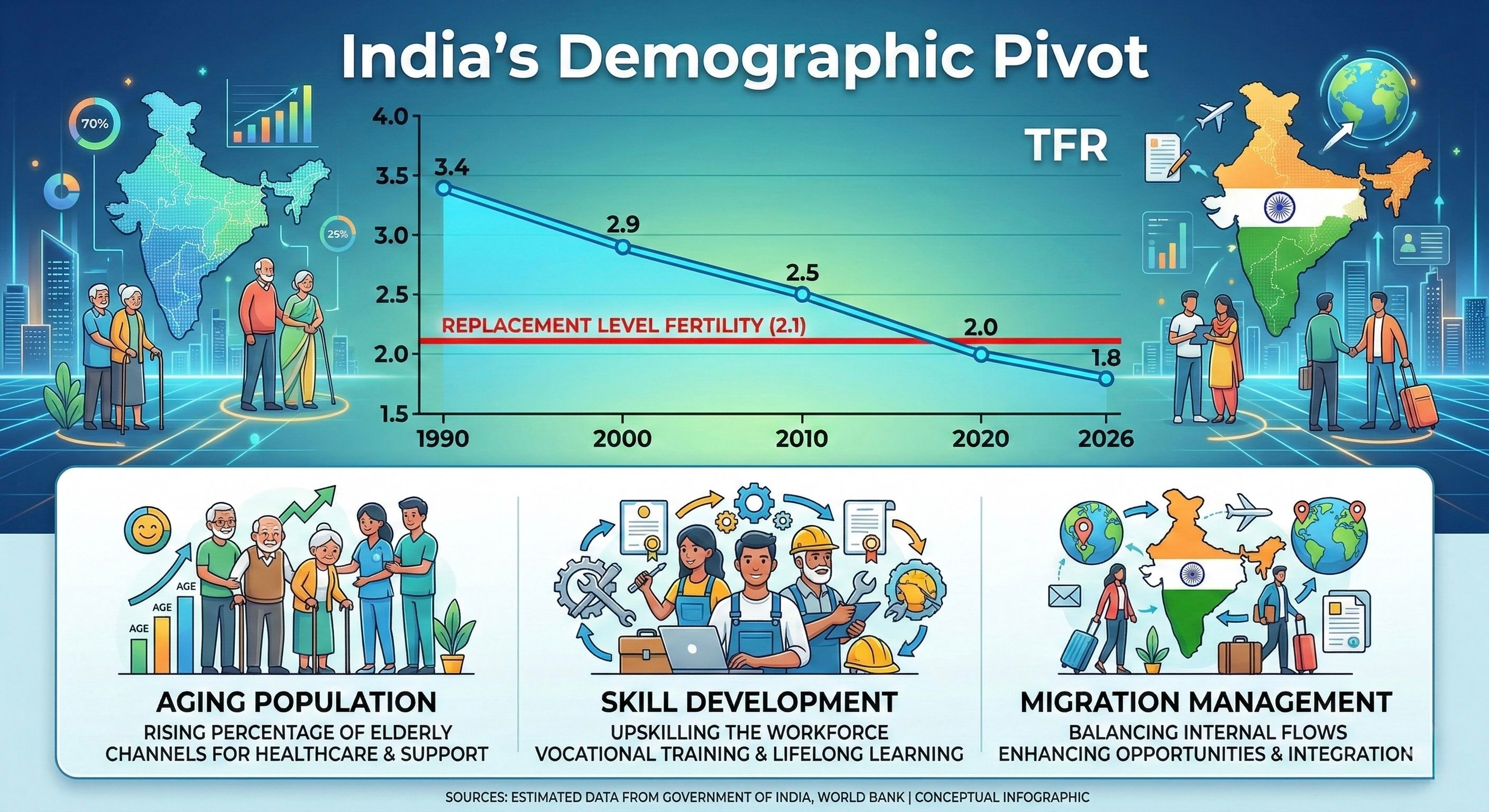
India’s Demographic Pivot
Key Concepts Involved:
- Total Fertility Rate (TFR): The average number of children born to a woman during her lifetime; 2.1 is generally considered the "replacement level" required to keep a population stable.
- Demographic Dividend: The economic growth potential that results from a shift in a population’s age structure, specifically when the share of the working-age population is larger than the non-working-age share.
- Precautionary Fertility: A historical reproductive strategy where families have more children to offset high infant and child mortality rates.
- Replacement Level Fertility: The level of fertility at which a population exactly replaces itself from one generation to the next without migration.

SuperKalam is your personal mentor for UPSC preparation, guiding you at every step of the exam journey.
Download the App


STUDY RESOURCES
CONTACT US
ⓒ Snapstack Technologies Private Limited