GS 3: EconomyGS 3: Environment & EcologyGS 2: GovernancePrelims
The case for energy efficiency, Pg8
India's grid emission factor rises despite renewable capacity surge, highlighting the urgent need for energy efficiency measures and flexible grid management.
Practice MCQs
819 Students attempted
Key Highlights:
- India's grid emission factor (GEF) has increased from 0.703 tCO₂/MWh in 2020-21 to 0.727 tCO₂/MWh in 2023-24, despite a rise in renewable energy capacity.
- Renewables account for about 50% of India’s total installed capacity as of June 2025.
- In 2023-24, renewables supplied only 22% of total electricity, with the remainder from fossil fuels.
- Energy efficiency measures in India saved approximately 200 Million Tonnes of Oil Equivalent of final energy and close to ₹760,000 crore from FY2017-18 to FY2022-23.
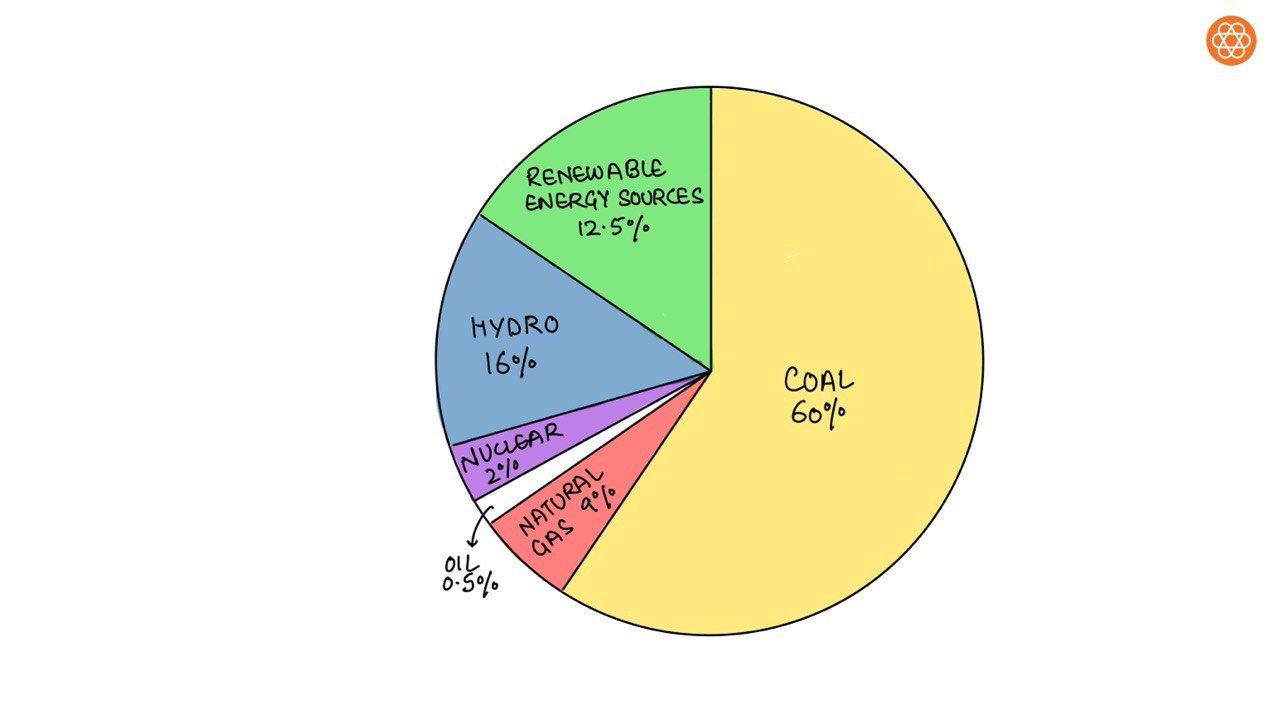
Energy Sources.jpg
Detailed Insights:
- The increase in GEF is due to the capacity-generation mismatch, where renewables have high installed capacity but lower actual electricity generation compared to coal.
- Electricity demand peaks during evenings when solar availability decreases, leading to reliance on coal-fired plants to meet demand.
- Energy efficiency can reduce demand, especially during peak hours, decreasing reliance on coal and enhancing the integration of renewable energy sources.
- Measures needed include enabling homes to connect batteries to virtual power plants, accelerating appliance efficiency standards, and supporting SMEs to adopt efficient technologies.
- Flexible pricing and scrappage incentives for old equipment, along with electricity distribution companies procuring "electricity services" like green cooling, are crucial.
- The Central Electricity Authority’s National Electricity Plan projects a fall in India’s GEF to 0.548 by 2026-27 and 0.430 by 2031-32 through a flexible system approach with energy efficiency at its core.
Key Concepts Involved:
- Grid Emission Factor (GEF): A measure of the carbon intensity of electricity generation in a power grid.
- Capacity Utilization: The extent to which an installed power plant is used to generate electricity.
- Energy Efficiency: Using less energy to provide the same level of energy service.

SuperKalam is your personal mentor for UPSC preparation, guiding you at every step of the exam journey.
Download the App


STUDY RESOURCES
CONTACT US
ⓒ Snapstack Technologies Private Limited