GS 3: Environment & EcologyGS 3: Disaster ManagementGS 1: Physical GeographyGS 3: EconomyPrelims
Europe must rethink how it will live with heat, Pg12
Europe confronts a new normal of extreme heat, demanding urgent infrastructure, agricultural, and societal adaptation strategies beyond emergency responses.
Practice MCQs
797 Students attempted
Key Highlights:
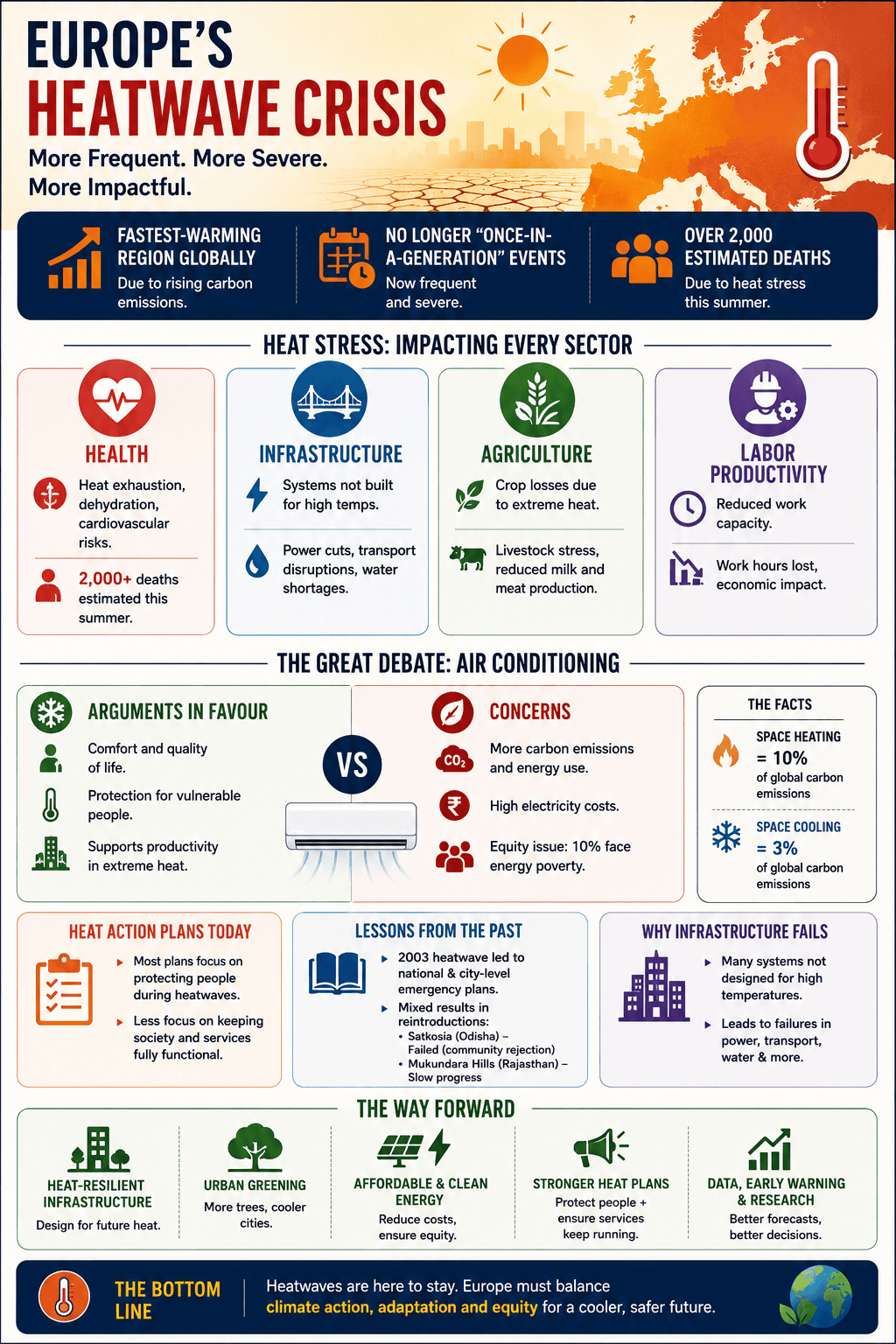
- Europe is experiencing increasingly frequent and severe heatwaves, moving beyond "once-in-a-generation" events.
- The continent is identified as the fastest-warming region globally, primarily due to increasing carbon emissions.
- Heat stress has significant repercussions on health, infrastructure, and labor productivity, with over 2,000 estimated deaths this summer.
- Current European heat action plans are largely geared towards protecting people rather than ensuring broader societal functioning.
- The debate around widespread air conditioning highlights concerns about increased carbon emissions versus comfort and equity issues.
- Agricultural sectors face challenges such as crop losses and difficulties for livestock and farming activities due to extreme heat.
Europe Heatwave.png
Detailed Insights:
- The 2003 heatwave prompted several European countries to create national and city-level emergency response plans.
- Scientific consensus links the changing weather patterns and rising global temperatures to increasing carbon emissions.
- Calls for Europe to become an "air-conditioned" society face opposition from environmentalists due to potential increases in carbon emissions.
- Space heating contributes significantly more to global carbon emissions (10%) compared to space cooling (3%).
- High electricity costs and "energy poverty" for 10% of the population raise equity concerns regarding widespread AC adoption.
- Infrastructure failures in Europe during heatwaves are often attributed to systems not built for high temperatures.
- Initiatives like the Coalition for Disaster Resilient Infrastructure in the Global South offer models for climate preparedness and resilient infrastructure.
- France has reported significant losses, up to one-third of its corn production, due to unpredictable weather patterns.
- Diversifying crop patterns and adapting farming practices are crucial steps for agricultural resilience in the face of extreme heat.
Key Concepts Involved:
- Heatwave: A prolonged period of excessively hot weather, often accompanied by high humidity, posing risks to health and infrastructure.
- Energy Poverty: A situation where households struggle to afford adequate energy services for their basic needs, including heating or cooling.
- Coalition for Disaster Resilient Infrastructure (CDRI): A multi-stakeholder global partnership that promotes the resilience of new and existing infrastructure systems to climate and disaster risks.

SuperKalam is your personal mentor for UPSC preparation, guiding you at every step of the exam journey.
Download the App


STUDY RESOURCES
CONTACT US
ⓒ Snapstack Technologies Private Limited