GS 3: Internal SecurityGS 2: International RelationsGS 3: Science & TechnologyPrelims
Russia delivers fourth squadron of the S-400 air defence system, Pg10
India receives fourth S-400 air defence squadron from Russia, boosting long-range capabilities with AI integration for enhanced threat prioritisation.
Practice MCQs
790 Students attempted
Key Highlights:
- India received the fourth squadron of the Russian-made S-400 air defence system in May.
- This delivery is part of a $5.43-billion agreement signed between India and Russia in 2018 for five S-400 regimental systems.
- The system is expected to be deployed shortly, significantly strengthening India's long-range air defence network.
- The S-400 will integrate AI-enabled decision-support capabilities to enhance threat prioritization and target selection.
Detailed Insights:
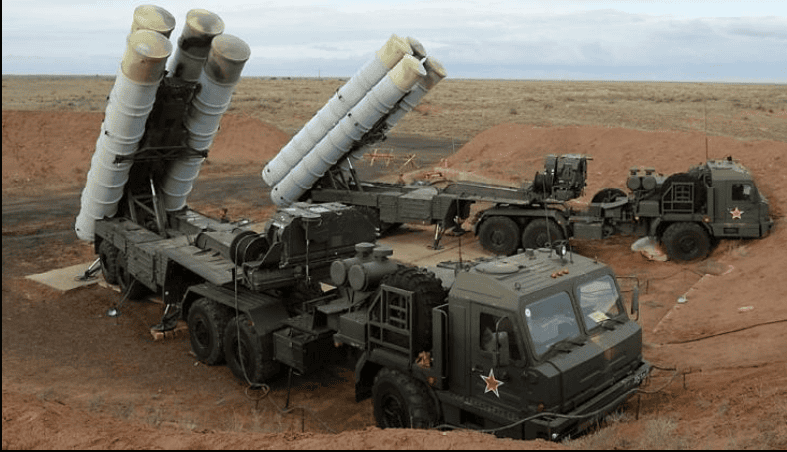
- The S-400 Triumf is a mobile, long-range surface-to-air missile system capable of engaging various aerial targets, including aircraft, drones, and ballistic/cruise missiles, at ranges up to 400 km.
- Three S-400 squadrons are already operational in India, with the fifth and final squadron under the current contract expected by 2027.
- Deliveries experienced delays due to the Russia-Ukraine conflict but are now back on schedule.
- The integration of Artificial Intelligence aims to improve operational efficiency by analyzing large amounts of data in real-time, providing recommendations for threat assessment and target engagement.
- While AI will assist in identifying and prioritizing threats, the final engagement decision will remain with the human operator.
- This acquisition underscores India's commitment to modernizing its defense capabilities and maintaining its strategic defense partnership with Russia.
S400.png
Scientific/Technical Concepts Involved:
- S-400 Triumf: A sophisticated Russian long-range surface-to-air missile (SAM) system designed to detect, track, and destroy diverse aerial threats.
- Air Defence System: A comprehensive network of sensors, command and control systems, and weapon platforms designed to protect airspace from hostile aerial attacks.
- AI-enabled Decision Support: The application of Artificial Intelligence to process complex data and offer informed recommendations to human operators, enhancing the speed and accuracy of critical decisions.

SuperKalam is your personal mentor for UPSC preparation, guiding you at every step of the exam journey.
Download the App


STUDY RESOURCES
CONTACT US
ⓒ Snapstack Technologies Private Limited