GS 2: International RelationsGS 3: Economy
Iran may be losing the battles, but it might still win the war, Pg8
Despite tactical losses, Iran leverages resilience, regional influence, and global economic factors to strategically counter US pressure.
Practice MCQs
775 Students attempted
Key Highlights:
- President Trump addressed the nation on April 1, stating the aim of U.S. strikes was to eliminate Iran's nuclear weapons capability and power projection, denying regime change as a goal.
- Iran has demonstrated resilience, retaining the capacity to retaliate against U.S. bases and regional adversaries, and potentially block 25% of global oil and gas supply via the Strait of Hormuz.
- Despite tactical victories by the U.S. and Israel, achieving broader strategic objectives like regime change in Iran is unlikely without a large-scale ground invasion.
- Iran's IRGC has consolidated its hold over the country's political and military apparatus, surviving the U.S. decapitation strategy.
Detailed Insights:
- The Iranian regime has shown unexpected resilience, contrary to initial assessments that a massive attack would trigger a popular uprising.
- Iran has regionalized the conflict by targeting U.S.-aligned Arab states, damaging energy infrastructure and tourism, and shaking their sense of safety.
- Confusion in Washington regarding the war's purpose has benefited Iran, with pre-war Israeli intelligence proving inaccurate.
- The U.S. faces increasing isolation as allies and regional partners hesitate to join the war effort, and Gulf partners feel exposed to Iranian retaliation.
- Iran's ability to threaten energy flows and regional stability has provided it with leverage and strategic confidence, leading regional states to explore alternative pathways to end the war.
- Despite tactical losses, Iran is regaining economic breathing space through oil exports and earning strategic respect in parts of the Global South.
- If negotiations occur, Iran is likely to enter them with greater confidence, especially if the stated U.S. goals of unconditional surrender and regime change become unattainable.
Key Concepts Involved:
- Horizontal Escalation: Expanding a conflict geographically by involving new actors or fronts.
- Regime Resilience: The capacity of a government to withstand internal and external pressures.
- Decapitation Strategy: An attempt to cripple an enemy by eliminating its leadership.
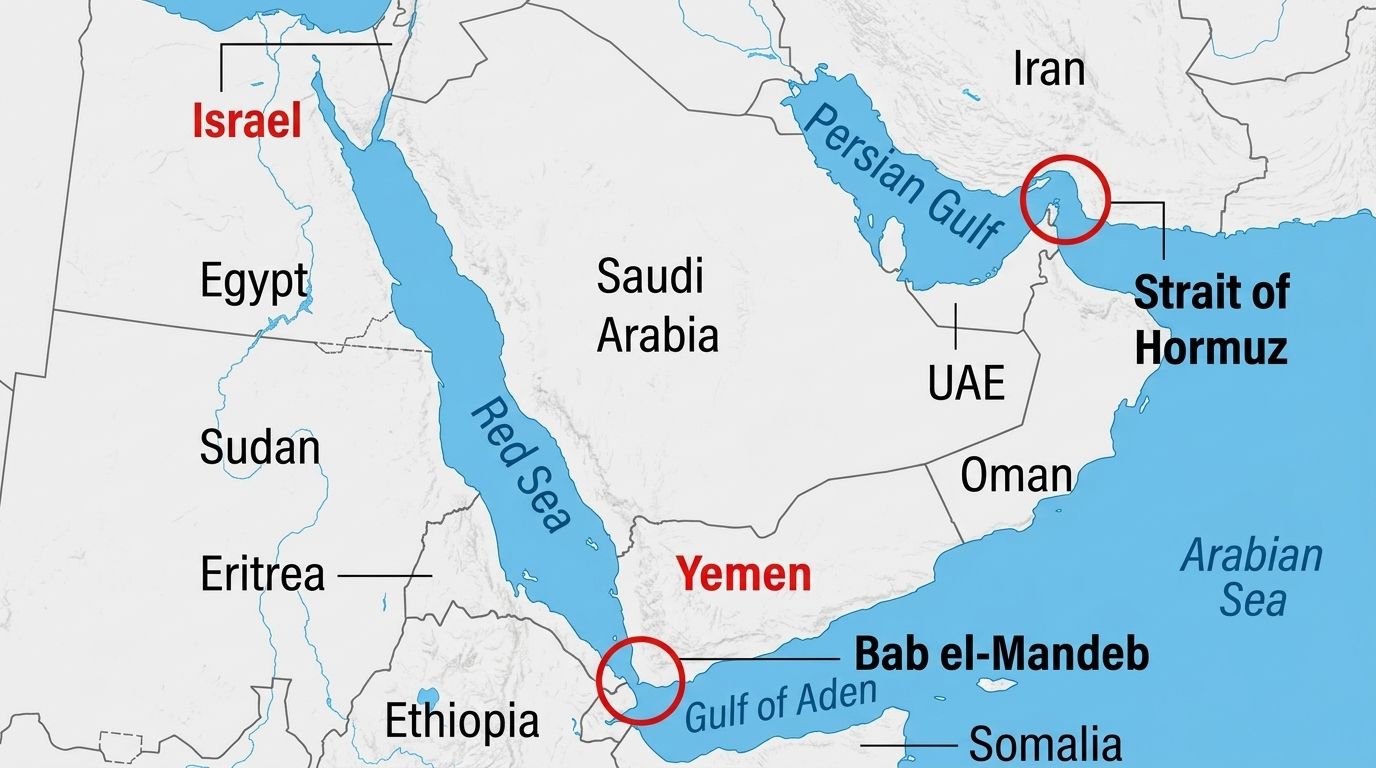
Straight of Hormuz

SuperKalam is your personal mentor for UPSC preparation, guiding you at every step of the exam journey.
Download the App


STUDY RESOURCES
CONTACT US
ⓒ Snapstack Technologies Private Limited