GS 3: Environment & EcologyGS 2: GovernanceGS 1: Indian GeographyGS 2: Social Justice
Great Nicobar plan triggers fresh concerns among locals, Pg1
Great Nicobar Island project's tribal relocation plan faces opposition due to consent issues and unclear implementation details.
Practice MCQs
775 Students attempted
Key Highlights:
- The Andaman and Nicobar Islands administration has drafted a Comprehensive Tribal Welfare Plan with a ₹42.52-crore outlay for relocating Nicobarese tribal communities affected by the Great Nicobar Island (GNI) mega-infrastructure project.
- The draft plan proposes relocation from tsunami-affected or project-impacted areas, including housing, land development, and basic infrastructure, over 24 months.
- Tribal Council members have expressed confusion over the relocation details, particularly regarding the proposed sites and beneficiaries.
- The Union government informed the Calcutta High Court on March 30 that it needs 15 days to demonstrate tribal consent for the project, which is being challenged in court.
Detailed Insights:
- The Nicobarese community has been protesting the ₹92,000-crore GNI project since 2022, alleging that their forest rights have not been settled and they withdrew their consent.
- The draft plan suggests relocation to Rajiv Nagar and New Chingenh, while also considering Pulobhabi for community purposes and potential return to ancestral villages.
- The Tribal Council submitted a letter on April 1 requesting clarification and a Hindi translation of the draft plan, requiring at least a month to review the translated document.
- The community has demanded a return to all ancestral villages along the west coast since displacement in 2004, fearing the project would encroach on their forest lands.
Key Concepts Involved:
- Forest Rights: Rights of tribal communities to access, manage, and conserve forest resources.
- Tribal Council: A representative body of tribal communities that advises the government on matters related to their welfare and development.
- Relocation: The process of moving people from one area to another, often due to development projects or natural disasters.
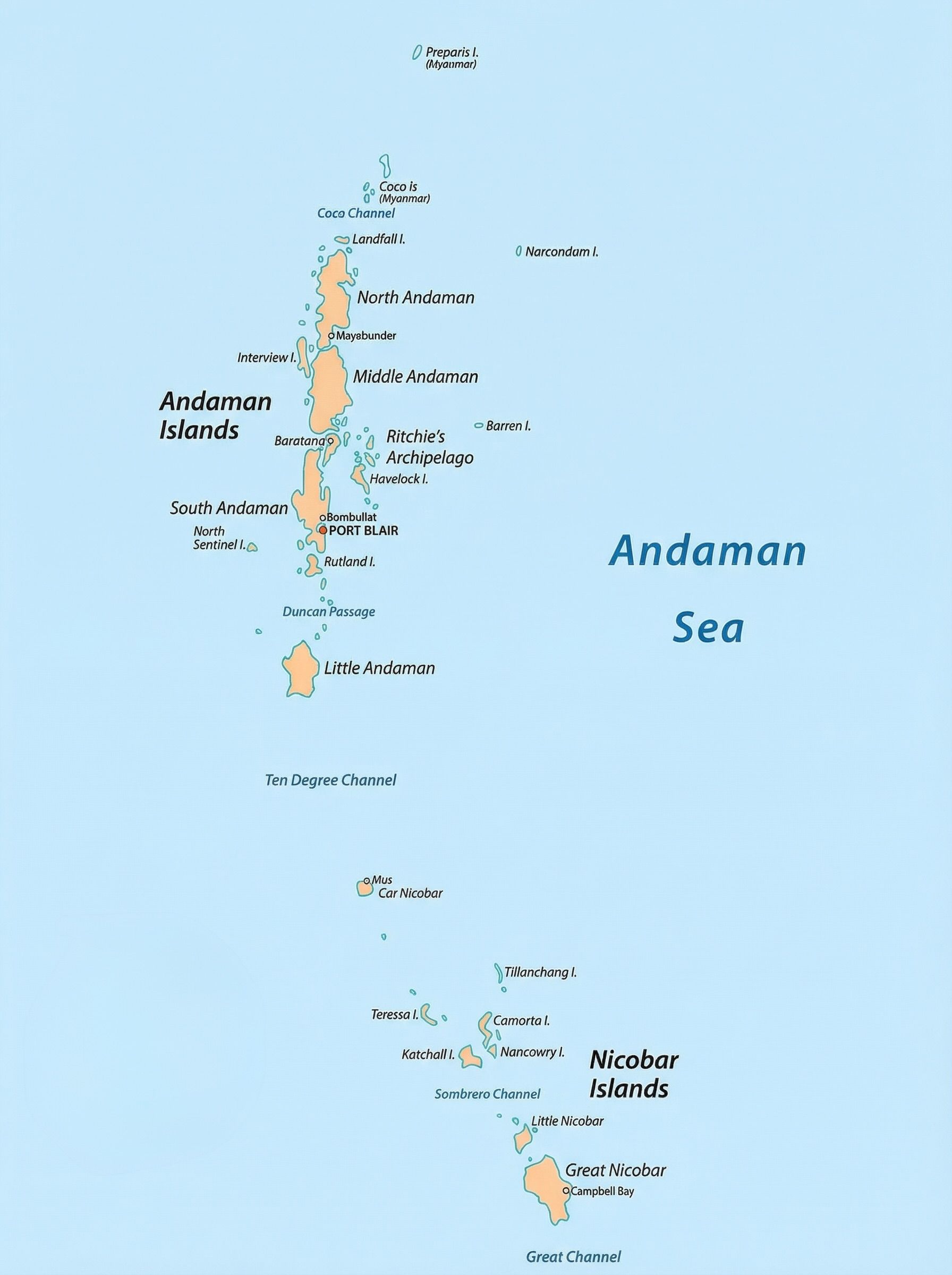
Andaman and Nicobar Islands

SuperKalam is your personal mentor for UPSC preparation, guiding you at every step of the exam journey.
Download the App


STUDY RESOURCES
CONTACT US
ⓒ Snapstack Technologies Private Limited