GS 2: GovernanceGS 2: Social JusticeGS 3: EconomyPrelims
VB-G RAM G scheme rolled out from village in A.P., Pg1
India launches VB-G RAM G scheme replacing MGNREGS from AP, pledging ₹11,700 crore for rural employment, asset creation, and farmer welfare.
Practice MCQs
790 Students attempted
Key Highlights:
- The Viksit Bharat-Guarantee for Rozgar Ajeevika Mission Grameen (VB-G RAM G) scheme was launched nationwide from Mukkavaripalli village in Tirupati district, Andhra Pradesh.
- Union Minister for Agriculture Shivraj Singh Chouhan, Andhra Pradesh Chief Minister N. Chandrababu Naidu, and Deputy Chief Minister Pawan Kalyan inaugurated the scheme.
- VB-G RAM G replaces the Mahatma Gandhi National Rural Employment Guarantee Scheme (MGNREGS).
- The new scheme guarantees 125 days of wage employment per financial year for eligible rural households, an increase from the previous 100 days.
- It prioritizes farmers' welfare and rural development, with an emphasis on creating assets like roads, drainages, and canals.
VBGRAMG.png
Detailed Insights:
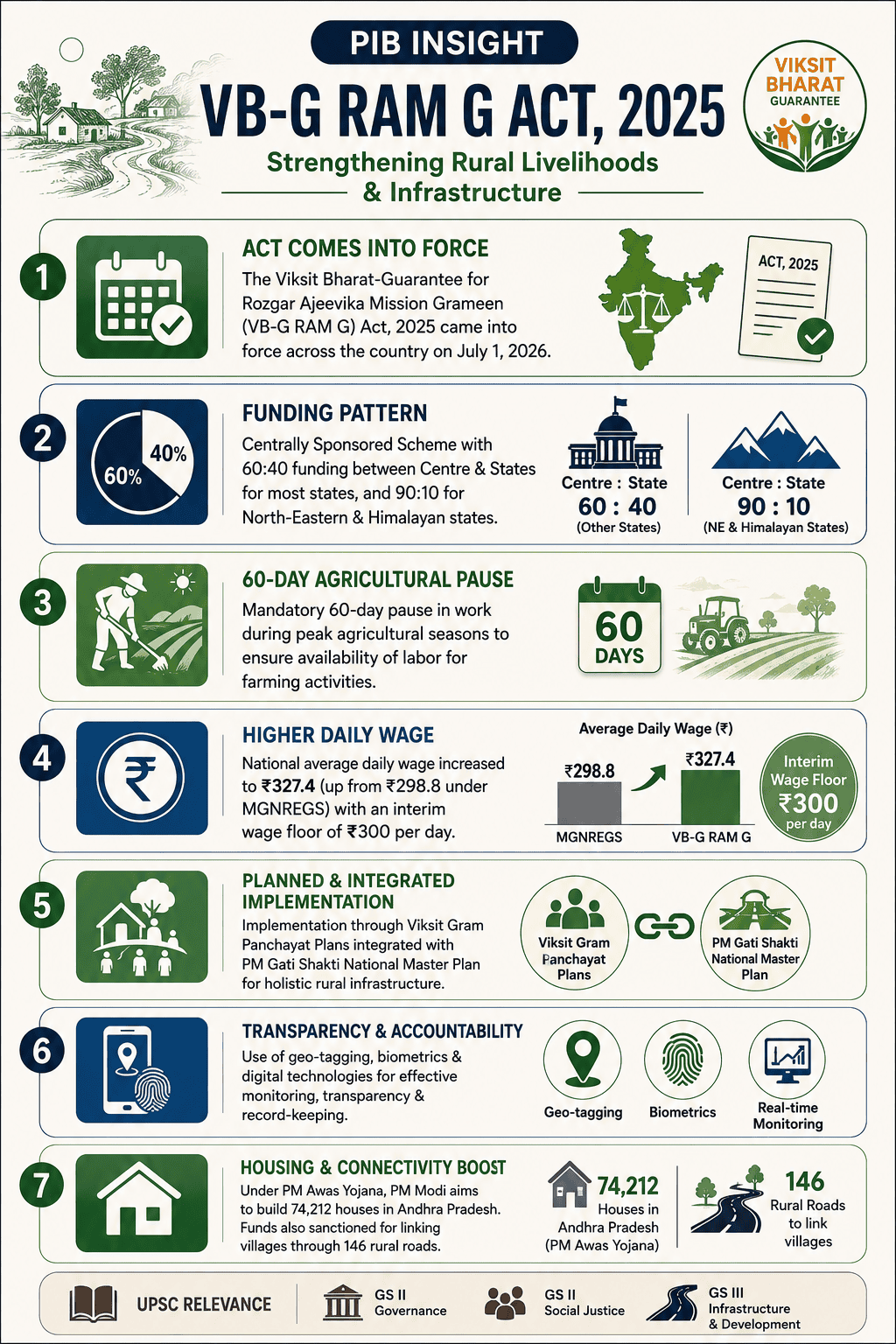
- The Viksit Bharat-Guarantee for Rozgar Ajeevika Mission Grameen (VB-G RAM G) Act, 2025 came into force across the country on July 1, 2026.
- The scheme operates as a Centrally Sponsored Scheme, with a funding pattern of 60:40 between the Centre and States for most states, and 90:10 for North-Eastern and Himalayan states.
- A significant change includes a mandatory 60-day pause in work during peak agricultural seasons to ensure the availability of labor for farming activities.
- The national average daily wage under VB-G RAM G has been increased to ₹327.4, up from ₹298.8 under MGNREGS, with an interim wage floor of ₹300 per day.
- The scheme's implementation will involve Viksit Gram Panchayat Plans and will be integrated with the PM Gati Shakti National Master Plan for comprehensive rural infrastructure development.
- Transparency and accountability are key features, with the scheme deploying technologies such as geo-tagging and biometrics for monitoring and record-keeping.
- Under the Pradhan Mantri Awas Yojana, Prime Minister Narendra Modi aims to build 74,212 houses in Andhra Pradesh, with funds also sanctioned for linking villages through 146 rural roads.
- Andhra Pradesh Deputy Chief Minister Pawan Kalyan, holding the Panchayat Raj portfolio, proposed a "Wood Bank" concept to generate future revenue for panchayats through tree plantations.
Key Concepts Involved:
- Viksit Bharat-Guarantee for Rozgar Ajeevika Mission Grameen (VB-G RAM G): A new social welfare legislation enacted in 2025, replacing MGNREGS, to guarantee 125 days of wage employment in rural areas.
- Mahatma Gandhi National Rural Employment Guarantee Scheme (MGNREGS): A social security measure enacted in 2005, guaranteeing 100 days of wage employment to enhance livelihood security in rural areas.
- Pradhan Mantri Awas Yojana (PMAY): A government initiative launched in 2015, aiming to provide affordable housing to all eligible urban and rural citizens of India.
- Geo-tagging: The process of adding geographical identification data to various media, used for monitoring project progress and ensuring transparency in government schemes.
- Biometrics: Automated methods of recognizing individuals based on unique physical or behavioral traits, utilized for identity verification and enhancing transparency in scheme implementation.
- Panchayat Raj: A system of local self-governance in rural India, comprising elected bodies at the village, block, and district levels responsible for local administration and development.

SuperKalam is your personal mentor for UPSC preparation, guiding you at every step of the exam journey.
Download the App


STUDY RESOURCES
CONTACT US
ⓒ Snapstack Technologies Private Limited