GS 2: International RelationsPrelims
Russia rains missiles, drones on Kyiv in major offensive, 21 killed, Pg14
Russia's deadliest missile and drone assault on Kyiv kills 21, devastates 130 buildings; Zelenskyy faults allies for air defense shortfalls.
Practice MCQs
790 Students attempted
Key Highlights:
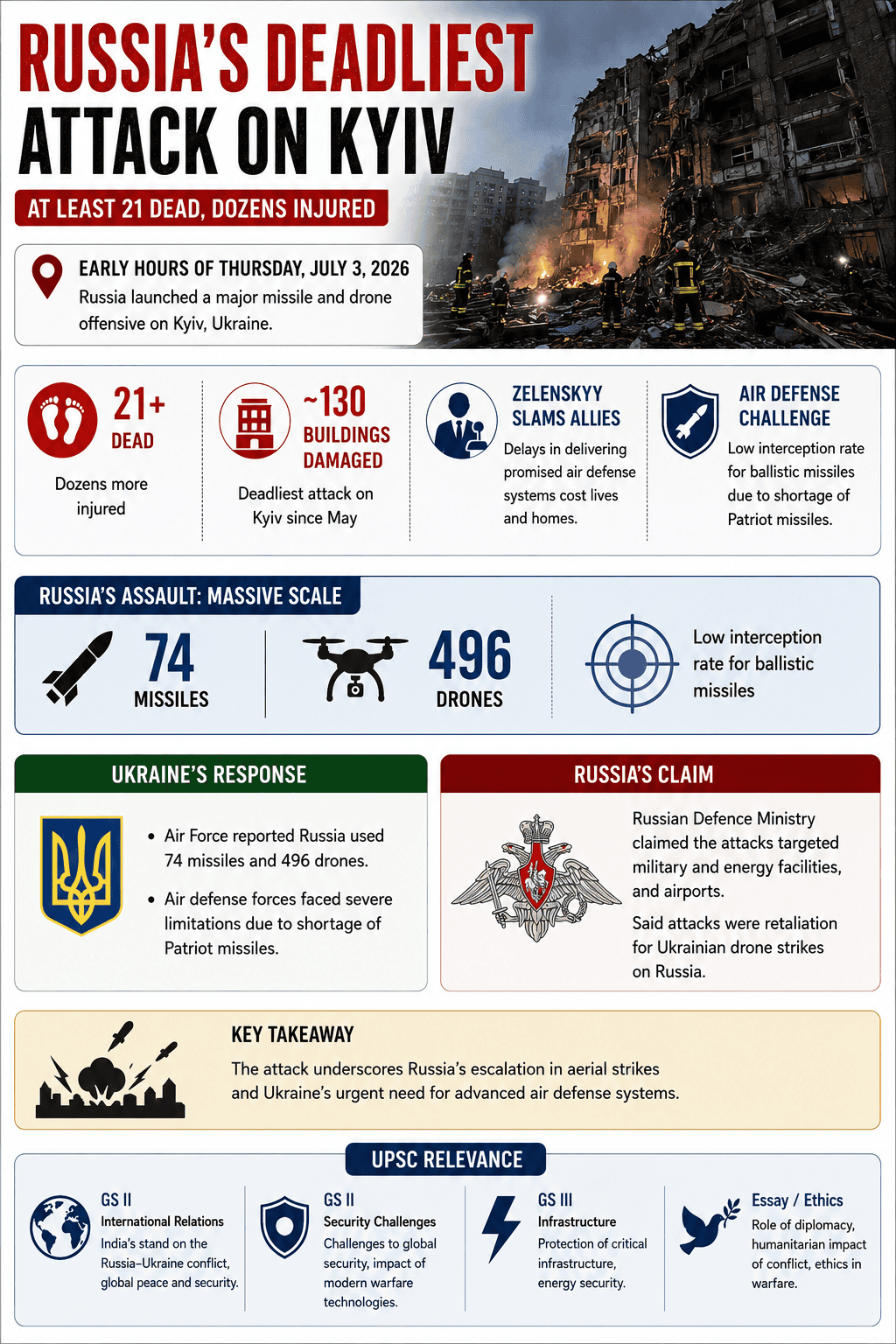
- Russia launched a major missile and drone offensive on Kyiv, Ukraine, in the early hours of Thursday, resulting in at least 21 deaths and numerous injuries.
- Approximately 130 buildings were damaged in what was described as the deadliest attack on Kyiv since May.
- Ukrainian President Volodymyr Zelenskyy criticized allies for delays in delivering promised air defense systems, stating it could have saved more lives and homes.
- The Ukrainian Air Force reported Russia used 74 missiles and 496 drones, noting a low interception rate for ballistic missiles due to shortages of Patriot missiles.
- The Russian Defence Ministry claimed the attacks targeted military and energy facilities, and airports, as retaliation for Ukrainian drone strikes on Russia.
Russia Attack Kyiv.png
Detailed Insights:
- The widespread destruction across Kyiv had little precedent, marking a significant escalation in the war now in its fifth year.
- President Volodymyr Zelenskyy cut short his visit to Ireland to return to Ukraine following the attack.
- The Russian Defence Ministry stated its "massive attack" utilized long-range, high-precision air- and sea-launched weapons.
- Ukraine had recently intensified its strikes on Russia's domestic fuel supply, including an oil refinery in the Nizhny Novgorod region.
- Kyiv Mayor Vitali Klitschko declared a day of mourning in the capital following the extensive damage.
- Katerina Mathernova, the European Union ambassador to Ukraine, reported that accommodation used by diplomatic personnel was struck, though diplomats were unharmed.
- Kaja Kallas, the European Union's foreign policy chief, advocated for sustained military support for Ukraine and increased pressure on Moscow, proposing new sanctions.
Key Concepts Involved:
- Ballistic Missiles: Missiles that follow a ballistic trajectory to deliver one or more warheads to a predetermined target.
- Air Defense Systems: Weapon systems designed to defend airspace from aerial attacks, including aircraft and missiles.
- Sanctions: Penalties imposed by one country or group of countries on another, often to influence policy or behavior.

SuperKalam is your personal mentor for UPSC preparation, guiding you at every step of the exam journey.
Download the App


STUDY RESOURCES
CONTACT US
ⓒ Snapstack Technologies Private Limited