GS 3: EconomyPrelims
‘Households piling on debt faster than creating assets’, Pg1
RBI data reveals Indian households' debt surging 102% since 2019-20, outpacing asset growth; mutual funds gain popularity.
Practice MCQs
804 Students attempted
Key Highlights:
- Indian households' annual financial debt grew by 102% between 2019-20 and 2024-25, outpacing the 48% growth in financial assets.
- In 2024-25, households added ₹35.6 lakh crore in financial assets and ₹15.7 lakh crore in financial liabilities.
- Financial assets added by households decreased from 12% of GDP in 2019-20 to 10.8% in 2024-25.
- Mutual funds have gained popularity, increasing from 2.6% of total household financial assets in 2019-20 to 13.1% in 2024-25.
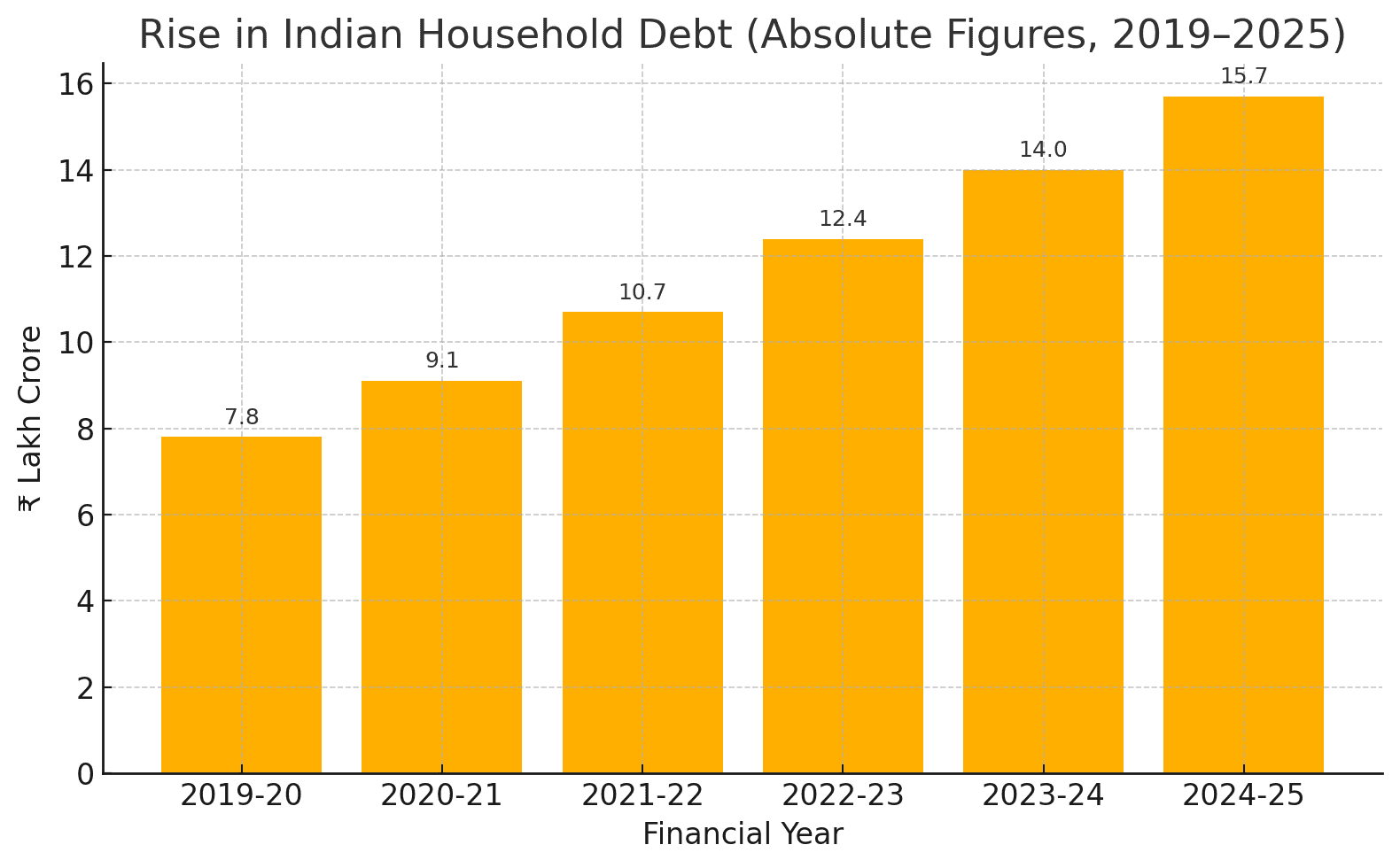
Rise in Indian Household Debt (Absolute Figures, 2019–2025).png
Detailed Insights:
- The increasing debt indicates potential financial strain on households, possibly due to increased spending or decreased income.
- The shift towards mutual funds suggests a growing awareness of diverse investment options among Indian households.
- While bank deposits remain the primary savings destination, the rise of mutual funds indicates changing investment preferences.
- The decrease in the share of currency investments reflects a move towards more formal financial instruments.
- The RBI data highlights the need to monitor household financial health and promote sustainable financial planning.
- The increase in financial liabilities as a percentage of GDP indicates a potential risk to the overall economic stability.
Key Concepts Involved:
- Financial Assets: Resources like savings, investments, and property that are expected to provide future benefits.
- Financial Liabilities: Obligations like loans, credit card debt, and mortgages that require future payments.
- Gross Domestic Product (GDP): The total monetary or market value of all the finished goods and services produced within a country’s borders in a specific time period.

SuperKalam is your personal mentor for UPSC preparation, guiding you at every step of the exam journey.
Download the App


STUDY RESOURCES
CONTACT US
ⓒ Snapstack Technologies Private Limited