GS 3: EconomyGS 2: GovernanceGS 3: Science & TechnologyPrelims
How insurance regulator aims to curb tricky dark patterns, Pg16
IRDAI launches major crackdown on 'dark patterns' and mis-selling in insurance, commissioning a nine-month study to boost consumer trust.
Practice MCQs
782 Students attempted
Key Highlights:
- The Insurance Regulatory and Development Authority of India (IRDAI) is taking steps to curb "dark patterns" and mis-selling in the insurance industry.
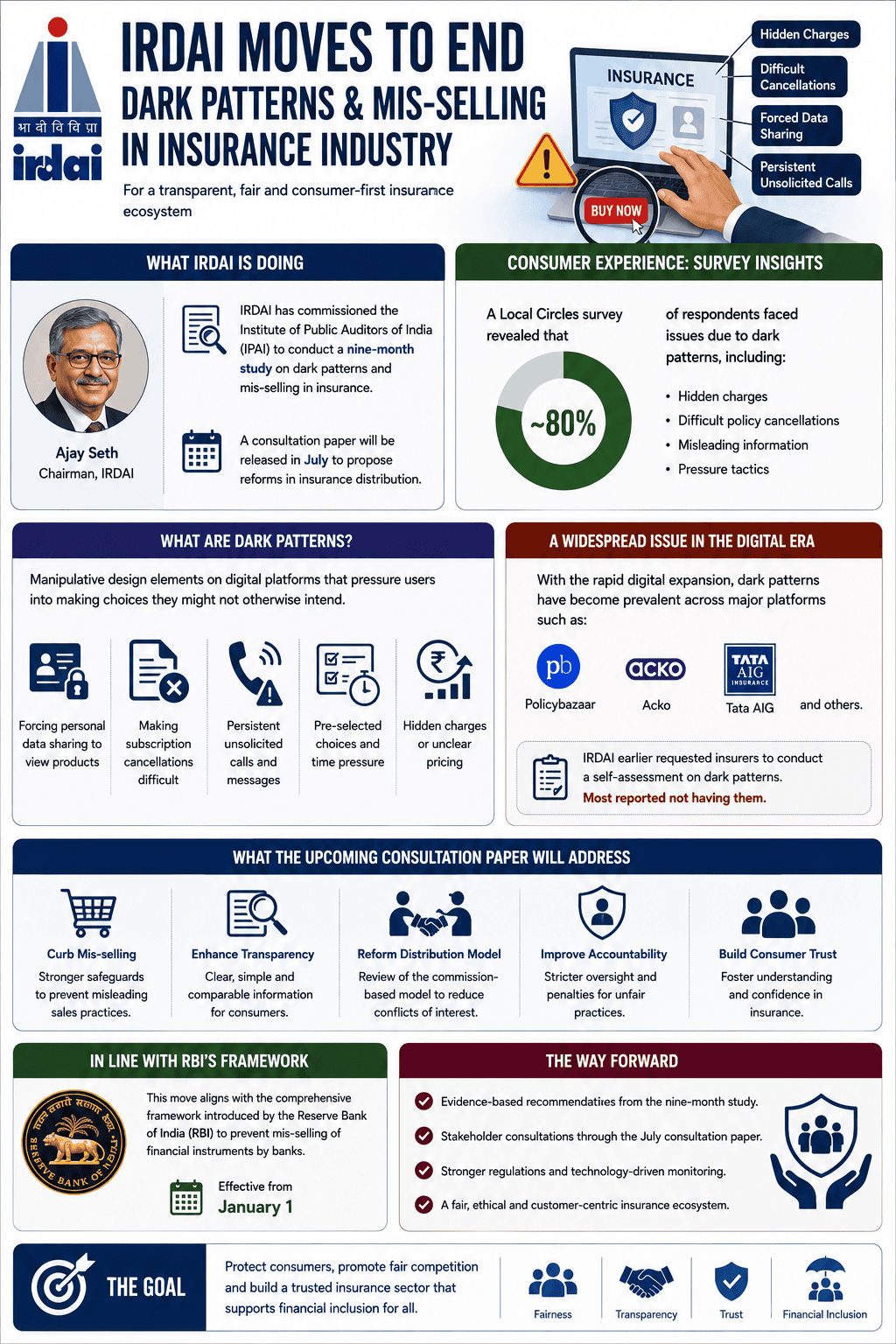
- IRDAI Chairman Ajay Seth has commissioned the Institute of Public Auditors of India to conduct a nine-month study on these practices.
- A survey by Local Circles revealed that approximately 80% of respondents encountered issues like hidden charges and difficult policy cancellations due to dark patterns.
- IRDAI plans to release a consultation paper in July to propose reforms in insurance distribution.
Dark Patterns.png
Detailed Insights:
- "Dark patterns" are manipulative design elements on digital platforms that pressure users into making choices they might not otherwise intend.
- Common examples include forcing personal data sharing to view products, making subscription cancellations difficult, and persistent unsolicited calls.
- The issue has become widespread with the digital expansion of the insurance sector, impacting major platforms such as Policybazaar, Acko, and Tata AIG.
- Earlier, IRDAI had requested insurers to conduct a self-assessment on dark patterns, but most reported not having them.
- The upcoming consultation paper is expected to address mis-selling, enhance transparency, and potentially revise the existing commission-based distribution model.
- This move aligns with a comprehensive framework introduced by the Reserve Bank of India (RBI) to prevent mis-selling of financial instruments by banks, effective from January 1.
- The regulator aims to foster greater trust and understanding in financial inclusion for consumers.
Key Concepts Involved:
- Dark Patterns: Deceptive user interface designs that manipulate users into making unintended decisions or sharing data.
- Mis-selling: The practice of selling financial products that are unsuitable for a customer's needs or misrepresenting their features.
- IRDAI: The statutory body in India responsible for regulating and promoting the insurance and re-insurance industries.
- Consultation Paper: A document issued by a regulatory body to solicit feedback from stakeholders on proposed policy changes or new regulations.

SuperKalam is your personal mentor for UPSC preparation, guiding you at every step of the exam journey.
Download the App


STUDY RESOURCES
CONTACT US
ⓒ Snapstack Technologies Private Limited