GS 3: EconomyGS 2: GovernancePrelims
GST revenues up 14% in June amid dependence on imports, Pg1
India's GST revenue surges 14% to ₹1.95 lakh crore in June 2026, driven by 35% import growth, raising concerns over domestic manufacturing reliance.
Practice MCQs
782 Students attempted
Key Highlights:
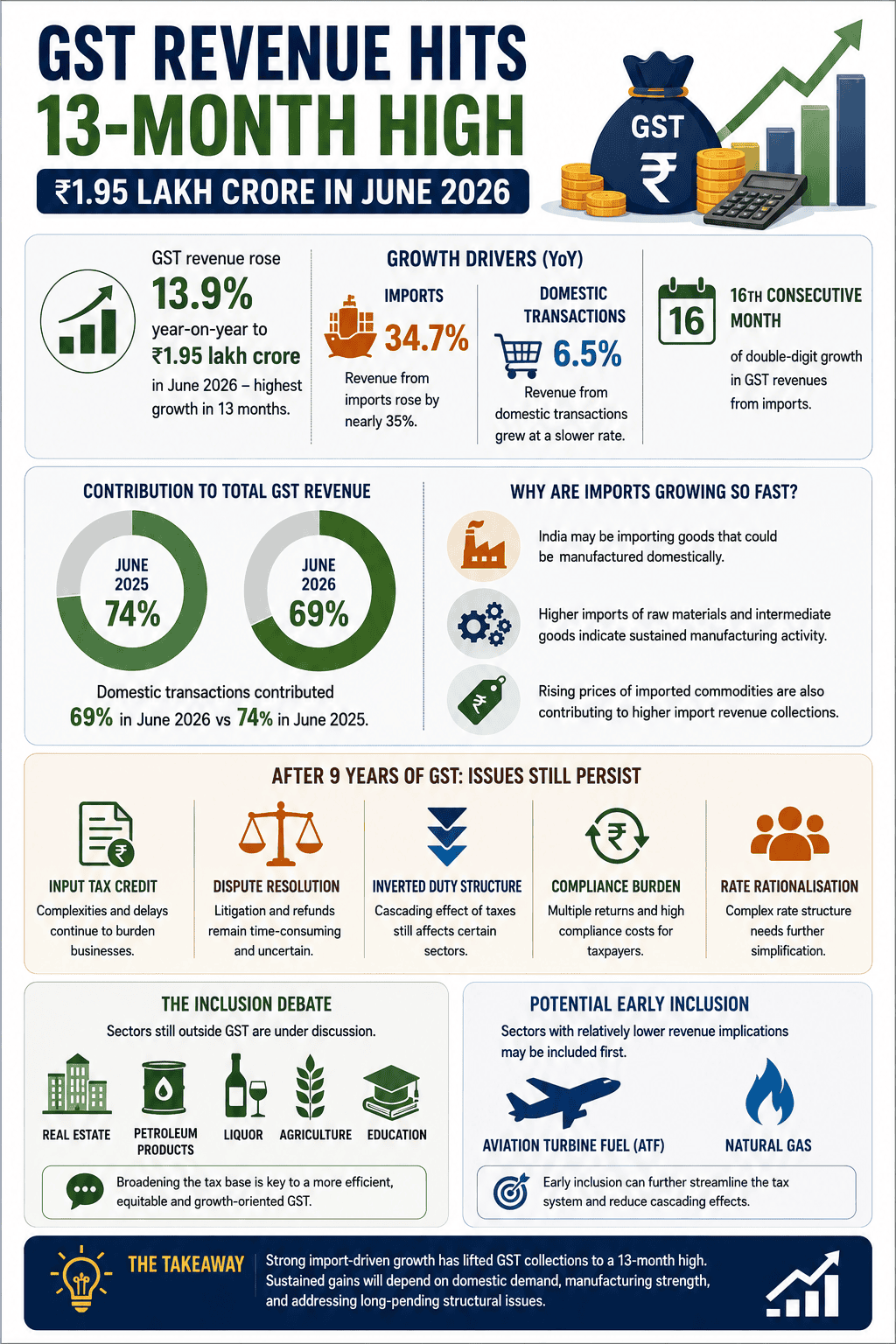
- India's Goods and Services Tax (GST) revenue increased by 13.9% year-on-year to ₹1.95 lakh crore in June 2026, marking the highest growth in 13 months.
- The growth was predominantly driven by imports, with revenue from imports rising by nearly 35%.
- Revenue from domestic transactions grew at a slower rate of 6.5% in the same period.
- This marks the 16th consecutive month where GST revenues from imports have shown double-digit growth.
GST.png
Detailed Insights:
- Domestic transactions contributed 69% of the total GST revenue in June 2026, a decrease from 74% in the previous year.
- Experts suggest that the high growth in import revenues might indicate India is importing goods that could be manufactured domestically.
- Alternatively, the increase in import revenues could reflect higher imports of raw materials and intermediate goods, signaling sustained manufacturing activity.
- Rising prices of imported commodities are also considered a potential factor contributing to the higher import revenue collections.
- After nine years of implementation, experts point to unresolved issues such as Input Tax Credit, dispute resolution, and the inverted duty structure.
- There is an ongoing discussion about including sectors like real estate, petroleum products, liquor, agriculture, and education under the GST regime.
- Aviation Turbine Fuel (ATF) and natural gas are identified as potential candidates for early inclusion into GST due to their relatively lower revenue implications.
Key Concepts Involved:
- Goods and Services Tax (GST): A comprehensive indirect tax levied on the supply of goods and services across India.
- Input Tax Credit (ITC): A mechanism allowing businesses to claim credit for taxes paid on inputs used for output supply.
- Inverted Duty Structure: A situation where the tax rate on inputs is higher than the tax rate on the finished product.

SuperKalam is your personal mentor for UPSC preparation, guiding you at every step of the exam journey.
Download the App


STUDY RESOURCES
CONTACT US
ⓒ Snapstack Technologies Private Limited