GS 2: International RelationsGS 2: PolityGS 2: GovernanceGS 1: Indian Society
China ethnic unity law comes into force despite overseas criticism, Pg14
China's new ethnic unity law, aiming for "shared identity," sparks international outcry from UN and rights groups over potential threats to minority freedoms.
Practice MCQs
782 Students attempted
Key Highlights:
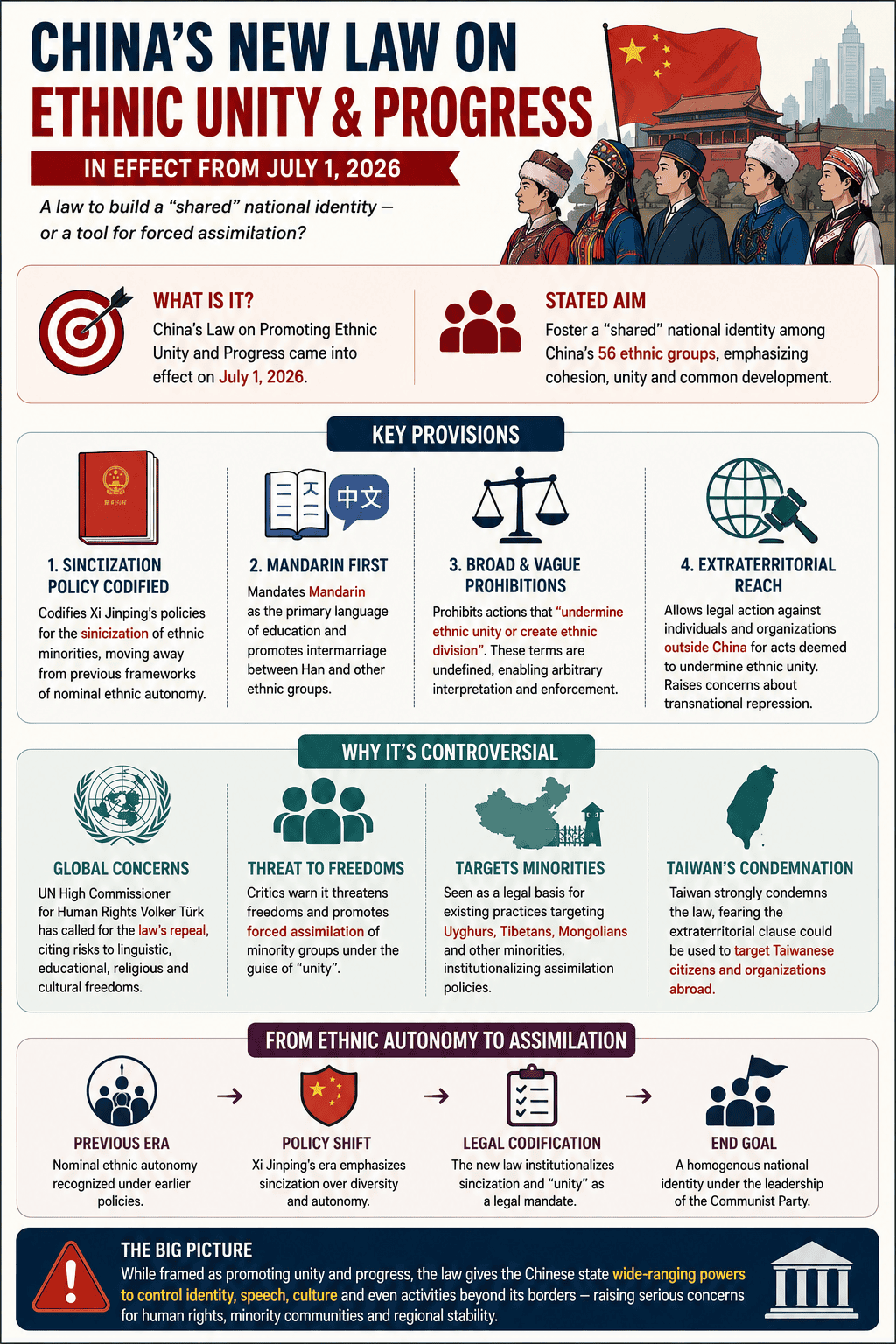
- China's new Law on Promoting Ethnic Unity and Progress officially came into effect on July 1, 2026.
- The law aims to foster a "shared" national identity among China's 56 ethnic groups, emphasizing cohesion and common development.
- Critics, including Taiwan, the United Nations, and various human rights organizations, warn that the law threatens freedoms and promotes forced assimilation of minority groups.
- A key provision allows for legal action against individuals and organizations outside China for acts deemed to undermine ethnic unity, raising concerns about transnational repression.
China Ethinic Unity.png
Detailed Insights:
- The Law on Promoting Ethnic Unity and Progress codifies Xi Jinping's policies for the sinicization of ethnic minorities, moving away from previous frameworks of nominal ethnic autonomy.
- It mandates the use of Mandarin as the primary language of education and promotes intermarriage between the Han majority and other ethnic groups.
- The law broadly prohibits actions that "undermine ethnic unity or create ethnic division," with these terms being largely undefined, leading to concerns about arbitrary enforcement.
- International bodies like the UN High Commissioner for Human Rights Volker Turk have called for the law's repeal, citing risks to linguistic, educational, religious, and cultural freedoms.
- The law is seen as a legal basis for existing practices targeting groups such as Uyghurs, Tibetans, and Mongolians, further institutionalizing policies of forced assimilation.
- Taiwan has expressed strong condemnation, fearing the law's extraterritorial clause could be used to target Taiwanese citizens abroad.
Key Concepts Involved:
- Sinicization: A process of cultural assimilation where non-Han ethnic groups adopt elements of Han Chinese culture, language, and identity.
- Transnational Repression: The practice by authoritarian governments of reaching beyond their borders to silence dissent among their diaspora and exiles.
- Ethnic Autonomy: A system where ethnic minority regions are granted a degree of self-governance, often including rights to use their own language and culture.

SuperKalam is your personal mentor for UPSC preparation, guiding you at every step of the exam journey.
Download the App


STUDY RESOURCES
CONTACT US
ⓒ Snapstack Technologies Private Limited