GS 2: Social JusticeGS 3: Science & TechnologyGS 2: GovernanceGS 1: Indian Society
The FemTech industry’s approach to PMOS, Pg7
FemTech industry redefines PMOS treatment in India, addressing gaps in conventional healthcare, but faces challenges in accessibility and scalability.
Practice MCQs
775 Students attempted
Key Highlights:
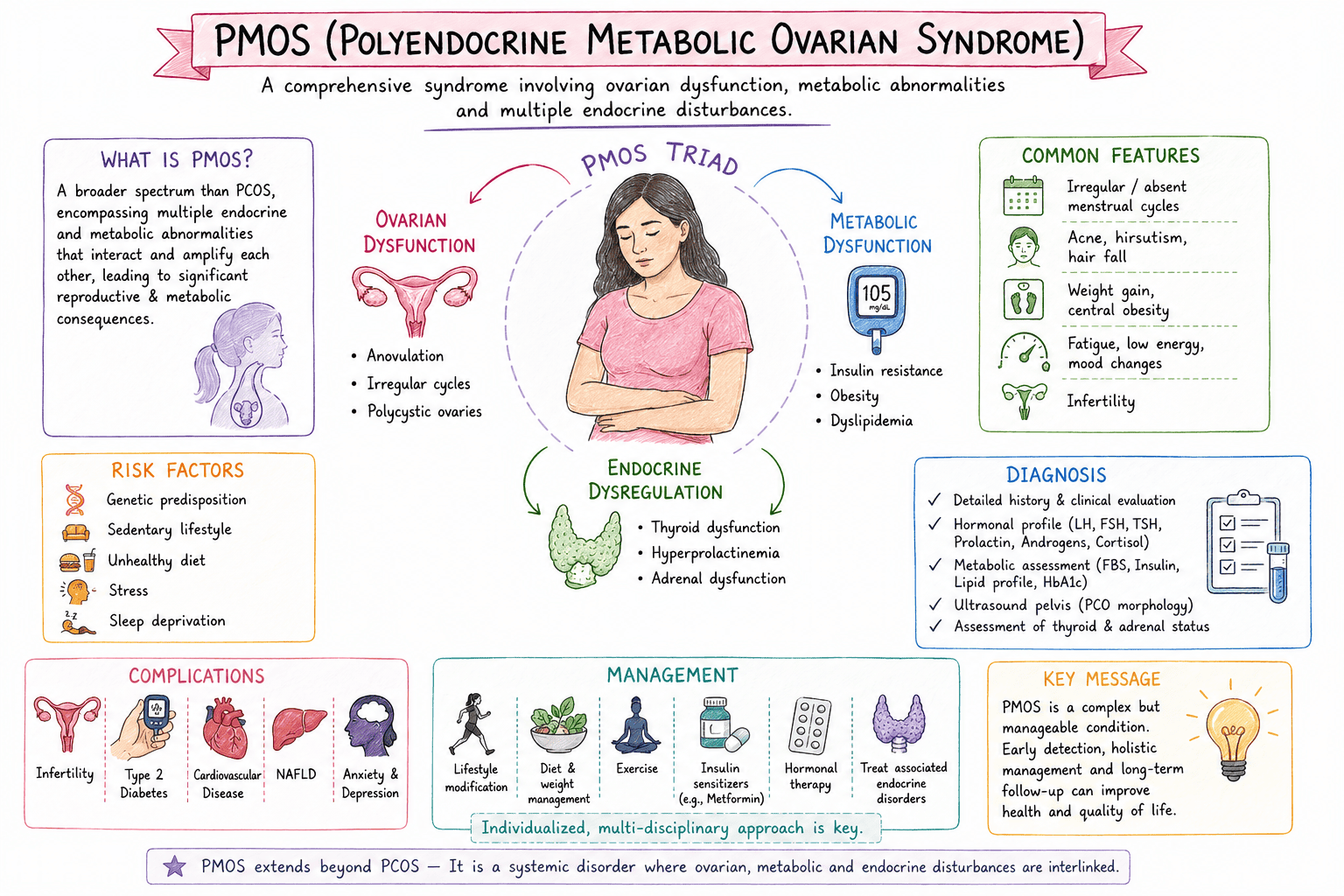
- Polycystic Ovary Syndrome (PCOS) has been renamed Polyendocrine Metabolic Ovarian Syndrome (PMOS), a change published in The Lancet and led by Professor Helena Teede.
- The renaming acknowledges the multisystem nature of the condition, which includes endocrine, metabolic, reproductive, psychological, and dermatological symptoms.
- India's FemTech industry had already begun treating PCOS as a multisystem condition, offering integrated care packages.
- As of 2025, India’s FemTech market was estimated to be worth $1.48 billion.
PMOS.png
Detailed Insights:
- The rationale for renaming PCOS to PMOS was due to the original term's failure to capture the condition’s complexity, reducing it to a reproductive disorder.
- FemTech platforms in India provide integrated care packages, addressing gaps in conventional healthcare by including various specialists and focusing on long-term management.
- These platforms improve doctor-patient interactions by training gynaecologists to avoid prejudiced language and offering digital consultations for greater privacy.
- Reliance on FemTech creates vulnerabilities due to dependence on internet access, subscription costs, and investor confidence, disproportionately affecting urban, digitally savvy women.
- The long-term solution requires investment in public healthcare infrastructure and medical education, moving beyond a narrow, fertility-first framework.
- Broader environmental factors like adulterated food, pollution, chronic stress, and toxins should be considered in discussions around PMOS.
Key Concepts Involved:
- FemTech: Technology-based products and services focused on women's health.
- Integrated Care: A coordinated approach to healthcare involving multiple specialists.
- Public Health Infrastructure: The systems, resources, and facilities necessary for maintaining and improving population health.

SuperKalam is your personal mentor for UPSC preparation, guiding you at every step of the exam journey.
Download the App


STUDY RESOURCES
CONTACT US
ⓒ Snapstack Technologies Private Limited