GS 3: Environment & EcologyPrelims
Gir lion deaths not alarming but flag need for multiple populations, Pg9
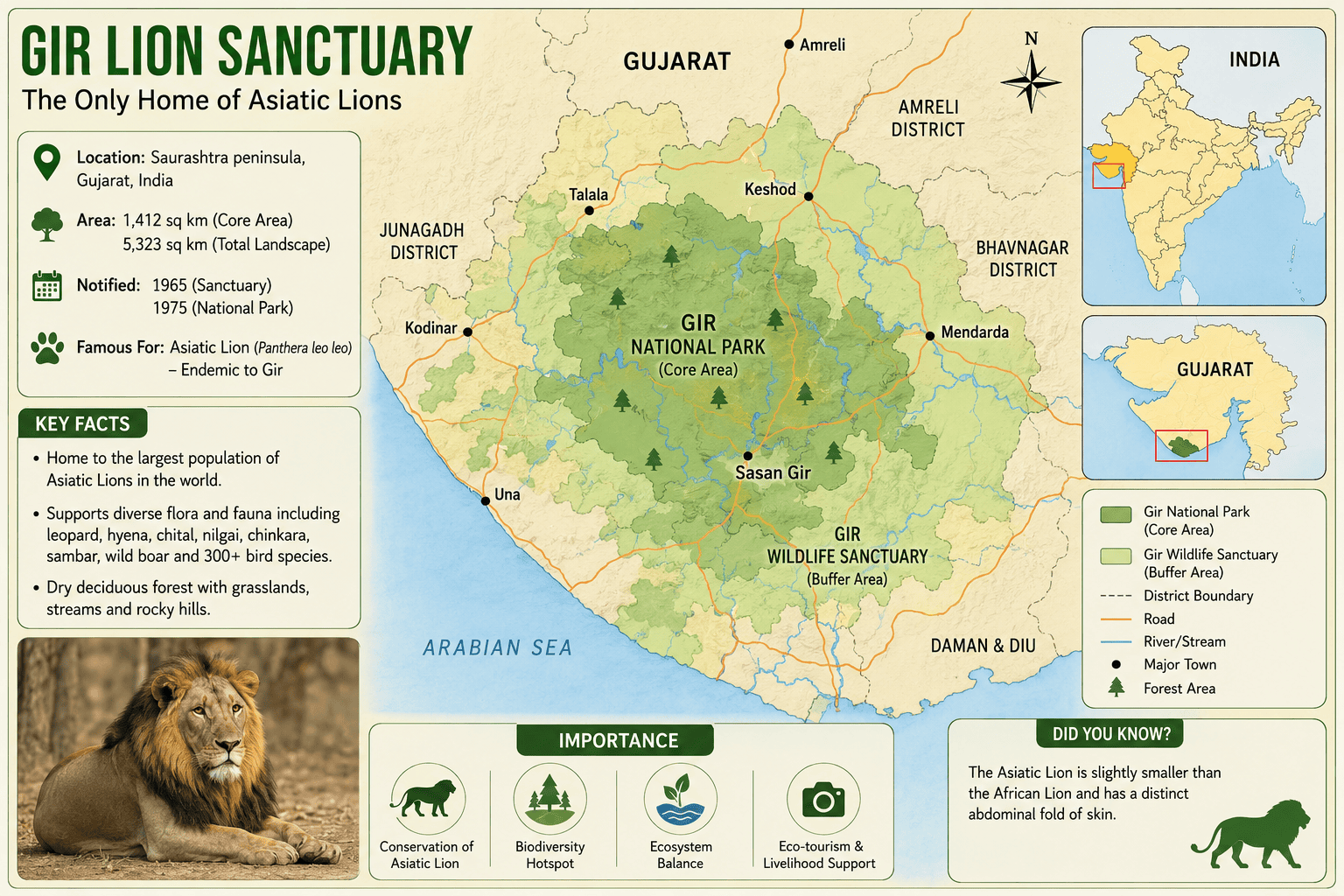
Babesiosis outbreak in Gujarat's Gir raises concerns about Asiatic lion conservation and need for multiple populations to mitigate extinction risks.
Practice MCQs
775 Students attempted
Key Highlights:
- Eight lions, including cubs, in Gujarat's Gir region have died due to suspected Babesiosis infection.
- The Babesia parasite, transmitted by ticks, is the suspected cause.
- The Forest Department has isolated lions within a 10-km radius of affected areas in Gir Somnath and Amreli districts.
- Wildlife scientist Yadvendradev V Jhala suggests that such deaths are not alarming but highlight the need for multiple lion populations.
Gir.png
Detailed Insights:
- Babesiosis is a tick-borne parasitic infection; lions can contract it from ticks infected with the Babesia parasite.
- Domestic livestock and wild ungulates like chital and nilgai can act as asymptomatic reservoirs of Babesia.
- Babesia acts similarly to malaria, infecting and rupturing red blood cells, leading to symptoms like lethargy, anaemia, enlarged spleen, and high fever.
- Asiatic lions are genetically compromised due to a historical bottleneck, making them more vulnerable to disease outbreaks.
- Establishing multiple, unconnected populations of Asiatic lions across their historic range would mitigate the risk of extinction from epidemics.
- The only exclusive space for Asiatic lions is a 250 sq km national park in Gir, while tigers have much larger human-free spaces in multiple reserves.
Scientific/Technical Concepts Involved:
- Babesiosis: A tick-borne parasitic infection caused by the Babesia parasite, affecting red blood cells.
- Asymptomatic Reservoir: Hosts that carry a pathogen without showing symptoms, acting as a source of infection.
- Genetic Bottleneck: A sharp reduction in the size of a population due to environmental events or human activities, leading to reduced genetic diversity.

SuperKalam is your personal mentor for UPSC preparation, guiding you at every step of the exam journey.
Download the App


STUDY RESOURCES
CONTACT US
ⓒ Snapstack Technologies Private Limited