GS 3: Environment & EcologyGS 2: GovernancePrelims
Rare whales in the way of Trump’s oil drilling plan, PgII
Trump's oil drilling plan threatens rare Rice's whales in Gulf of Mexico, risking extinction and endangering other marine species.
Practice MCQs
761 Students attempted
Key Highlights:
- The Trump administration aims to expand oil and gas drilling in the Gulf of Mexico, potentially endangering the Rice's whale, a critically endangered species.
- Rice's whales, recognized as a distinct species in 2021, are particularly vulnerable due to their limited population (less than 100) and habitat in the Gulf.
- The Endangered Species Committee granted an exemption to endangered species laws, sought by U.S. Defence Secretary Pete Hegseth, citing national security due to rising energy prices amid the Iran war.
- The 2010 Deepwater Horizon oil spill significantly impacted the Rice's whale population, and further drilling poses additional threats like vessel strikes, noise pollution, and climate change.
Detailed Insights:
- Rice's whales are the only whale species living year-round in the Gulf of Mexico, inhabiting a small area in the northeastern part of the water body.
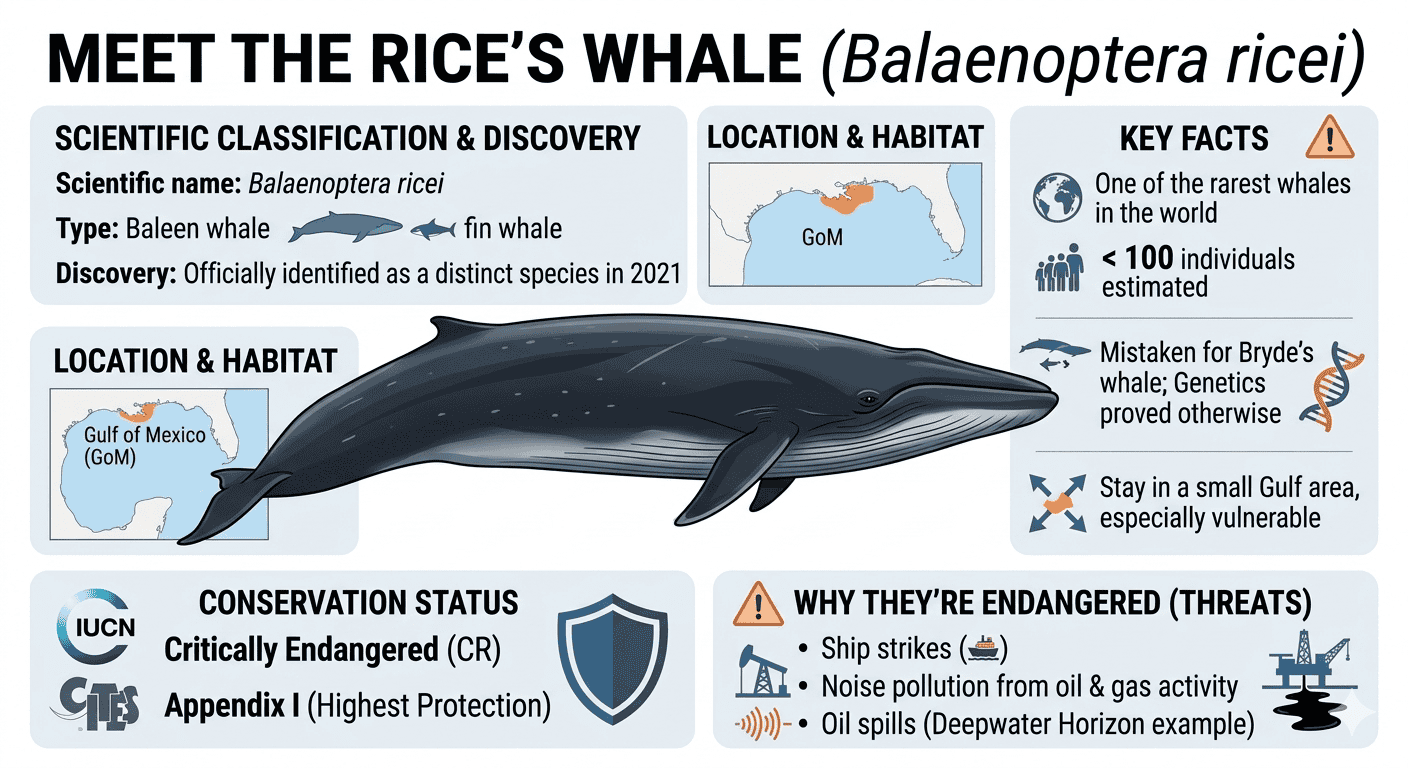
Rice's whale
- Other endangered species like manatees and sea turtles, including Kemp's Ridley and loggerheads, also face increased risks from potential oil spills and habitat disruption due to expanded drilling.
- Climate change impacts are already affecting the Rice's whale population, and the proposed drilling expansion compounds immediate and long-term risks to the species and its habitat.
Key Concepts Involved:
- Endangered Species Act: A law protecting critically endangered plants and animals.
- Endangered Species Committee: A committee that can provide exemptions to the Endangered Species Act.
- Oil Spill: Release of crude oil into the environment, usually the ocean.
Previous18/18

SuperKalam is your personal mentor for UPSC preparation, guiding you at every step of the exam journey.
Download the App


STUDY RESOURCES
CONTACT US
ⓒ Snapstack Technologies Private Limited