GS 3: EconomyGS 2: GovernancePrelims
Data doubts, Pg8
India's industrial output hits 5.1% in May 2026, but MoSPI's opaque data methodology changes and core sector discrepancies spark serious doubts.
Practice MCQs
775 Students attempted
Key Highlights:
- India's Index of Industrial Production (IIP) recorded a five-month high growth of 5.1% in May 2026.
- The manufacturing sector grew by 5.5% in May, contributing significantly to the overall industrial output.
- The Ministry of Statistics and Programme Implementation (MoSPI) updated its methodology, replacing the Wholesale Price Index (WPI) with the Producer Price Index (PPI) as a deflator for some sectors.
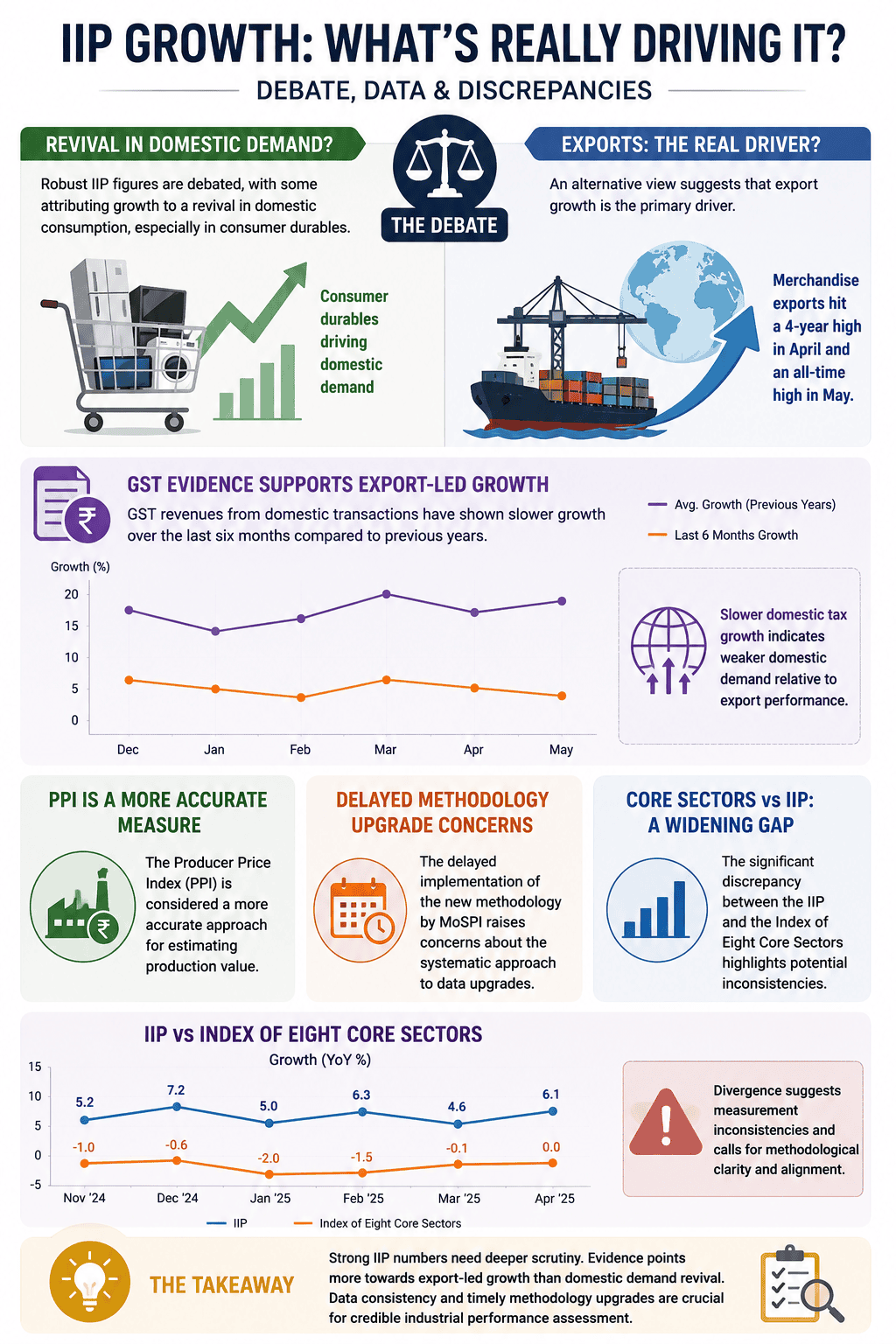
- This strong IIP growth contrasts with the Index of Eight Core Sectors, which showed its second-lowest growth in 21 months during the same period.
IIP.png
Detailed Insights:
- The robust IIP figures are debated, with some attributing growth to a revival in domestic consumption, particularly in consumer durables.
- An alternative view suggests that export growth is the primary driver, as merchandise exports hit a four-year high in April and an all-time high in May.
- GST revenues from domestic transactions have shown slower growth over the last six months compared to previous years, supporting the export-led growth argument.
- The adoption of the Producer Price Index (PPI) is considered a more accurate approach for estimating production value.
- The delayed implementation of the new methodology by MoSPI raises concerns about the systematic approach to data upgrades.
- The significant discrepancy between the IIP and the Index of Eight Core Sectors highlights potential inconsistencies in measuring industrial performance.
Key Concepts Involved:
- Index of Industrial Production (IIP): A composite indicator that measures the short-term changes in the volume of production of a basket of industrial products.
- Wholesale Price Index (WPI): Measures the average change in the prices of commodities at the wholesale level, used as a deflator for economic data.
- Producer Price Index (PPI): Measures the average change over time in the selling prices received by domestic producers for their output.
- Index of Eight Core Sectors: Represents the output of eight fundamental industries, accounting for a significant portion of the IIP.

SuperKalam is your personal mentor for UPSC preparation, guiding you at every step of the exam journey.
Download the App


STUDY RESOURCES
CONTACT US
ⓒ Snapstack Technologies Private Limited