GS 3: EconomyPrelims
Rupee defence to liquidity: RBI earned over Rs 4 lakh cr in FY26, spent a third of it, Pg16
RBI's FY26 income surges to ₹4.28 lakh crore driven by rupee defence, bond yields, and forex transactions.
Practice MCQs
768 Students attempted
Key Highlights:
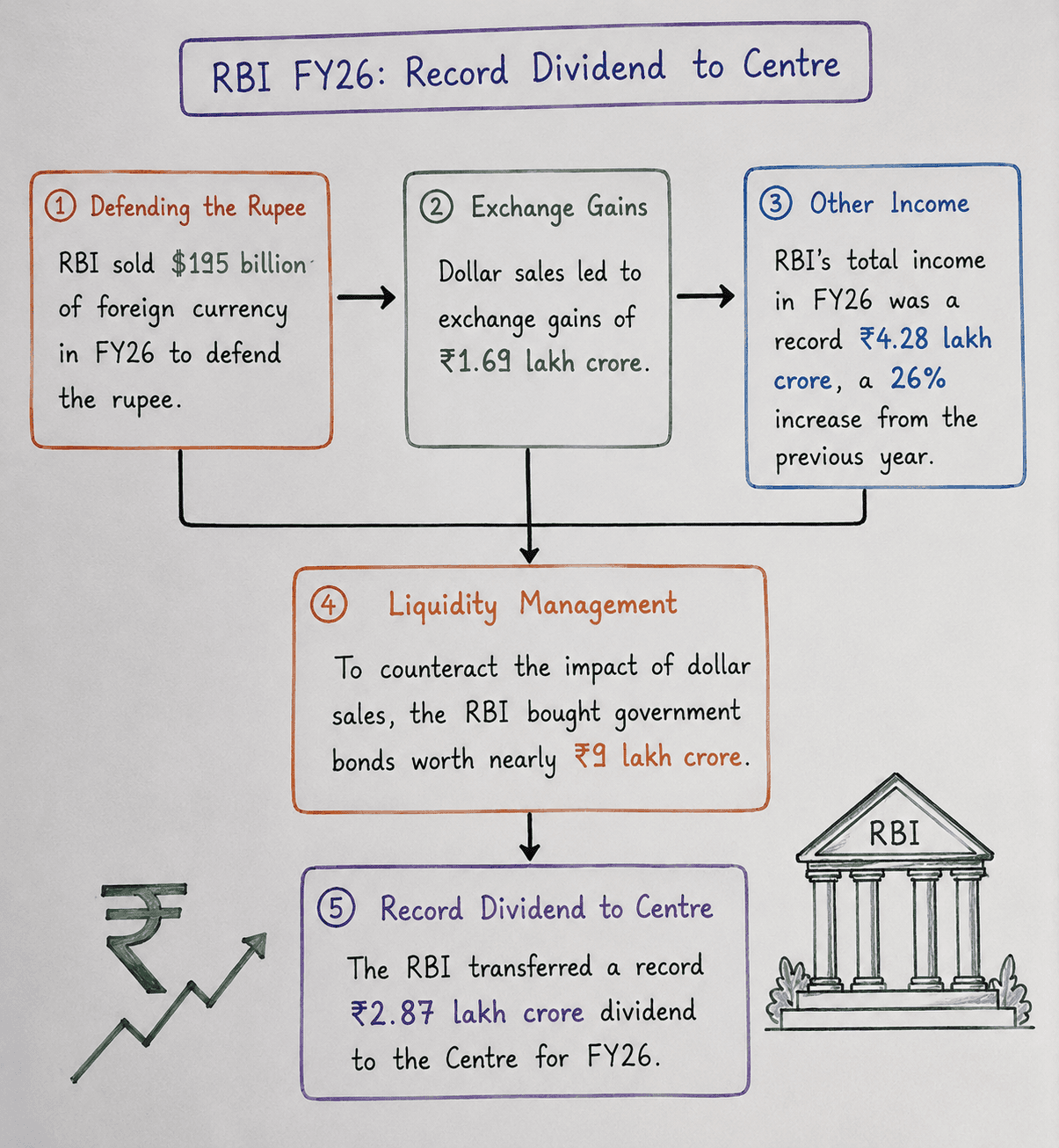
- The Reserve Bank of India (RBI) transferred a record Rs 2.87 lakh crore dividend to the Centre for FY26.
- RBI's total income in FY26 was a record Rs 4.28 lakh crore, a 26% increase from the previous year.
- The RBI sold $195 billion of foreign currency in FY26 to defend the rupee, leading to exchange gains of Rs 1.69 lakh crore.
- To counteract the impact of dollar sales, the RBI bought government bonds worth nearly Rs 9 lakh crore.
RBI.png
Detailed Insights:
- The RBI's primary objective is to ensure liquidity, manage foreign exchange reserves, and maintain market order, which generates revenue.
- In FY26, the rupee fell by 10% against the US dollar due to factors like tariffs, wars, and increased gold and silver imports.
- Selling dollars by the RBI reduces rupee liquidity, which can raise interest rates; to avoid this, the RBI infuses rupees by buying government bonds.
- The RBI's income includes interest on foreign securities (Rs 1.08 lakh crore) and foreign deposits (Rs 27,407 crore).
- Major expenditures for the RBI include printing currency (Rs 4,875 crore), employee costs (Rs 10,136 crore), and provisions for potential losses (Rs 1.09 lakh crore).
- The Contingent Risk Buffer was reduced from 7.5% to 6.5% of the balance sheet to manage provision requirements.
Key Concepts Involved:
- Liquidity: The availability of liquid assets to a market or company.
- Foreign Exchange Reserves: Assets held by a central bank in foreign currencies.
- Repo Rate: The rate at which the central bank lends money to commercial banks against the security of government securities.

SuperKalam is your personal mentor for UPSC preparation, guiding you at every step of the exam journey.
Download the App


STUDY RESOURCES
CONTACT US
ⓒ Snapstack Technologies Private Limited