GS 3: EconomyPrelims
Iran war: Agrochemicals stress and inflation worry, Pg19
Iran war threatens India's agrochemical supply, potentially raising fertilizer and pesticide costs, impacting crop yields and food prices.
Practice MCQs
754 Students attempted
Key Highlights:
- As of March 1, 2026, India has ample wheat (23.6 million tonnes) and milled rice (36.5 million tonnes) stocks in government warehouses.
- A surplus monsoon in 2025 has led to increased planting of rabi crops like wheat, mustard, maize, and chana.
- The Iran War has disrupted imports of fertilisers and raw materials from the Gulf Cooperation Council (GCC) countries.
- Prices of imported ammonia, sulphur, and DAP (Di-ammonium phosphate) have significantly increased due to the war.
- The war is causing supply chain disruptions for naphtha, a key feedstock for agrochemicals, potentially increasing production costs.
Detailed Insights:
- India's current food stock situation is comfortable due to good harvests and existing reserves, similar to the respite provided by agriculture during the 2020 COVID-19 pandemic.
- Favorable weather conditions, including rains from western disturbances, have benefited the wheat crop, allowing for better grain filling and higher yields.
- Disruption in fertiliser imports could impact the upcoming kharif season, necessitating recalibration of nutrient-based subsidy rates.
- Maximizing domestic production of complex fertilisers and SSP (Single Super Phosphate), along with promoting balanced fertilisation, is crucial.
- The agrochemical industry faces challenges due to increased costs of raw materials like naphtha and packaging materials, potentially affecting crop protection and food prices.
Key Concepts Involved:
- Rabi Crops: Crops sown in winter and harvested in the spring.
- Kharif Crops: Crops sown in monsoon and harvested in the autumn.
- Nutrient-Based Subsidy: A subsidy scheme by the government to provide fertilizers at affordable rates.
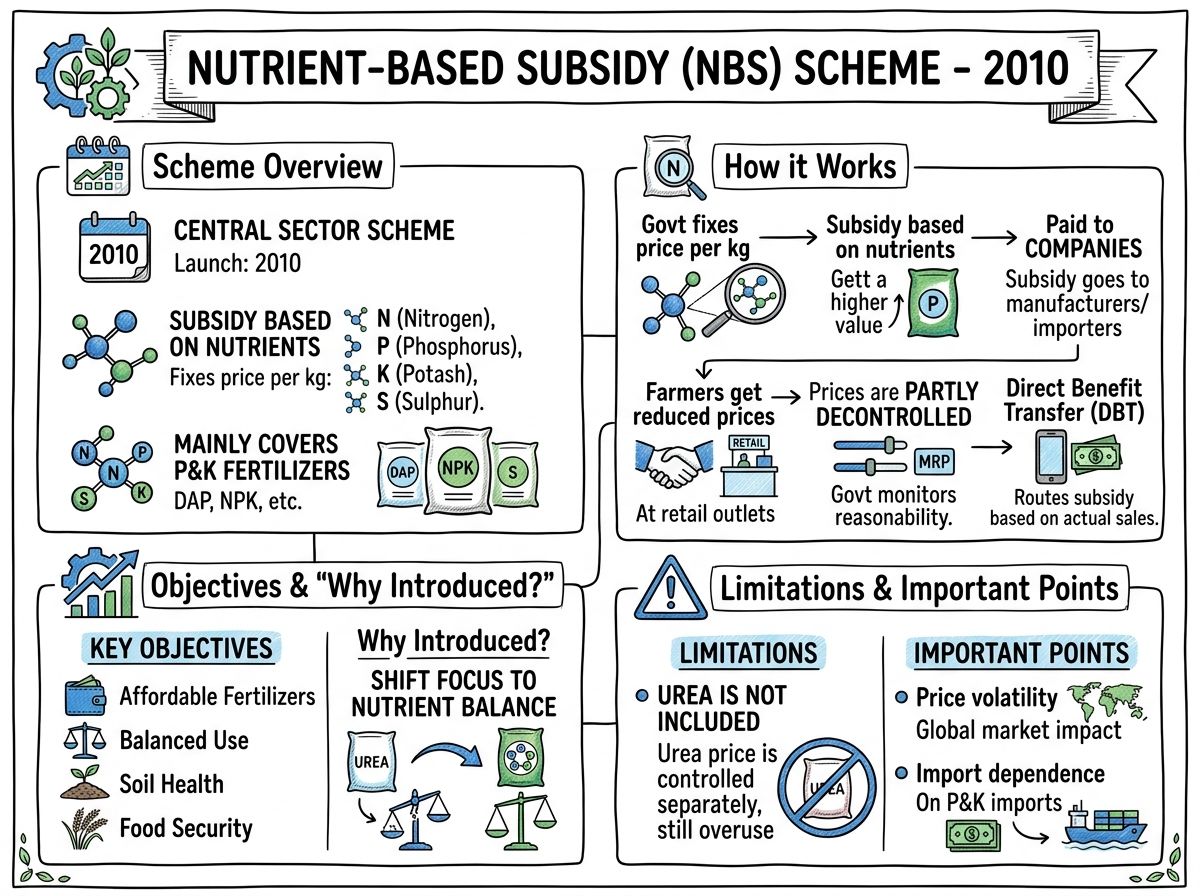
Nutrient Based Subsidy scheme
Previous20/20

SuperKalam is your personal mentor for UPSC preparation, guiding you at every step of the exam journey.
Download the App


STUDY RESOURCES
CONTACT US
ⓒ Snapstack Technologies Private Limited