GS 1: Physical GeographyGS 3: Environment & EcologyPrelims
El Nino might occur after July; a clear picture will emerge after April: IMD, Pg11
IMD forecasts potential El Nino development post-July, raising concerns about monsoon rainfall, with clearer predictions expected in April.
Practice MCQs
739 Students attempted
Key Highlights:
- The India Meteorological Department (IMD) forecasts a potential El Nino development after July.
- ENSO-neutral conditions are expected to continue until July.
- Climate models indicate a greater than 50% chance of El Nino after June, rising to nearly 70% during July-September.
- Below-normal rainfall is expected in most parts of India during February, with higher temperatures, except in southern regions.
Detailed Insights:
- El Nino, characterized by warming of the central equatorial Pacific, is often associated with weaker monsoon rainfall in India; the last global El Nino was in 2023-24.
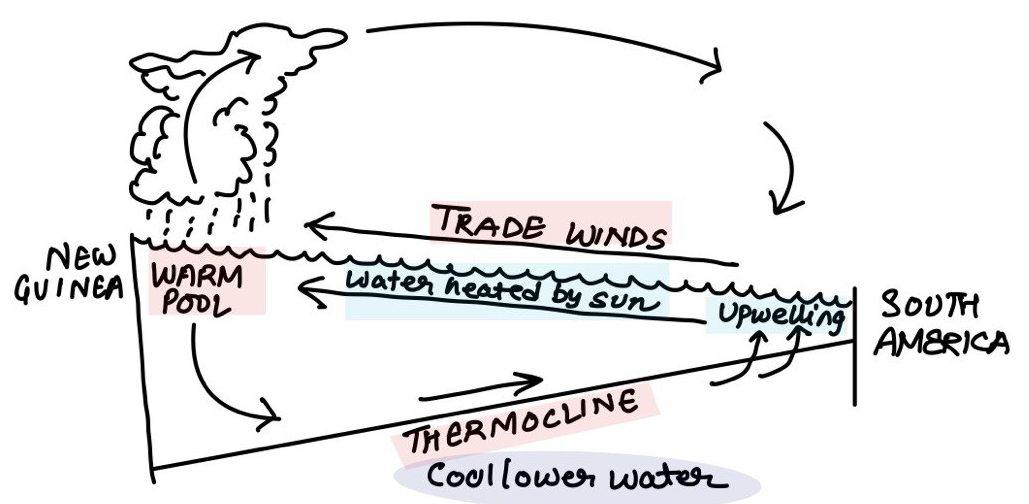
IMAGE 2026-02-01 08:07:34.jpg
- La Nina is the opposite of El Nino, marked by cooling of the Pacific Ocean, and both are cyclical phenomena impacting global weather patterns.
- Early climate models suggest a possible El Nino in 2026, increasing the risk of a sub-par monsoon and potential drought conditions across India.
- Forecasts made in April are generally more accurate than those in February and March, providing a clearer picture of the El Nino's development.
Key Concepts Involved:
- El Nino: Warming of the central equatorial Pacific Ocean, often linked to weaker monsoon rainfall in India.
- La Nina: Cooling of the central equatorial Pacific Ocean, the opposite of El Nino, impacting global weather.
- ENSO-neutral: A state where neither El Nino nor La Nina conditions are present in the Pacific Ocean.

SuperKalam is your personal mentor for UPSC preparation, guiding you at every step of the exam journey.
Download the App


STUDY RESOURCES
CONTACT US
ⓒ Snapstack Technologies Private Limited