PLI Scheme Impact Assessment by NITI Aayog: Achievements and Challenges
NITI Aayog and IIM Ahmedabad's mid-course report on all 14 PLI schemes: investment, production, jobs, disbursal and the challenges, explained for UPSC.
Nov, 2026
•5 min read
Context
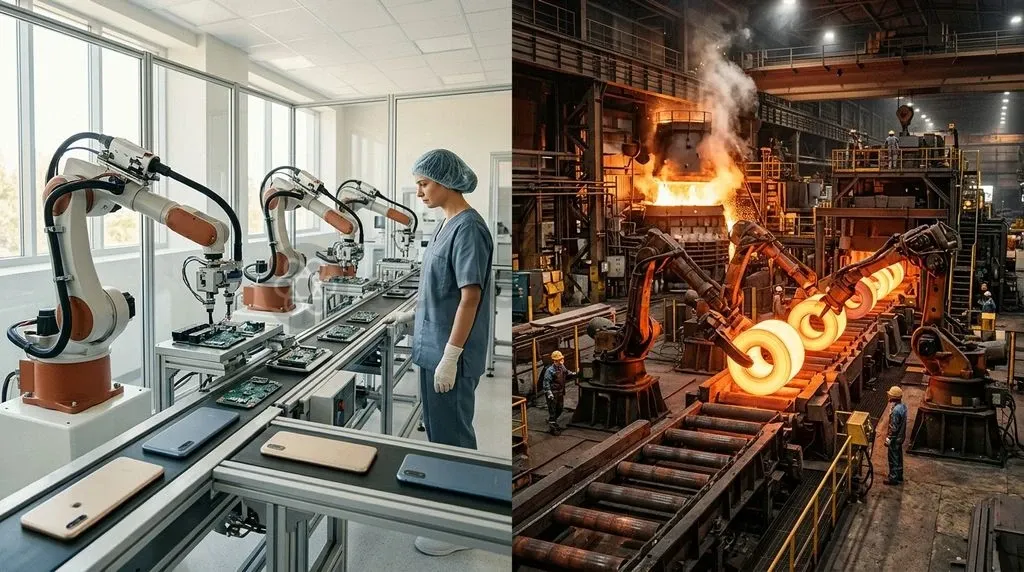
India's Production Linked Incentive push across 14 manufacturing sectors reveals a sharp divide. High-volume electronics assembly and pharmaceuticals scaled rapidly. In contrast, textiles and specialty steel have used less than 4% of their budgets, according to the report.
According to NITI Aayog's mid-course assessment, cumulative disbursements stood at ₹35,354 crore as of March 2026, representing approximately 18.51% of the evaluated outlay. Private capital commitments met 76% of aggregate investment targets, but physical job creation reached only 28% of full-tenure projections.
Why in the News: Inside NITI Aayog's Performance Review of PLI
NITI Aayog, alongside IIM Ahmedabad, evaluated the Production Linked Incentive schemes, which have a total approved outlay of ₹1.91 lakh crore, across 14 sectors. The assessment probed whether output subsidies successfully diversified India's manufacturing base or merely accelerated quick assembly.
- Fiscal Disbursal: Cumulative incentive disbursals reached ₹35,354 crore as of March 2026, representing approximately 18.51% of the evaluated outlay.
- Capital Outlay: Industry responded with actual cumulative investments of ₹2.40 lakh crore, reaching 76% of the ₹3.15 lakh crore full-tenure target.
- Labour Absorption: The policy generated 8.49 lakh direct jobs, achieving only 28% of its employment target of 30.19 lakh.
Discuss with Superkalam
What percentage of the total Rs 1.91 lakh crore PLI outlay had been disbursed to manufacturers by March 2026?
Ask NowThe Divergence: Fast Starters vs Sluggish Sectors Across 14 PLI Schemes
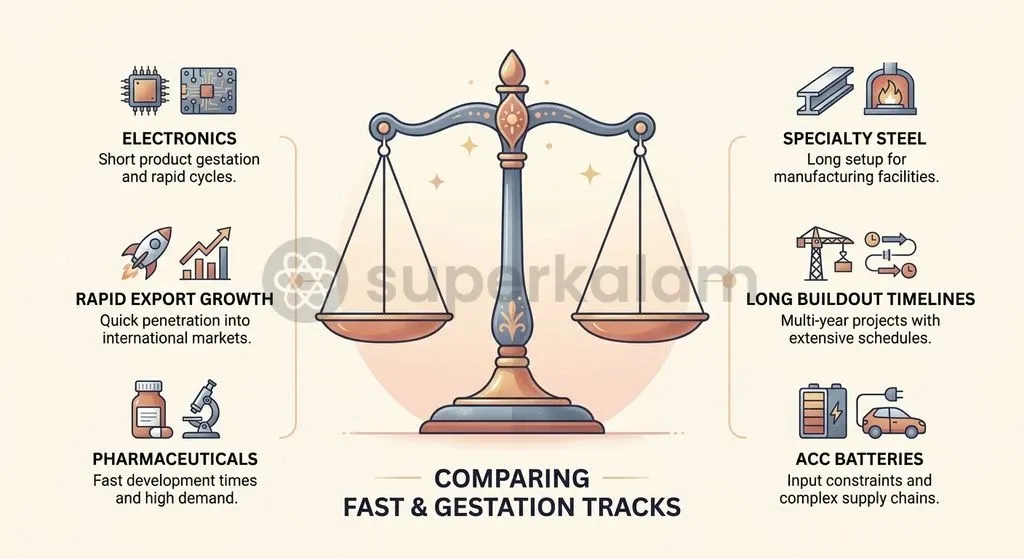
NITI Aayog found that roughly 70% of targeted PLI segments are broadly on track, with the strongest outcomes in electronics, telecom and pharmaceuticals.
- Large-Scale Electronics: Mobile exports rose nearly nine-fold to ₹2 lakh crore in FY2025 and mobile imports fell 77%.
- Bulk Drugs: A trade deficit of ₹1,930 crore (FY2021-22) became a surplus of ₹2,280 crore (FY2024-25), with 55,000 MT capacity across 26 critical APIs.
- Textiles and Apparel: Suffered low fund utilisation of just 3.61%, constrained by rigid turnover requirements and high capital expenditure entry bars.
- Specialty Steel: The scheme covers 67 applicants across 21 sub-categories, but frequent policy revisions, implementation delays and production below expectations remain key concerns.
Discuss with Superkalam
Why do high-volume electronics assembly lines scale faster under output subsidies than capital-intensive upstream industries like specialty steel?
Ask NowThe Success Engine: How Global Supply Chains Lifted Electronics and Pharma
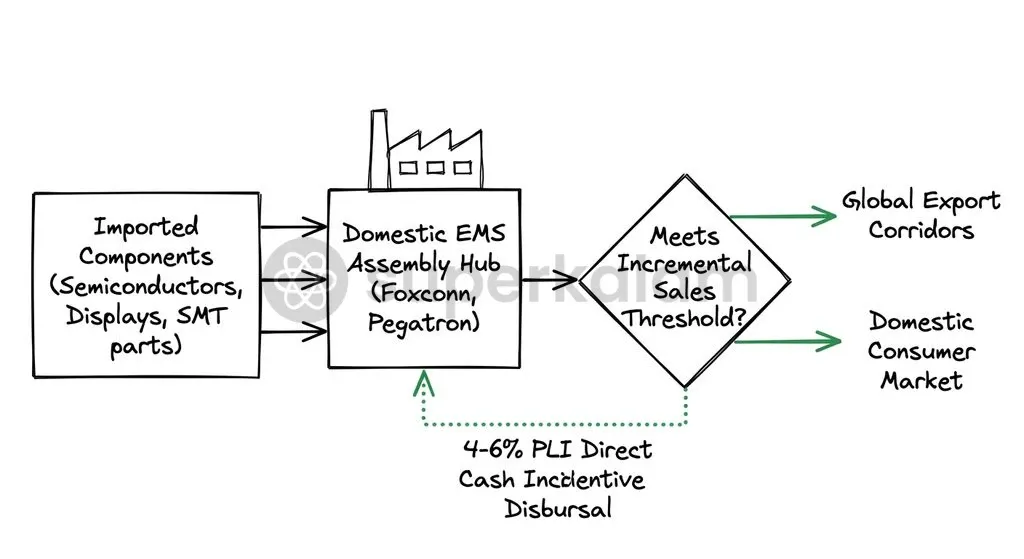
- Electronics Volume: Participating enterprises invested ₹20,580.20 crore, nearly triple the initial ₹7,000 crore commitment, generating cumulative production worth ₹11,61,505 crore. Mobile phone production has risen 33 times to ₹6.27 lakh crore, and India is now the second-largest mobile manufacturer by volume.
- Pharmaceuticals: Under the ₹15,000-crore Pharmaceuticals PLI scheme, cumulative investment stood at ₹46,744 crore and cumulative production/sales at ₹4,02,869 crore as of 30 June 2026.
- Bulk Drugs and Devices: Under the dedicated Bulk Drugs initiative, PIB reports first-time domestic manufacturing of 191 bulk drugs. This support helped India turn an API trade deficit of ₹1,930 crore in FY 2021-22 into a net trade surplus of ₹2,280 crore by FY 2024-25.
The Bottlenecks: Why High Capex and Local Sourcing Stalled Textiles, Specialty Steel, and Battery Cells
Textiles and specialty steel have used less than 4% of their budgets, according to the NITI Aayog report, which says the steel scheme's design "has been faulty". The sections below list the textile issues the report identifies.
The textile sector faced regulatory design hurdles alongside raw material constraints:
- Low Scheme Utilisation: The PLI Scheme for Textiles registered a fund utilisation rate of just 3.61%.
- Restrictive Eligibility: High eligibility thresholds and rigid HSN codes partly explain the low utilisation.
Discuss with Superkalam
How can policymakers apply lessons from the Bulk Drugs trade turnaround to reverse import dependencies in other lagging manufacturing segments?
Ask NowBeyond Output: The Debate Over Assembly, Domestic Value Addition, and Jobs
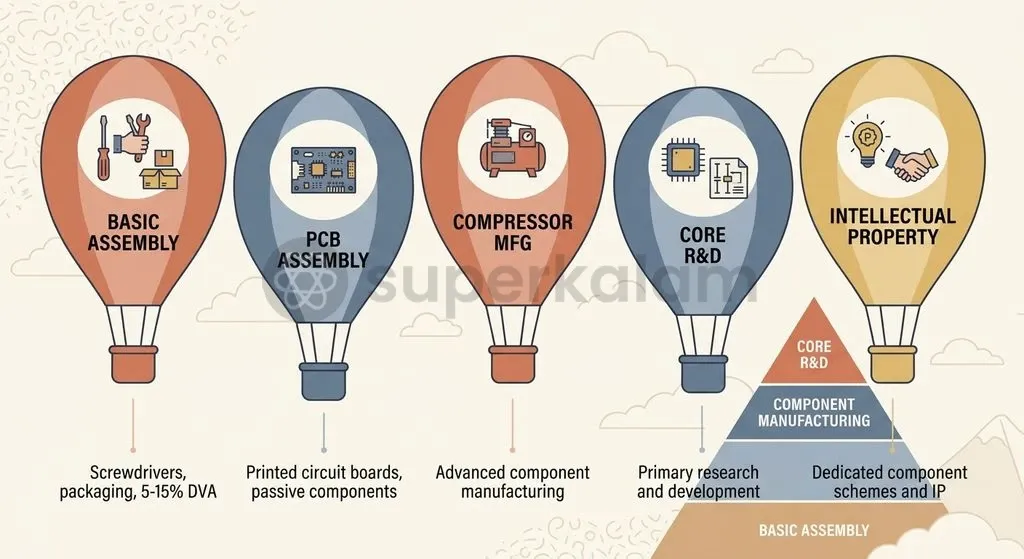
Domestic value addition is uneven across sectors. In white goods, domestic value addition rose from 20 per cent to 55 per cent by March 2026. The report lists limited domestic value addition among the key challenges.
Job creation metrics highlight another major policy challenge. While cumulative investments reached 76% of multi-year targets, aggregate employment hit only 28% of projections. Modern advanced manufacturing relies primarily on automated, capital-intensive methods rather than absorbing large volumes of industrial labour.
Course Correction: How NITI Aayog Plans to Redesign Disbursals and Milestones
NITI Aayog said it will review each scheme to see how it can be improved. The report points to the need for demand, local supply chains and Centre-State coordination.
Discuss with Superkalam
Analyse the structural factors that caused actual capital investments to reach 76% of targets while direct job creation attained only 28%.
Ask NowWay Forward: Moving from Output Subsidies to Deep Industrial Ecosystems
The report's key challenges are low employment generation, limited domestic value addition and uneven sector performance. Strengthening demand, local supply chains and Centre-State coordination is the way forward it identifies.
Discuss with Superkalam
Evaluate whether shifting from finished-good output subsidies to local supply-chain infrastructure is necessary for sustainable industrial growth.
Ask NowKey Takeaways
- Low Disbursal: By March 2026, cumulative PLI disbursements reached ₹35,354 crore (18.51% of the ₹1.91 lakh crore outlay). Incentives are paid only after investment and production conditions are met.
- The Investment-Jobs Divergence: While actual investments reached ₹2.40 lakh crore (76% of the full-tenure target), direct employment hit only 8.49 lakh jobs (28% of the projected 30.19 lakh target), reflecting the capital intensity of modern industry.
- Electronics and Pharma Success: Electronics, telecom and pharma are the strongest sectors. Bulk Drugs turned an API trade deficit of ₹1,930 crore (FY2021-22) into a surplus of ₹2,280 crore (FY2024-25).
- Structural Bottlenecks: Textiles and specialty steel have used less than 4% of their budgets.
- Way Forward: Demand, local supply chains and Centre-State coordination.
Mains Question
"While India's Production Linked Incentive (PLI) scheme has catalysed private capital commitments, the resultant divergence between investment realization and direct employment generation exposes structural limits of modern manufacturing." Critically analyse. (15 Marks)
Evaluate NowMains Question
Evaluate the role of the Production Linked Incentive (PLI) scheme in transforming trade profiles in high-technology and critical sectors such as pharmaceuticals and mobile electronics. (10 Marks)
Evaluate NowPractice MCQs
QUESTION 1
Regarding the mid-course assessment of the Production Linked Incentive (PLI) schemes conducted by NITI Aayog and IIM Ahmedabad, consider the following statements: 1. Cumulative incentive disbursements under the evaluated schemes stood at approximately 18.51% of the total approved outlay by March 2026. 2. Actual private capital investment commitments met more than 70% of the aggregate full-tenure target. 3. Physical direct employment generation exceeded 50% of the projected 30.19 lakh jobs. Which of the statements given above are correct?
QUESTION 2
Consider the following statements regarding sectoral performance under the Production Linked Incentive (PLI) schemes: 1. The dedicated Bulk Drugs initiative assisted India in turning an API trade deficit into a net trade surplus by FY 2024-25. 2. In the white goods segment, domestic value addition increased from 20 per cent to 55 per cent by March 2026. 3. The PLI Scheme for Textiles registered a fund utilisation rate exceeding 50% due to relaxed eligibility thresholds. Which of the statements given above is/are correct?
QUESTION 3
With reference to the Large-Scale Electronics Manufacturing and Pharmaceuticals PLI schemes, consider the following statements: 1. Mobile phone production expanded 33 times to reach Rs 6.27 lakh crore. 2. Under the Bulk Drugs scheme, domestic manufacturing of 191 bulk drugs was achieved for the first time. 3. Mobile phone imports declined by 77% alongside an expansion in export volumes. Which of the statements given above are correct?
QUESTION 4
According to the NITI Aayog evaluation of the Production Linked Incentive schemes, which of the following pairs of sectors experienced severe bottlenecks resulting in budget utilisation rates below 4%?
QUESTION 5
Consider the following statements regarding the structural outcomes of India's PLI framework: 1. A key divergence revealed by the evaluation is the lag between capital investment targets achieved (76%) and direct job creation targets reached (28%). 2. In specialty steel, all 67 selected applicants have met planned production schedules ahead of milestones. Which of the statements given above is/are correct?
Related Blogs

Pannun Case: Hague Service Convention Article 19 and Section 29 CPC on Service of Foreign Summons
Nov, 2026
•4 min read

Siddi Tribe of Gujarat: PVTG Status, Origin and Scheduled Tribe Classification
Nov, 2026
•4 min read

IRF Ban Extended Under UAPA: Unlawful Association, Section 3 and 6 Explained
Nov, 2026
•4 min read


