GS 2: GovernanceGS 3: Science & TechnologyGS 2: Social JusticePrelimsGS 2: Government policies and interventions for development in various sectors
Typhoid Control Needs More Vaccine, Less Antibiotic, Pg11
Amidst rising typhoid cases, India must prioritize vaccination, improved diagnostics, and responsible antibiotic use to combat growing antimicrobial resistance.
Practice MCQs
818 Students attempted
Key Highlights:
- Typhoid cases are increasing in India, raising concerns about inappropriate and broad-spectrum antibiotic use.
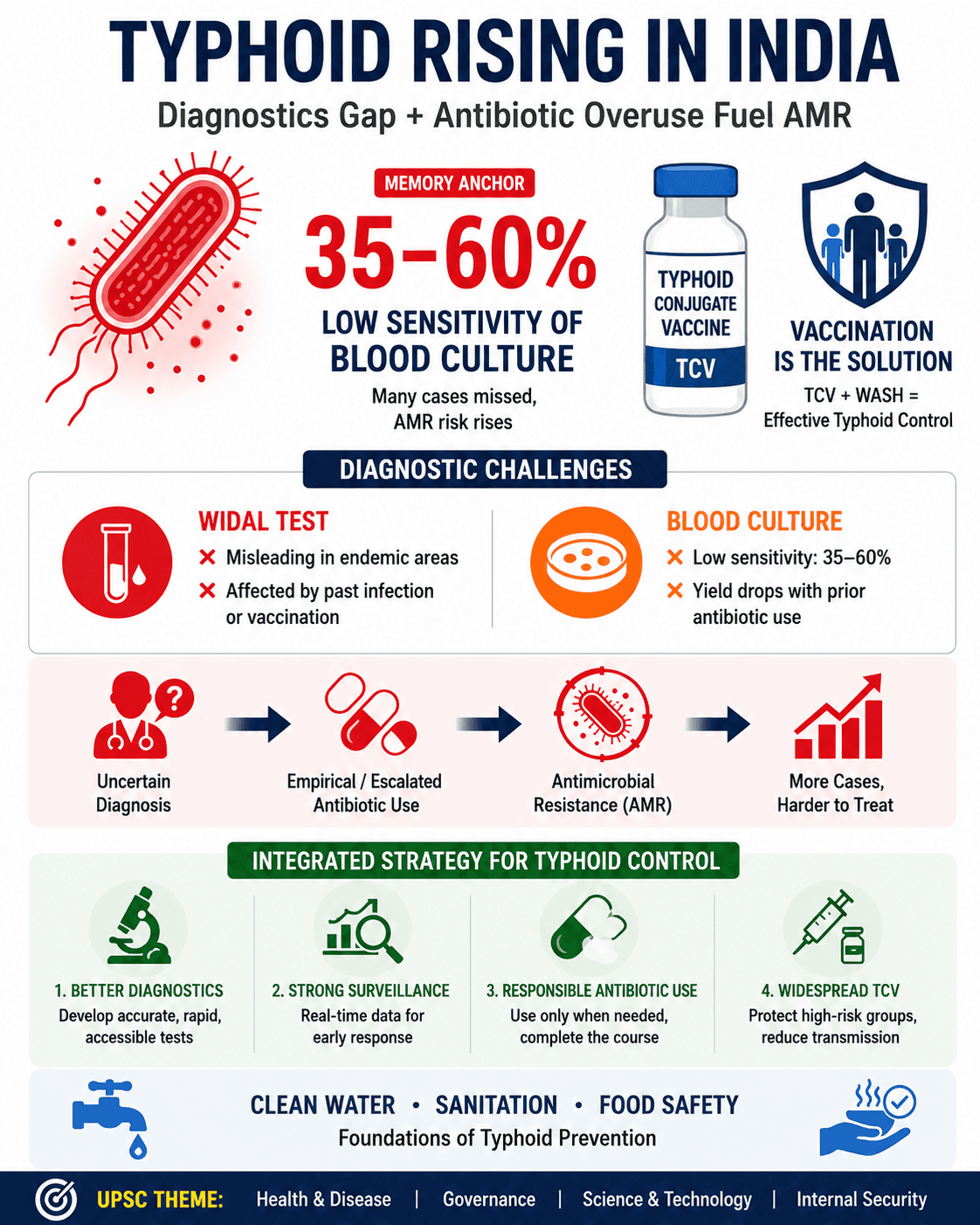
- The disease is vaccine-preventable, but current diagnostic methods like the Widal test and blood culture have significant limitations.
- This diagnostic challenge often leads to empirical treatment, contributing to the growing problem of Antimicrobial Resistance (AMR), particularly for Salmonella Typhi.
- India has the manufacturing capability for WHO-prequalified Typhoid Conjugate Vaccines (TCV), including Typbar-TCV.
- An integrated strategy focusing on better diagnostics, stronger surveillance, responsible antimicrobial use, and widespread vaccination is crucial for effective typhoid control.
Typhoid.jpg
Detailed Insights:
- The absence of a simple, reliable, and accessible diagnostic test is a fundamental problem in managing typhoid in India.
- The Widal test is often misinterpreted in endemic regions due to background antibodies and previous exposure or vaccination.
- Blood culture, while a conventional standard, has low sensitivity (35-60%) and its yield is significantly reduced by prior antibiotic use.
- This diagnostic gap often results in clinicians escalating or changing antibiotics without microbiological confirmation, thereby fueling AMR.
- India is a high-burden country where the WHO prioritizes the introduction of Typhoid Conjugate Vaccine (TCV) to combat high disease burden and AMR levels.
- Vaccination should be viewed as an integral part of a comprehensive typhoid-control strategy, complementing improvements in clean water, sanitation, and food safety.
- Strengthened surveillance is essential for systematically documenting suspected and culture-confirmed cases, AMR patterns, and prior antibiotic exposure.
- Investment in rapid, point-of-care diagnostic tests is crucial to improve diagnostic stewardship and reduce the reliance on empirical antibiotic treatment.
Key Concepts Involved:
- Antimicrobial Resistance (AMR): The ability of microorganisms to resist the effects of an antimicrobial drug to which they were once sensitive.
- Typhoid Conjugate Vaccine (TCV): A vaccine that offers longer-lasting immunity and can be administered to younger children, including infants.
- Widal test: A serological test used to detect antibodies against Salmonella Typhi and Paratyphi in blood samples.
- Blood culture: A laboratory test performed to detect the presence of bacteria or other microorganisms in a blood sample.

SuperKalam is your personal mentor for UPSC preparation, guiding you at every step of the exam journey.
Download the App


STUDY RESOURCES
CONTACT US
ⓒ Snapstack Technologies Private Limited