GS 1: World GeographyGS 2: International RelationsGS 3: EconomyPrelimsGS 3: Infrastructure: Energy, Ports, Roads, Airports, Railways etc.
Can China restrain Iran? Gulf states test Beijing's influence, Pg16
Amidst escalating conflict, Gulf states seek China's economic influence over Iran to protect vital energy routes, challenging Beijing's diplomatic role.
Practice MCQs
811 Students attempted
Key Highlights:
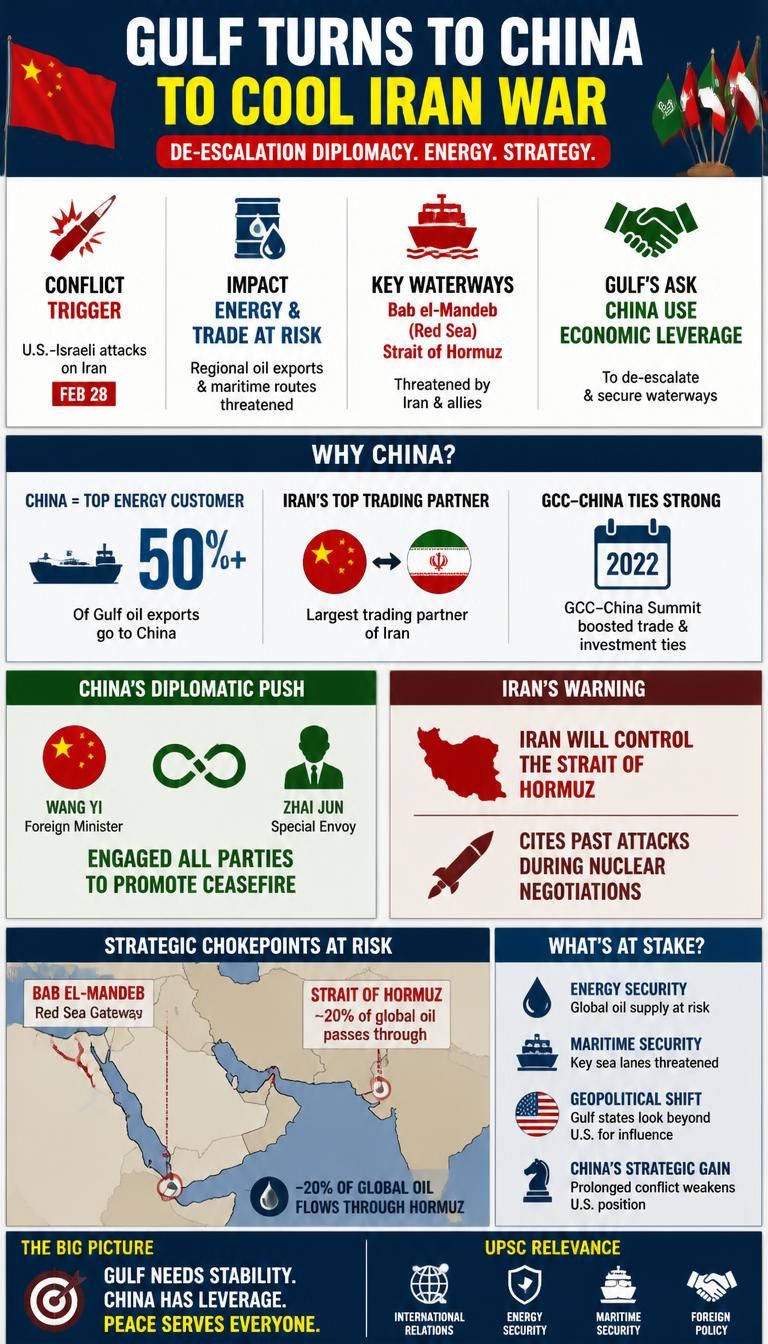
- Gulf Arab states are urging China to use its economic leverage to de-escalate the escalating Iran war and secure key waterways.
- The conflict, which began with U.S.-Israeli attacks on Iran on February 28, has impacted regional energy exports and threatened maritime routes.
- Iran and its allies have threatened the Bab el-Mandeb waterway in the Red Sea and the Strait of Hormuz.
- China's Foreign Minister Wang Yi and special envoy Zhai Jun have engaged in diplomatic efforts with all parties to promote a ceasefire.
China in Gulf.jpg
Detailed Insights:
- Gulf states are increasingly looking to China, rather than the United States, to exert influence over Tehran.
- This shift is driven by growing frustration among Gulf nations regarding the limitations of American power in the region.
- China holds a significant position as a major buyer of oil from the entire Gulf region and is Iran's largest trading partner.
- The Gulf Cooperation Council (GCC) states have developed close trade and investment ties with China since a 2022 summit.
- A prolonged conflict in the region could potentially serve China's interests by increasing pressure on the United States.
- Iran maintains that it will control the Strait of Hormuz, citing past attacks during nuclear program negotiations.
Key Concepts Involved:
- Strait of Hormuz: A narrow, strategically important waterway connecting the Persian Gulf to the Arabian Sea, crucial for global oil shipments.
- Bab el-Mandeb: A strait located between Yemen on the Arabian Peninsula and Djibouti and Eritrea in the Horn of Africa, connecting the Red Sea to the Gulf of Aden.
- Gulf Cooperation Council (GCC): A regional intergovernmental political and economic union consisting of all Arab states of the Persian Gulf, except Iraq.

SuperKalam is your personal mentor for UPSC preparation, guiding you at every step of the exam journey.
Download the App


STUDY RESOURCES
CONTACT US
ⓒ Snapstack Technologies Private Limited