GS 2: GovernanceGS 3: EconomyPrelimsGS 3: Indian Economy, Planning, Mobilization of Resources, Growth, Development and EmploymentGS 3: Major Crops, Cropping Patterns and Irrigation Systems
Why did the Centre reduce import duty on edible oils?, Pg10
Centre slashes import duty on crude edible oils to curb rising prices ahead of festive season, balancing consumer relief with farmer concerns.
Practice MCQs
818 Students attempted
Key Highlights:
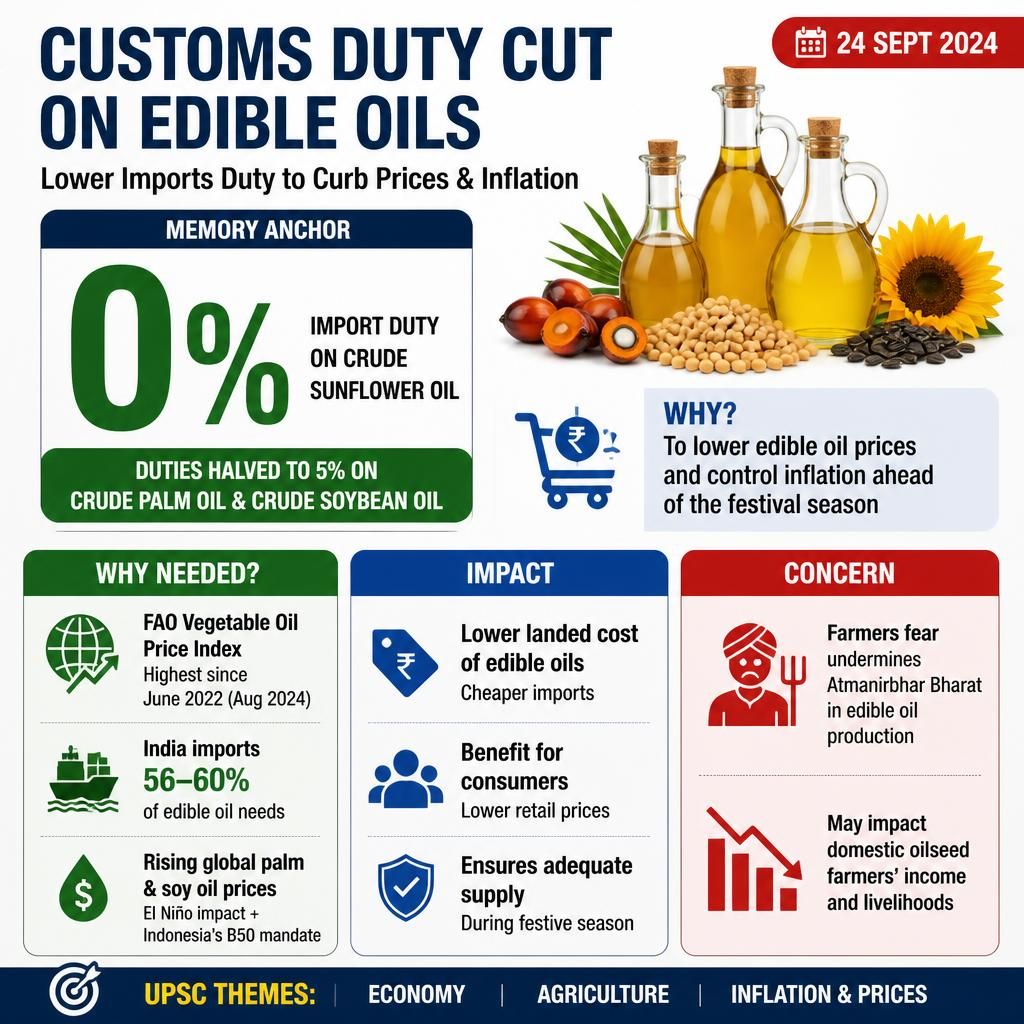
- The Union Government reduced Basic Customs Duty (BCD) on major imported crude edible oils, including palm oil, soybean oil, and sunflower oil, on September 24.
- This decision aims to moderate domestic edible oil prices and control inflation ahead of the festival season.
- The FAO Vegetable Oil Price Index reached its highest level since June 2022 in August, driven by rising palm and soy oil prices.
- Crude sunflower oil now has zero BCD, while crude soybean oil and crude palm oil duties were halved to 5%.
- The move is expected to benefit consumers and ensure adequate supply, but has raised concerns among domestic oilseed farmers.
Custom Duty Cut.jpg
Detailed Insights:
- India relies heavily on edible oil imports, meeting approximately 56-60% of its domestic demand through foreign sources.
- The reduction in import duties is intended to lower the landed cost of edible oils, thereby reducing retail prices for consumers.
- International palm oil prices have been increasing due to robust global demand and concerns over El Niño weather conditions impacting production in Southeast Asia.
- Indonesia's implementation of a B50 biofuel mandate is expected to increase domestic palm oil consumption, potentially making palm oil more expensive globally.
- The government's decision aligns with its objective of containing food-price and overall inflationary pressures in the economy.
- Farmers fear that reduced import duties undermine the government's goal of Atmanirbharta (self-reliance) in edible oil production and negatively impact their livelihoods.
- India has initiatives like the National Mission on Edible Oils (NMEO), comprising NMEO-Oil Palm and NMEO-Oilseeds, to boost domestic production and reduce import dependency.
Key Concepts Involved:
- Basic Customs Duty (BCD): A type of tax levied on goods imported into India, aimed at regulating trade and protecting domestic industries.
- FAO Food Price Index: A measure of the monthly change in international prices of a basket of five major food commodity groups, including vegetable oils.
- El Niño: A climate pattern describing the unusual warming of surface waters in the eastern tropical Pacific Ocean, affecting global weather patterns and agricultural yields.
- B50 Biofuel Mandate: A policy requiring diesel fuel to contain 50% palm oil-based biodiesel, implemented by Indonesia to reduce fossil fuel imports.
- Atmanirbharta: The concept of self-reliance, promoted by the Indian government, aiming to reduce dependence on imports across various sectors, including edible oils.

SuperKalam is your personal mentor for UPSC preparation, guiding you at every step of the exam journey.
Download the App


STUDY RESOURCES
CONTACT US
ⓒ Snapstack Technologies Private Limited