GS 2: GovernanceGS 2: International RelationsGS 3: EconomyPrelimsGS 3: Changes in Industrial Policy and Effects on Industrial Growth
US curbs on China cotton drive Indian yarn prices, Pg11
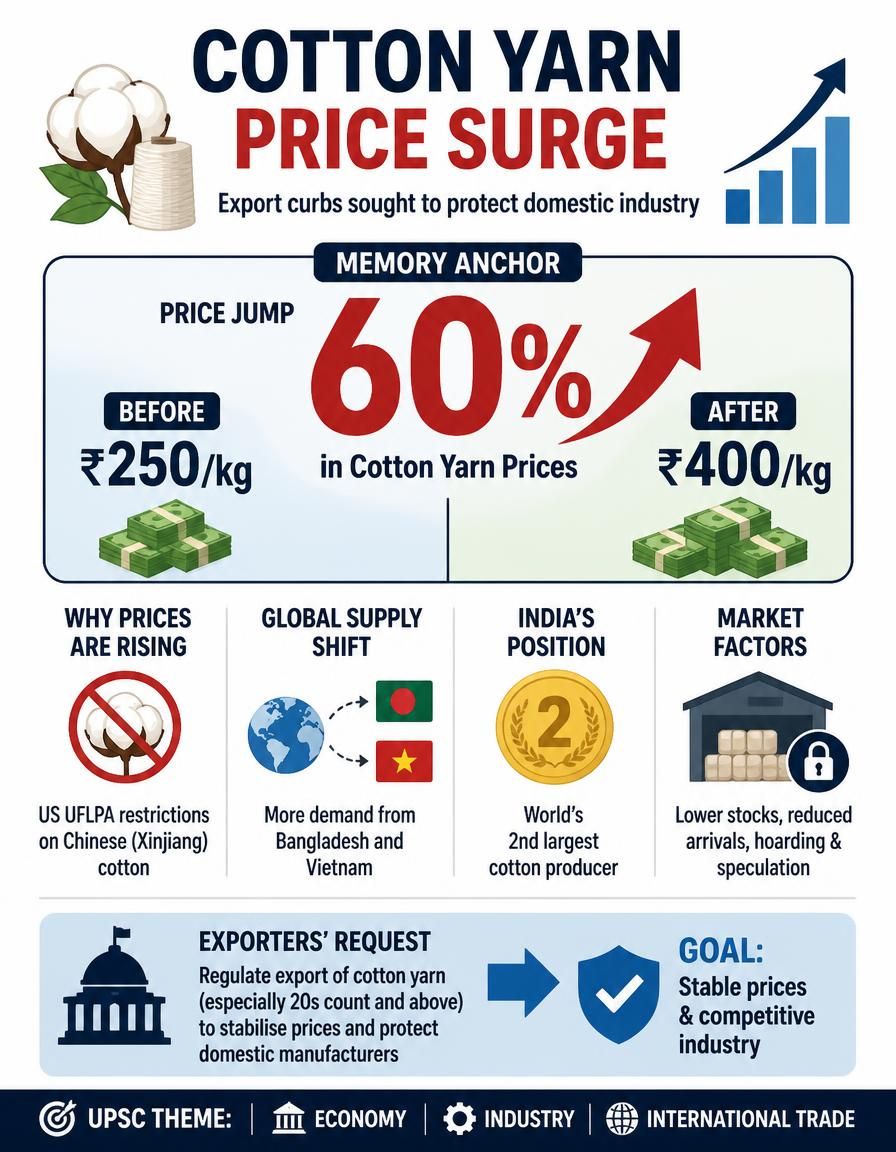
US restrictions on China's Uyghur cotton have surged Indian yarn prices by 60%, compelling apparel exporters to urge government regulation on exports to stabilize domestic supply.
Practice MCQs
811 Students attempted
Key Highlights:
- Indian apparel exporters have urged the Commerce and Industry Ministry and the Textile Ministry to regulate cotton yarn exports due to a sharp price surge.
- The price increase is attributed to US restrictions on cotton from China's Uyghur region, where forced labor allegations exist.
- Cotton yarn prices have risen by approximately 60%, from Rs 250 per kg to Rs 400 per kg, impacting apparel manufacturing.
- India is the world's second-largest cotton producer, while China holds a 29% share of global cotton production.
- Increased demand for Indian cotton and cotton yarn is coming from major apparel-producing nations like Bangladesh and Vietnam.
Cotton Yarn.jpg
Detailed Insights:
- The Apparel Export Promotion Council (AEPC) highlighted that the US restrictions, particularly the Uyghur Forced Labor Prevention Act (UFLPA), have made countries more cautious about supply chain traceability.
- The AEPC specifically requested measures to regulate the export of cotton yarn, especially 20s count and above, to stabilize prices and ensure competitive rates for domestic units.
- Limited stock availability with ginners and reduced arrivals have compelled mills to rely more heavily on auctions conducted by the Cotton Corporation of India (CCI).
- The AEPC noted that much of the cotton has moved from farmers to traders, leading to hoarding and speculative practices in the market.
- The global emphasis on ethical sourcing and supply chain traceability has redirected demand towards Indian cotton yarn, which was already in short supply.
Key Concepts Involved:
- Uyghur Forced Labor Prevention Act (UFLPA): A US law establishing a rebuttable presumption that goods from China's Xinjiang Uyghur Autonomous Region are made with forced labor and prohibited from import into the US.
- Cotton Corporation of India (CCI): A public sector undertaking under the Ministry of Textiles, serving as the central agency for Minimum Support Price (MSP) operations and market stabilization in cotton.
- Apparel Export Promotion Council (AEPC): The official body of apparel exporters in India, established in 1978 under the Ministry of Textiles, promoting and supporting garment exports.
- Supply chain traceability: The ability to track and document the history, location, and movement of goods and materials throughout the supply chain, from raw materials to the final destination.

SuperKalam is your personal mentor for UPSC preparation, guiding you at every step of the exam journey.
Download the App


STUDY RESOURCES
CONTACT US
ⓒ Snapstack Technologies Private Limited