GS 3: Environment & EcologyPrelimsGS 3: Conservation, Pollution and DegradationGS 2: Government policies and interventions for development in various sectorsGS 1: Changes in Critical Geographical Features, Water Bodies, Ice Caps, Flora and Fauna
A quiet move that has kept Dehradun’s vultures safe, Pg9
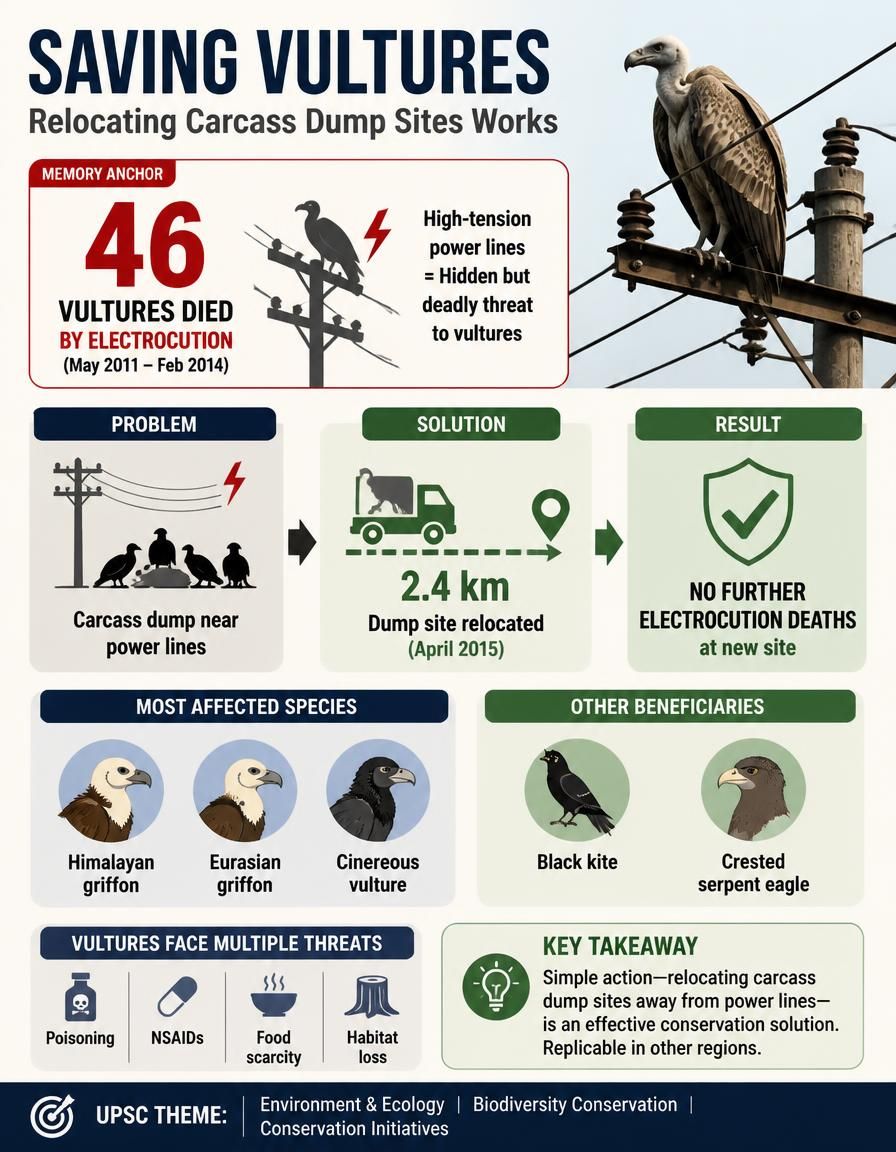
Relocating a Dehradun carcass dump 2.4 km from high-tension power infrastructure significantly reduced vulture electrocution mortality, a key conservation success.
Practice MCQs
811 Students attempted
Key Highlights:
- A study in Dehradun, Uttarakhand, identified electrocution from high-tension power infrastructure as a significant threat to vultures.
- Between May 2011 and February 2014, 46 vulture electrocution deaths were documented in the Sudhauwala region.
- The Himalayan griffon, Eurasian griffon, and Cinereous vulture were the most affected species.
- Local authorities relocated a livestock carcass dumping site 2.4 km away from hazardous power lines in April 2015.
- Post-relocation monitoring indicated no further electrocution mortalities at the new site.
Saving Vultures.jpg
Detailed Insights:
- Vultures in India face multiple threats including poisoning, veterinary Non-Steroidal Anti-Inflammatory Drugs (NSAIDs), food scarcity, and habitat loss.
- The study, published in the Journal of Threatened Taxa, highlighted electrocution as an underreported but significant localized threat.
- The relocation of the carcass dump served as a practical and effective conservation measure to mitigate electrocution risk for these long-lived scavengers.
- This successful intervention suggests that similar strategies could be applied in other regions facing comparable challenges for vulture conservation.
- Other raptor species, such as the black kite and crested serpent eagle, were also observed benefiting from the relocated site.
- While effective, no further studies have been conducted since 2015 to assess the long-term impact and sustainability of this measure.
Scientific/Technical Concepts Involved:
- Non-Steroidal Anti-Inflammatory Drugs (NSAIDs): A class of drugs, like diclofenac, that are highly toxic to vultures when consumed through the carcasses of treated livestock.
- Himalayan Griffon (Gyps himalayensis): A large Old World vulture species native to the Himalayas and the Tibetan Plateau, known for its scavenging habits.
- Electrocution: The injury or death of an animal caused by electric shock, often resulting from contact with high-voltage power lines or infrastructure.

SuperKalam is your personal mentor for UPSC preparation, guiding you at every step of the exam journey.
Download the App


STUDY RESOURCES
CONTACT US
ⓒ Snapstack Technologies Private Limited