GS 2: GovernanceGS 2: PolityGS 1: Indian SocietyPrelimsGS 2: Development Processes and Role of NGOs, SHGs and Other Stakeholders
FCRA Bill 2026, a threat to civil society organisations, Pg6
Controversial FCRA Bill 2026, listed for Monsoon Session, threatens civil society organizations with stringent foreign funding regulations and asset vesting.
Practice MCQs
804 Students attempted
Key Highlights:
- The Foreign Contribution (Regulation) Amendment Bill, 2026, is slated for consideration in the upcoming Monsoon Session of Parliament.
- The Bill was previously deferred after widespread protests from Christian organizations and Non-Governmental Organisations (NGOs).
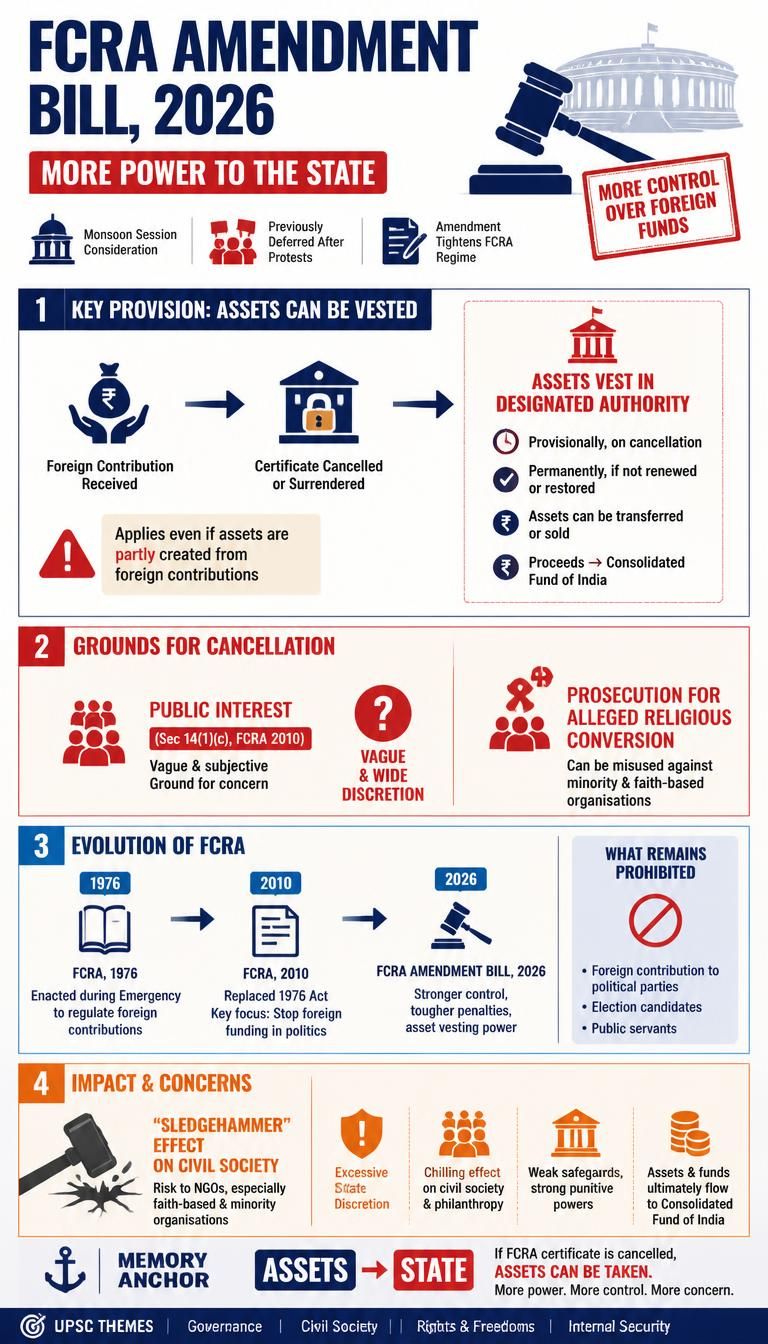
- A significant provision in the Bill allows for the vesting of foreign contributions and assets created from them in a designated authority upon cancellation or surrender of an organization's registration certificate.
- Concerns have been raised regarding the Bill's potential "sledgehammer effect" on civil society, particularly due to vague grounds for certificate cancellation such as "public interest".
FCRA.jpg
Detailed Insights:
- Foreign contributions in India have been regulated since the enactment of the Foreign Contribution (Regulation) Act, 1976, during the Emergency period.
- The FCRA, 2010, replaced the 1976 Act, primarily focusing on preventing the infusion of foreign money into politics by prohibiting contributions to political parties, election candidates, and public servants.
- Under the FCRA Bill, 2026, if a certificate is cancelled, assets created even partially from foreign contributions can provisionally vest in a designated authority.
- Permanent vesting occurs if an organization fails to renew or restore its certificate, allowing the authority to transfer or sell these assets, with proceeds credited to the Consolidated Fund of India.
- Grounds for cancellation include "public interest" (Section 14(1)(c) of FCRA, 2010) and prosecution for alleged religious conversion, raising concerns about potential misuse against minority groups.
- The Bill also stipulates that if an organization voluntarily surrenders its registration certificate, all remaining foreign contributions and assets created from them will vest in the designated authority.
- Clause 16L of the Bill grants the government power to exempt certain organizations from its provisions, which critics argue could be challenged under Article 14 of the Constitution for violating equality before the law.
- Critics suggest these amendments reflect a broader state intent to control organizations active in educational, cultural, environmental, and charitable sectors.
Key Concepts Involved:
- Foreign Contribution (Regulation) Act (FCRA): An Indian law that regulates the acceptance and utilization of foreign contributions by individuals, associations, and companies.
- Consolidated Fund of India: The principal government account where all revenues received by the government, including taxes and loans, are deposited.
- Article 14 of the Constitution: A fundamental right guaranteeing equality before the law and equal protection of the laws to all persons within India's territory.
- Civil Society Organisations (CSOs)/Non-Governmental Organisations (NGOs): Non-profit, voluntary groups that operate independently of the government, working on various social, economic, and environmental issues.

SuperKalam is your personal mentor for UPSC preparation, guiding you at every step of the exam journey.
Download the App


STUDY RESOURCES
CONTACT US
ⓒ Snapstack Technologies Private Limited