GS 3: Science & TechnologyPrelimsGS 3: Achievements of Indians in Science and TechnologyGS 3: Indigenization of Technology and New Technology DevelopmentGS 3: Space Technology
ISRO to Launch Navigation Satellite NVS-03 on Friday, Pg6
ISRO to launch NVS-03 navigation satellite with indigenous atomic clock on GSLV-F18 from Sriharikota, ensuring IRNSS continuity.
Practice MCQs
818 Students attempted
Key Highlights:
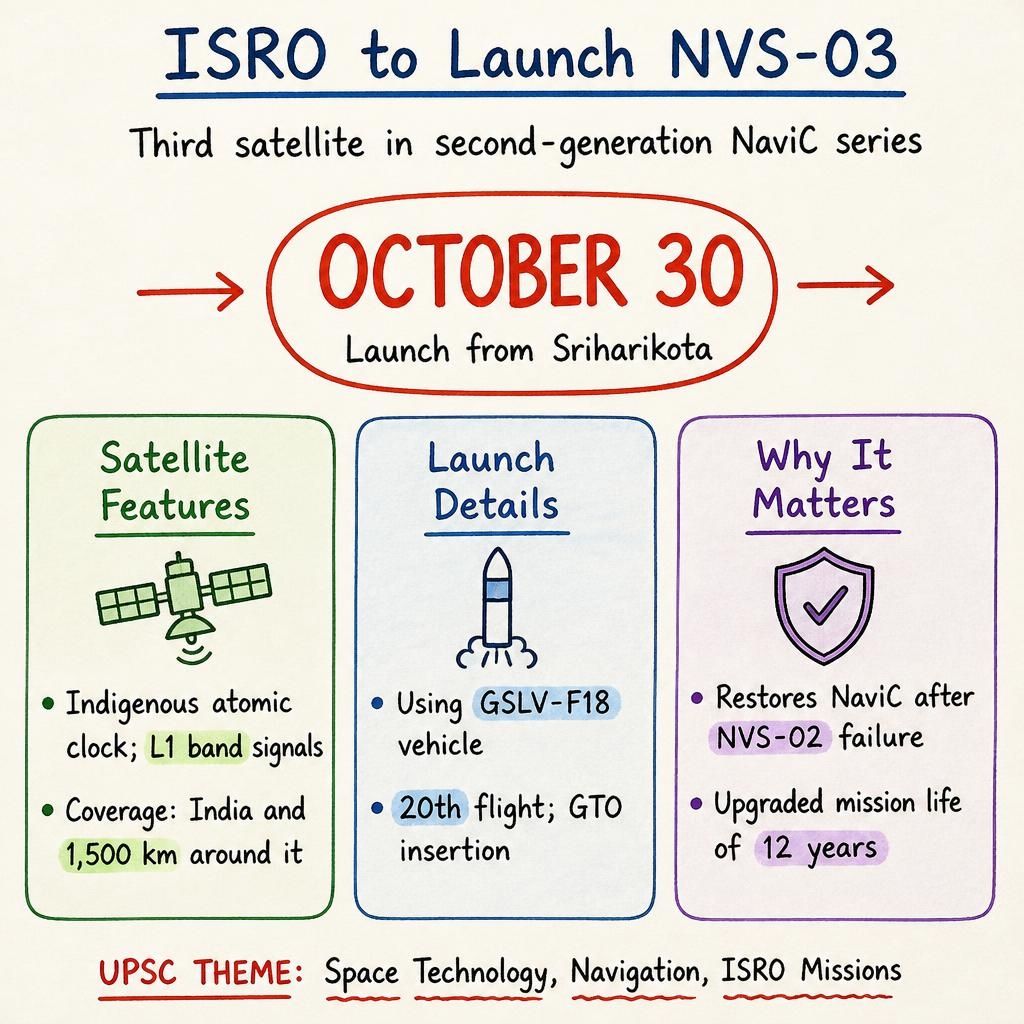
- ISRO is set to launch the NVS-03 navigation satellite on October 30 from Sriharikota.
- NVS-03 is the third satellite in the second-generation NavIC (Navigation with Indian Constellation) series, aimed at ensuring continuity of navigation services for the IRNSS series.
- The satellite will carry an indigenous atomic clock and introduce signals in the L1 frequency band.
- It is designed to offer coverage over the entire Indian landmass and extend up to 1500 km beyond its borders.
- The launch will be conducted using the GSLV-F18 vehicle, placing the satellite into a Geosynchronous Transfer Orbit.
Navic Series.jpg
Detailed Insights:
- The launch of NVS-03 is critical for restoring and strengthening India's indigenous navigation system, NavIC, following a shortage of operational satellites.
- Weighing approximately 2,250 kg, NVS-03 marks the 20th flight of the GSLV-F18 rocket.
- The inclusion of an indigenous Rubidium atomic clock, developed by the Space Applications Centre (SAC) in Ahmedabad, addresses past failures of imported clocks in earlier IRNSS satellites.
- By broadcasting in the L1, L5, and S bands, the L1 band will enhance compatibility with modern commercial platforms such as smartphones and smartwatches.
- The NavIC system provides both Standard Positioning Service (SPS) for civilian users and Restricted Service (RS) for authorized users, covering India and a region extending 1,500 km around it.
- A previous launch attempt for NVS-02 in January 2025 failed during orbit raising operations due to a propulsion system issue, making the successful deployment of NVS-03 crucial.
- The NVS series satellites are designed with an upgraded mission life of 12 years, aiming for enhanced reliability and longevity compared to the first-generation IRNSS satellites.
Scientific/Technical Concepts Involved:
- NavIC (Navigation with Indian Constellation): India's autonomous regional satellite navigation system providing accurate positioning, velocity, and timing services.
- Indigenous Atomic Clock: A highly precise timekeeping device developed in India, essential for accurate navigation signals and reducing reliance on foreign technology.
- Geosynchronous Transfer Orbit (GTO): An elliptical orbit used as an intermediate step to place satellites into a circular geosynchronous or geostationary orbit.
- GSLV (Geosynchronous Satellite Launch Vehicle): ISRO's launch vehicle primarily used for placing communication and navigation satellites into Geosynchronous Transfer Orbit.

SuperKalam is your personal mentor for UPSC preparation, guiding you at every step of the exam journey.
Download the App


STUDY RESOURCES
CONTACT US
ⓒ Snapstack Technologies Private Limited