GS 2: International RelationsGS 3: EconomyPrelimsGS 2: Bilateral, Regional and Global Groupings and AgreementsGS 2: Effect of Policies and Politics of Developed and Developing Countries on India's Interests
U.S., China Unveil List of ‘Non-Sensitive’ Products Under $30 Billion Tariff Cut, Pg14
US and China announce $30 billion reciprocal tariff cuts on non-sensitive products, aiming to bolster bilateral trade and economic cooperation.
Practice MCQs
811 Students attempted
Key Highlights:
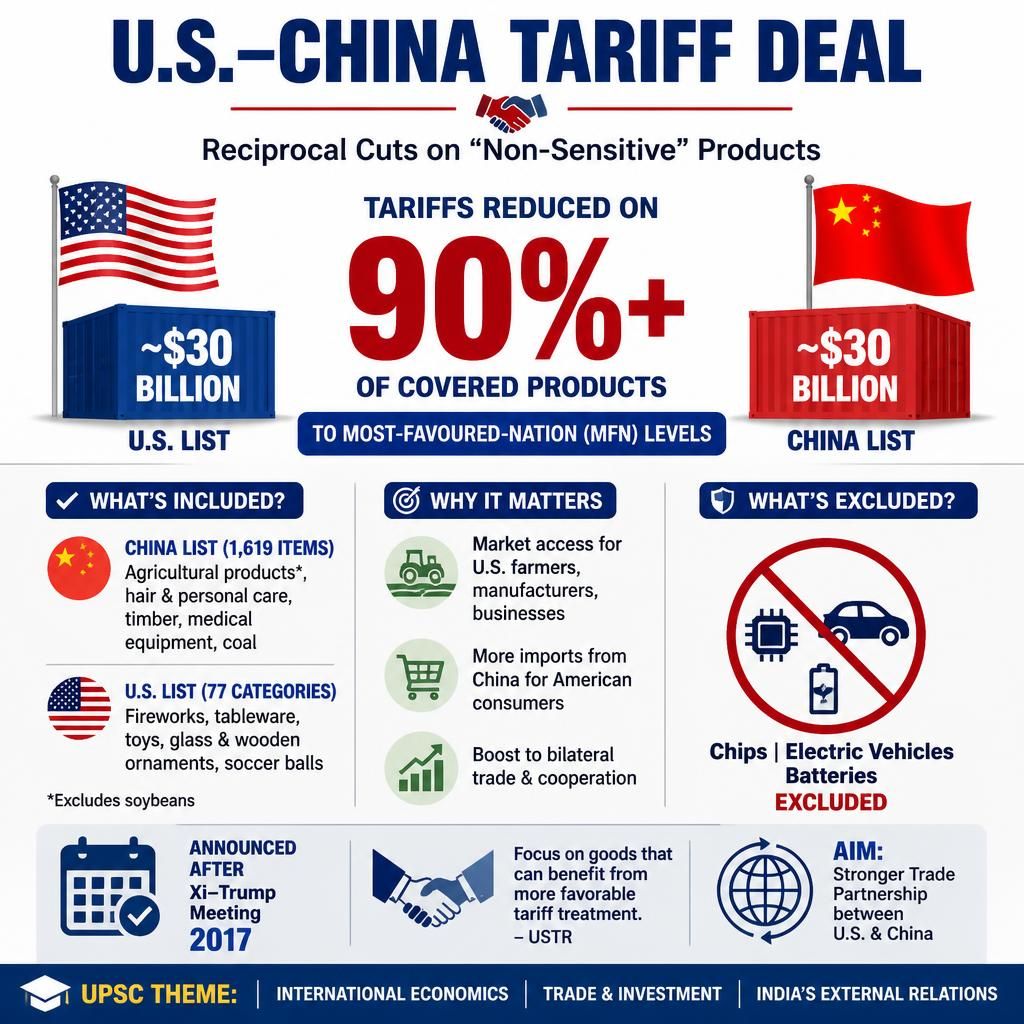
- The U.S. and China announced reciprocal tariff cuts on "non-sensitive" products, valued at approximately $30 billion each.
- This agreement followed a meeting between Chinese President Xi Jinping and U.S. President Donald Trump in 2017.
- The tariff rates on over 90% of the covered products would be reduced to Most-Favoured-Nation levels.
- The deal aimed to bolster bilateral trade and strengthen trade cooperation between the two nations.
US-China Tariff Deal.jpg
Detailed Insights:
- The agreement was unveiled days after President Xi Jinping's first state visit to the U.S. since 2015, where he met President Trump.
- China's list for tariff reduction included 1,619 items, such as agricultural products (excluding soybeans), hair and personal care items, timber, medical equipment, and coal.
- The U.S. list covered 77 categories of Chinese goods, including fireworks, tableware, toys, glass and wooden Christmas ornaments, and soccer balls.
- U.S. Trade Representative Jamieson Greer indicated the focus was on goods that could benefit from more favorable tariff treatment.
- The deal was expected to secure market access for U.S. farmers, manufacturers, and businesses, while benefiting American consumers with imports from China.
- Strategically important sectors like chips, electric vehicles, and batteries were explicitly excluded from this agreement.
Key Concepts Involved:
- Most-Favoured-Nation (MFN): A principle in international trade where a country treats all its trading partners equally, extending the same trade advantages to all.
Previous12/12

SuperKalam is your personal mentor for UPSC preparation, guiding you at every step of the exam journey.
Download the App


STUDY RESOURCES
CONTACT US
ⓒ Snapstack Technologies Private Limited