GS 3: Science & TechnologyGS 2: Social JusticePrelimsGS 4: Attitude, Content, Structure and Function
ICMR's cervical cancer pill shows promise by stopping HPV from turning cancerous, Pg9
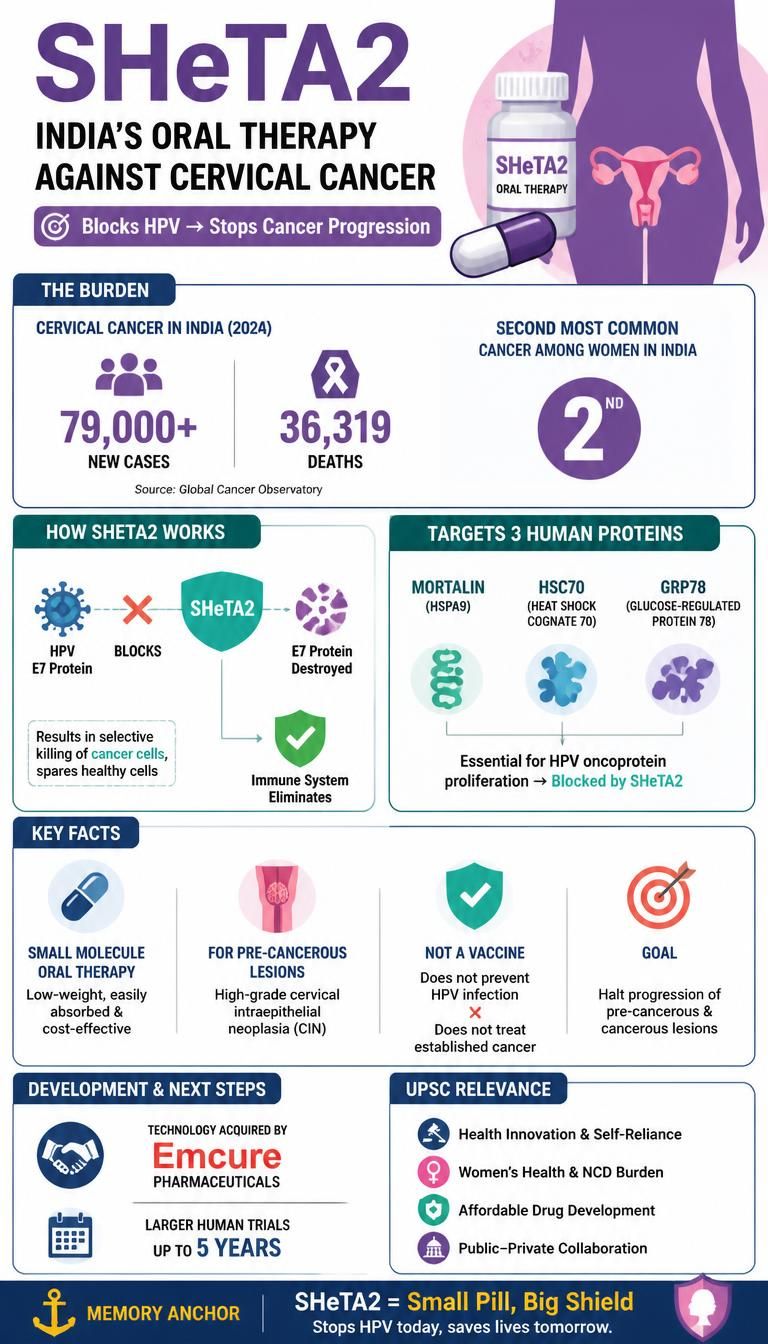
ICMR's SHeTA2 oral pill shows breakthrough potential, halting cervical cancer by blocking HPV's cancer-causing proteins, offering a cost-effective, home-based treatment.
Practice MCQs
796 Students attempted
Key Highlights:
- The Indian Council of Medical Research (ICMR) has developed an oral therapy named SHeTA2 to combat cervical cancer.
- SHeTA2 is designed to prevent Human Papillomavirus (HPV) infection from progressing into cancerous lesions by blocking the virus's cancer-causing proteins.
- Cervical cancer is the second most common cancer among women in India, with over 79,000 new cases and 36,319 deaths projected for 2024, according to Global Cancer Observatory data.
- The therapy targets three human proteins—mortalin, heat shock cognate (hsc70), and glucose-regulated protein 78 (Grp78)—essential for the proliferation of the viral oncoprotein.
- Emcure Pharmaceuticals has acquired the technology for further development and larger human trials, which are expected to take up to five years.
HPV.jpg
Detailed Insights:
- SHeTA2 is a small molecule therapy, meaning it is a chemically manufactured, low-weight compound that is easily absorbed and cost-effective to produce.
- It works by disrupting the connection between the HPV-E7 protein and a host protein in human cells, leading to the destruction of the harmful E7 protein by the body's immune system.
- This mechanism ensures that SHeTA2 selectively targets cancer cells while sparing healthy ones.
- The therapy is intended for individuals who have already developed pre-cancerous lesions, such as high-grade cervical intraepithelial neoplasia.
- While it cannot prevent HPV infection, it aims to halt the progression of pre-cancerous and cancerous lesions.
- The final cost is yet to be determined but is anticipated to be more affordable than many biologic or immunotherapy-based cancer treatments, potentially allowing for home administration.
- Early detection methods like Pap smears, HPV DNA tests, or visual inspection with acetic acid remain crucial for timely intervention.
Scientific/Technical Concepts Involved:
- Human Papillomavirus (HPV): A common virus, certain types of which are known to cause approximately 85% of cervical cancer cases.
- Small Molecule Therapy: A type of drug therapy using low molecular weight compounds that can easily enter cells and modulate biological processes.
- Oncoprotein: A protein encoded by an oncogene that can transform a cell into a tumor cell.
- Cervical Intraepithelial Neoplasia (CIN): The abnormal growth of cells on the surface of the cervix, which can be pre-cancerous.

SuperKalam is your personal mentor for UPSC preparation, guiding you at every step of the exam journey.
Download the App


STUDY RESOURCES
CONTACT US
ⓒ Snapstack Technologies Private Limited