GS 2: GovernanceGS 3: Science & TechnologyGS 2: Social JusticePrelimsGS 3: Biotechnology
Prioritizing Infection Prevention to Tackle the Global Antimicrobial Resistance Threat
The Lancet identifies antimicrobial resistance as an existential threat, urging India to prioritize infection prevention to avert 3.44 billion lost life years.
Source: Indian Express (Pg. 13)
Practice MCQs
818 Students attempted
Key Highlights:
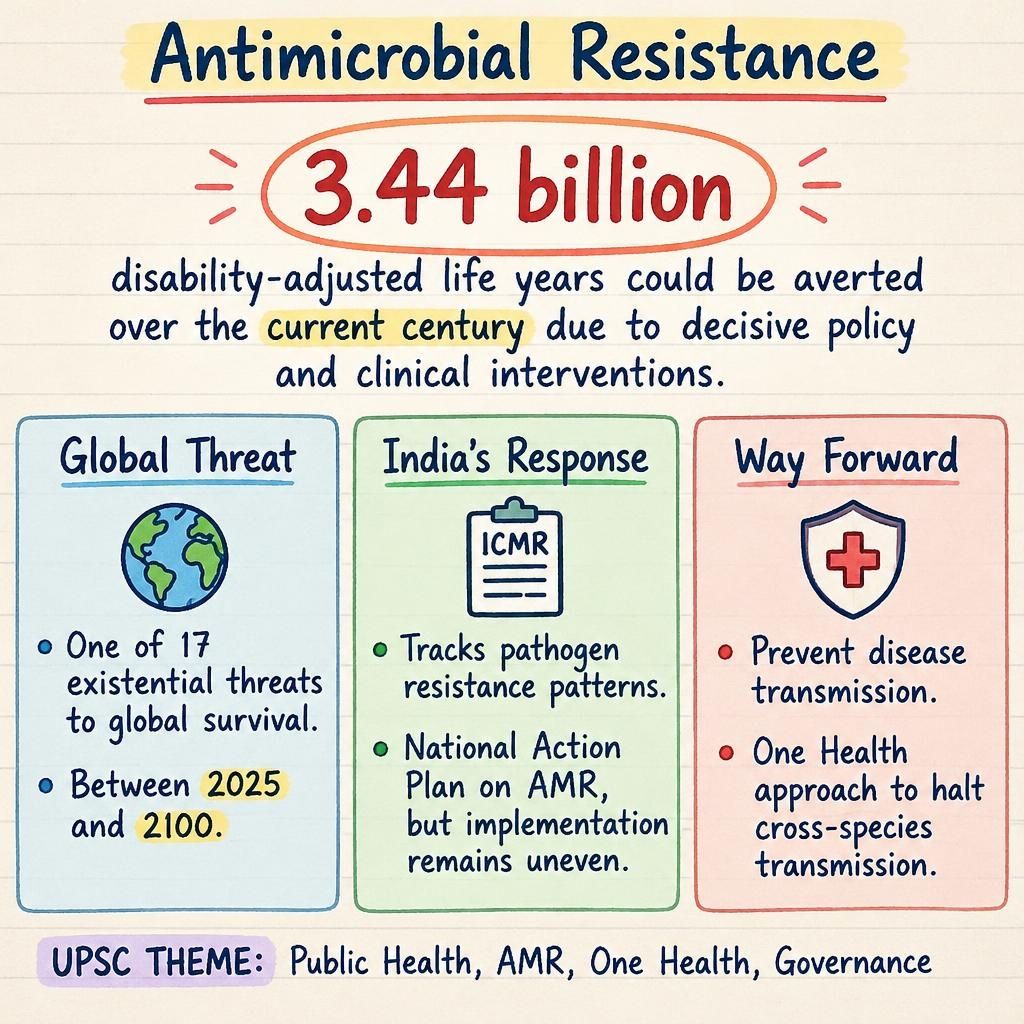
- The Lancet Commission on 21st Century Global Threats to Health identified antimicrobial resistance as one of 17 existential threats to global survival between 2025 and 2100.
- Decisive policy and clinical interventions could avert an estimated 3.44 billion disability-adjusted life years linked to drug-resistant infections over the current century.
- India tracks pathogen resistance patterns through the ICMR Antimicrobial Resistance Surveillance and Research Network across regional tertiary healthcare institutions.
- Public health experts emphasize redirecting primary focus toward preventing disease transmission rather than relying exclusively on developing novel reserve antibiotics.
- Resistant bacterial strains like carbapenem-resistant Klebsiella pneumoniae pose severe therapeutic challenges despite hospital-based antimicrobial stewardship programs.
AMR
Detailed Insights:
- India formulated the National Action Plan on Antimicrobial Resistance to operationalize surveillance, but decentralized state-level implementation remains uneven.
- The Union Ministry of Health and Family Welfare launched the Red Line Campaign to deter over-the-counter dispensing of prescription antibiotics.
- Extensive non-therapeutic antibiotic consumption across livestock sectors requires stringent compliance monitoring by the Food Safety and Standards Authority of India.
- An integrated One Health approach coordinates human, veterinary, and environmental surveillance to halt cross-species microbial transmission cycles.
- Enhancing baseline water, sanitation, and hygiene infrastructure reduces community pathogen exposure, directly decreasing unnecessary antimicrobial consumption.
Scientific/Technical Concepts Involved:
- Antimicrobial Resistance: Biological mechanism wherein microorganisms evolve survival adaptations against medicines previously effective at eliminating them.
- Carbapenem-Resistant Enterobacteriaceae: High-priority bacterial group possessing enzymatic defenses that neutralize last-resort carbapenem class antibiotics.
- Antimicrobial Stewardship: Systemic clinical framework designed to optimize drug selection, dosing, and duration to prevent emergence of resistant pathogens.
- Disability-Adjusted Life Years: Quantitative health metric representing the total number of years lost due to premature mortality and debilitating illness.

SuperKalam is your personal mentor for UPSC preparation, guiding you at every step of the exam journey.
Download the App


STUDY RESOURCES
CONTACT US
ⓒ Snapstack Technologies Private Limited