GS 2: GovernanceGS 3: Science & TechnologyGS 2: Social JusticePrelimsGS 2: Government policies and interventions for development in various sectors
Salmonella infections: why India needs to look beyond typhoid and diarrhoea, Pg II
India faces growing threat from severe Salmonella infections and alarming antibiotic resistance, demanding comprehensive public health and food safety reforms.
Practice MCQs
796 Students attempted
Key Highlights:
- Salmonella infections extend beyond typhoid and diarrhea, encompassing a range of illnesses from mild gastroenteritis to serious bloodstream infections.
- Non-typhoidal Salmonella (NTS) infections are a significant concern, often undiagnosed due to self-recovery, but can become invasive and life-threatening, especially in vulnerable populations.
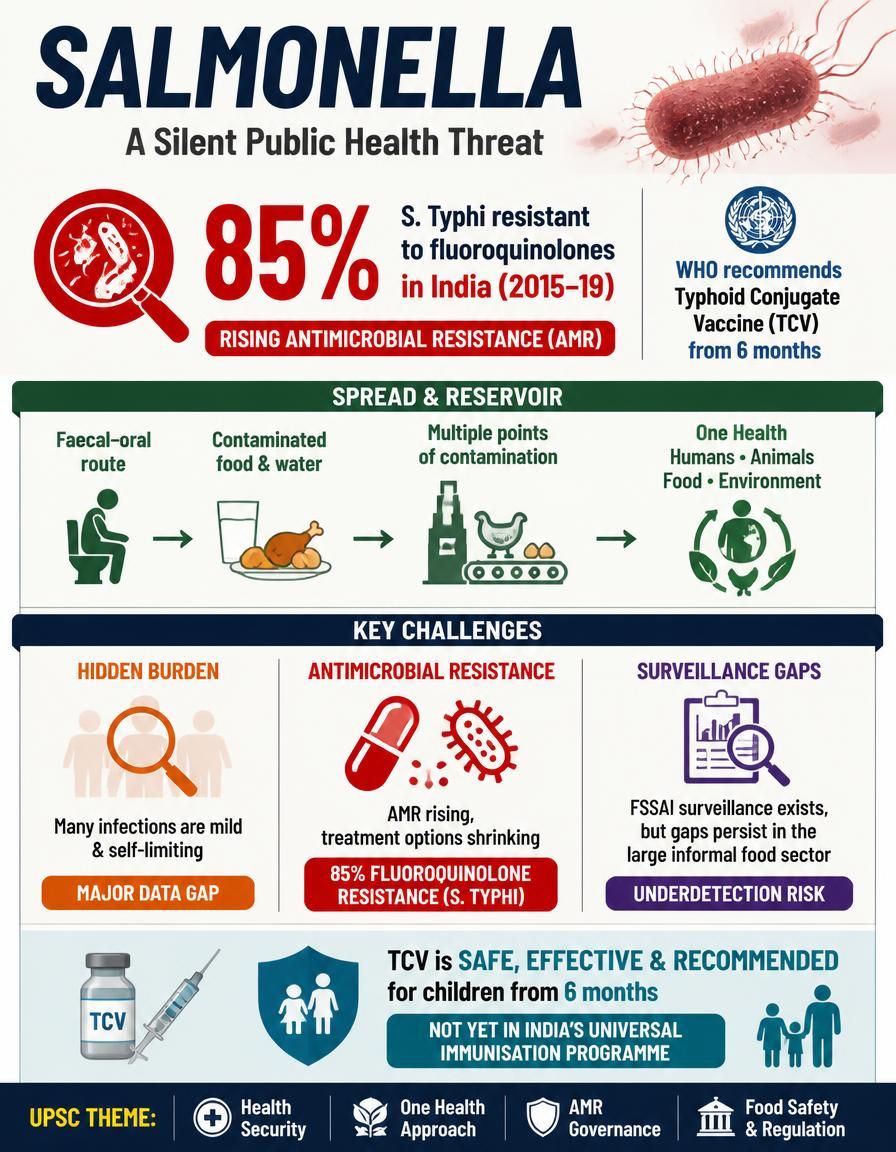
- A major challenge is the growing Antimicrobial Resistance (AMR) in Salmonella, with a study indicating fluoroquinolone resistance in S. Typhi reaching 85% in India by 2015-19.
- The World Health Organization (WHO) recommends Typhoid Conjugate Vaccines (TCV) for children from six months, but it is not yet part of India’s Universal Immunisation Programme.
- Food Safety and Standards Authority of India (FSSAI) has surveillance systems, but gaps remain, particularly in the large informal food sector.
Salmonella.jpg
Detailed Insights:
- Salmonella is a group of bacteria, with Salmonella Typhi and Salmonella Paratyphi causing typhoid and paratyphoid (enteric fever), while other serotypes cause NTS.
- NTS commonly causes gastroenteritis and is often linked to contaminated poultry, eggs, and other animal-based foods.
- The actual burden of NTS is difficult to estimate due to many mild infections going undiagnosed, highlighting a public health data gap.
- Both typhoid and NTS spread via the faecal-oral route, but typhoid's reservoir is primarily humans, whereas NTS has a wider ecology involving animals, food, and the environment.
- Contamination can occur at multiple points in the food supply chain, from farms to household kitchens, making Salmonella a One Health problem.
- The emergence of extensively drug-resistant typhoid underscores the critical need for judicious antibiotic use and effective prevention strategies.
- Proper diagnosis, such as blood culture, is crucial before initiating antibiotic treatment, as the Widal test has limitations for typhoid diagnosis.
- Prevention measures include hand washing, safe water, thorough cooking of poultry and eggs, proper refrigeration, and separating raw meat from ready-to-eat food.
Key Concepts Involved:
- Salmonella: A genus of rod-shaped, Gram-negative bacteria that can cause various infections in humans and animals.
- Non-typhoidal Salmonella (NTS): Serotypes of Salmonella that typically cause gastroenteritis but can lead to invasive, life-threatening infections.
- Antimicrobial Resistance (AMR): The ability of microorganisms to resist the effects of an antimicrobial drug to which they were once sensitive.
- One Health: A collaborative, multisectoral, and transdisciplinary approach recognizing the interconnectedness of human, animal, and environmental health.
- Typhoid Conjugate Vaccines (TCV): Advanced vaccines that provide longer-lasting immunity against typhoid and are suitable for young children.

SuperKalam is your personal mentor for UPSC preparation, guiding you at every step of the exam journey.
Download the App


STUDY RESOURCES
CONTACT US
ⓒ Snapstack Technologies Private Limited