GS 2: GovernanceGS 2: PolityGS 2: International RelationsGS 3: Environment & EcologyPrelims
India, Bangladesh must not just renew Ganga Treaty. They should reimagine it, Pg11
India and Bangladesh urged to reimagine the expiring 1996 Ganga Water Treaty, integrating climate change, federal politics, and broader regional cooperation for enduring ties.
Practice MCQs
789 Students attempted
Key Highlights:
- The 1996 Ganga Water Treaty between India and Bangladesh is approaching the end of its 30-year term.
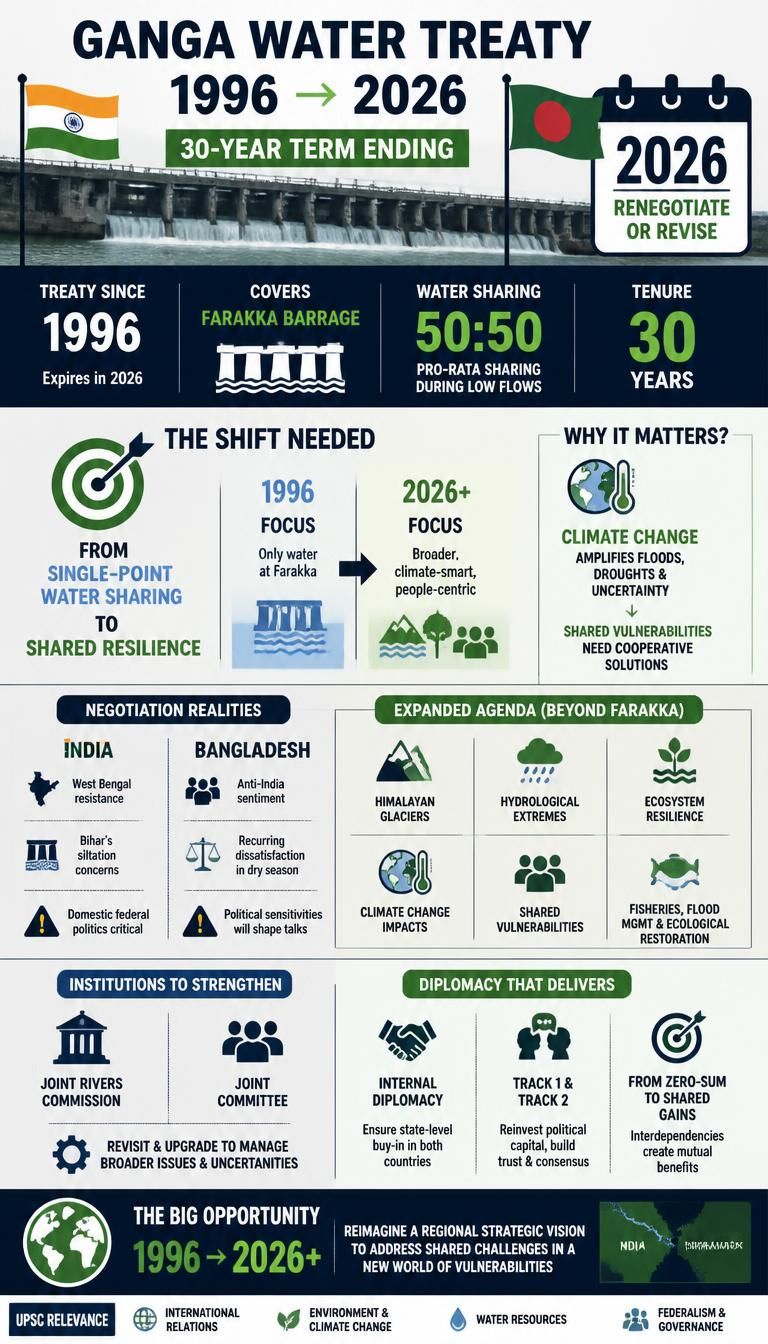
- Discussions are underway to renew or revise the treaty, with a focus on reimagining its scope beyond water sharing at Farakka Barrage.
- The original treaty established a flow-dependent water-sharing arrangement, including a 50:50 pro-rata sharing during low flows.
- Bangladesh has frequently expressed dissatisfaction regarding its share of water during the dry seasons.
- Future negotiations are expected to address complex political dynamics and an expanded agenda, including climate change impacts and shared vulnerabilities.
Ind-Ban.jpg
Detailed Insights:
- The 1996 Ganga Water Treaty was a single-point agenda agreement, primarily addressing water allocation at Farakka.
- The political, institutional, and ecological conditions have significantly changed since the treaty's inception, necessitating a broader approach.
- Domestic political complexities in both India (e.g., West Bengal's resistance, Bihar's siltation concerns) and Bangladesh (anti-India sentiment) will influence negotiations.
- The expanded agenda will likely include managing Himalayan glaciers, hydrological extremes, ecosystem resilience, and shared vulnerabilities due to climate change.
- The article advocates for "internal diplomacy" within both nations to navigate federal politics and ensure state-level buy-in for any new agreement.
- It emphasizes shifting from a zero-sum game to recognizing interdependencies for shared gains like flood management, fisheries, and joint ecological restoration.
- Existing bilateral institutions like the Joint Rivers Commission and the Joint Committee may need to be revisited to manage increased uncertainties and broader issues.
- Reinvestment in political capital and fostering Track 1 and Track 2 diplomacy are crucial for building consensus and trust, similar to the 1996 treaty's formation.
- The renegotiation offers an opportunity to revisit a regional strategic vision for addressing shared challenges in a new global context of vulnerabilities.
Key Concepts Involved:
- Ganga Water Treaty: A bilateral agreement between India and Bangladesh governing the sharing of the Ganga River's waters.
- Farakka Barrage: A dam on the Ganga River in West Bengal, India, designed to divert water into the Hooghly River.
- Track 1 Diplomacy: Official negotiations conducted directly between representatives of governments.
- Track 2 Diplomacy: Unofficial, non-governmental interactions aimed at conflict resolution and building trust.
- Riparian State: A country or state situated along the banks of a river or other body of water.

SuperKalam is your personal mentor for UPSC preparation, guiding you at every step of the exam journey.
Download the App


STUDY RESOURCES
CONTACT US
ⓒ Snapstack Technologies Private Limited