GS 2: GovernanceGS 2: International RelationsGS 3: EconomyPrelims
CBDT's crypto asset reporting guidance, and what it means for taxpayers, Pg9
CBDT mandates crypto exchanges to report transactions under new 198-page guidance, aligning with OECD's CARF for global tax transparency and combating evasion.
Practice MCQs
789 Students attempted
Key Highlights:
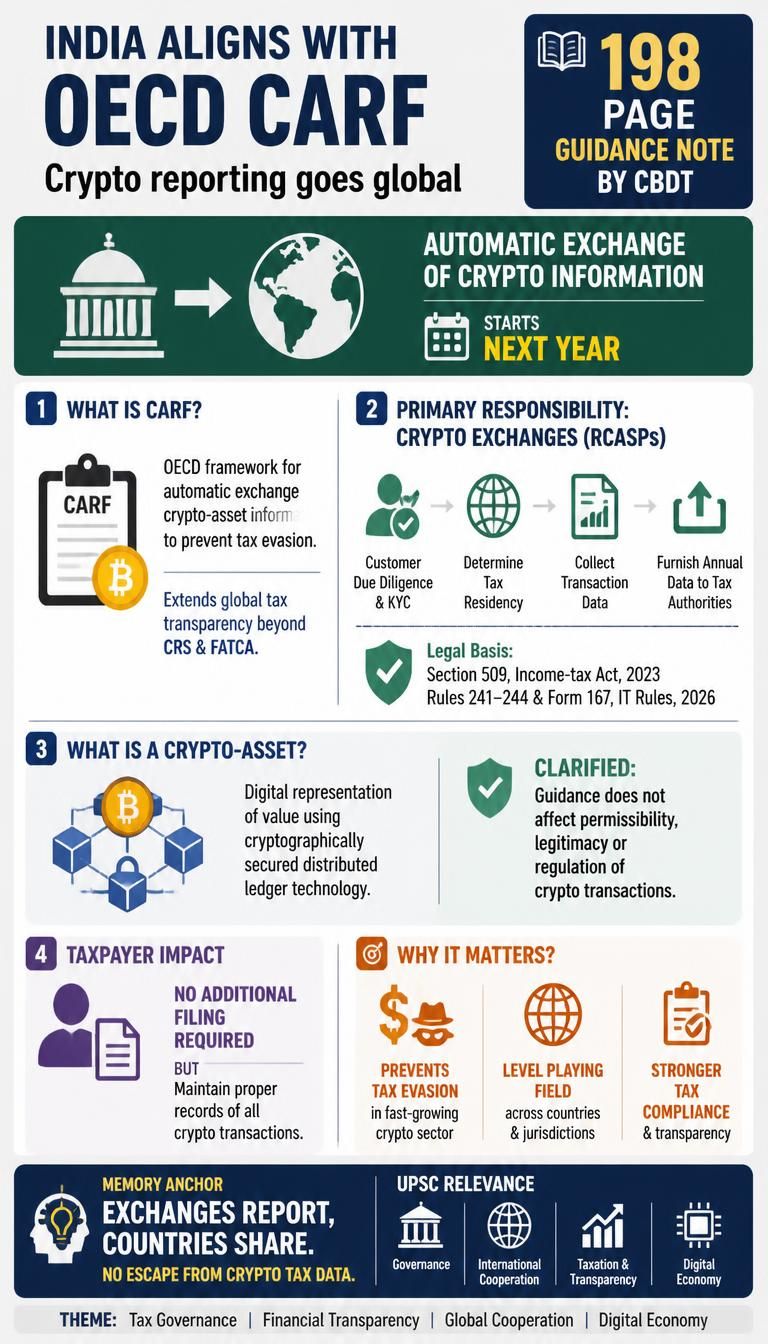
- The Central Board of Direct Taxes (CBDT) has issued a 198-page guidance note on crypto-asset reporting obligations.
- This guidance aligns India's tax reporting framework with the Organisation for Economic Co-operation and Development (OECD)'s Crypto-Asset Reporting Framework (CARF).
- The measure places the primary reporting responsibility on crypto exchanges, requiring them to accurately detail all transactions.
- The framework facilitates the automatic exchange of information regarding crypto-asset transactions between countries, starting next year.
Crypto.jpg
Detailed Insights:
- India's income tax legislation defines a "crypto-asset" as a digital representation of value using cryptographically secured distributed ledger technology.
- The CBDT clarified that the guidance note does not affect the permissibility or legitimacy of crypto-asset transactions or their regulation.
- The guidance note builds upon existing global tax transparency initiatives like the Common Reporting Standard (CRS) and the Foreign Account Tax Compliance Act (FATCA).
- It specifically guides Reporting Crypto-Asset Service Providers (RCASPs) for compliance under Section 509 of the Income-tax Act, 2023, and Rules 241 to 244 and Form 167 of the Income-tax Rules, 2026.
- For taxpayers, there is no additional direct filing requirement, but maintaining proper records of crypto transactions is crucial.
- Crypto exchanges must undertake customer due diligence, determine tax residency, collect KYC information, and furnish annual transaction data.
- The CARF was developed to address concerns about tax evasion in the crypto sector, as traditional financial reporting frameworks like CRS did not adequately cover crypto-assets.
Key Concepts Involved:
- Crypto-Asset Reporting Framework (CARF): An OECD framework extending global tax transparency standards to crypto-asset activities for automatic information exchange.
- Common Reporting Standard (CRS): An OECD standard for the automatic exchange of financial account information between tax authorities globally.
- Automatic Exchange of Information (AEOI): A global initiative enabling tax authorities to share financial data across borders to combat tax evasion.
- Reporting Crypto-Asset Service Providers (RCASPs): Entities like crypto exchanges and service providers obligated to report crypto-asset transaction information under the new framework.

SuperKalam is your personal mentor for UPSC preparation, guiding you at every step of the exam journey.
Download the App


STUDY RESOURCES
CONTACT US
ⓒ Snapstack Technologies Private Limited