GS 2: International RelationsGS 3: EconomyPrelimsGS 3: Effects of Liberalization on the EconomyGS 2: Effect of Policies and Politics of Developed and Developing Countries on India's Interests
India Prepares for Potential Headwinds from Proposed US Tariff Framework
India leverages trade diversification and strong macroeconomic buffers to counter proposed US tariffs ranging between 17% and 25%.
Source: Indian Express (Pg. 17)
Practice MCQs
811 Students attempted
Key Highlights:
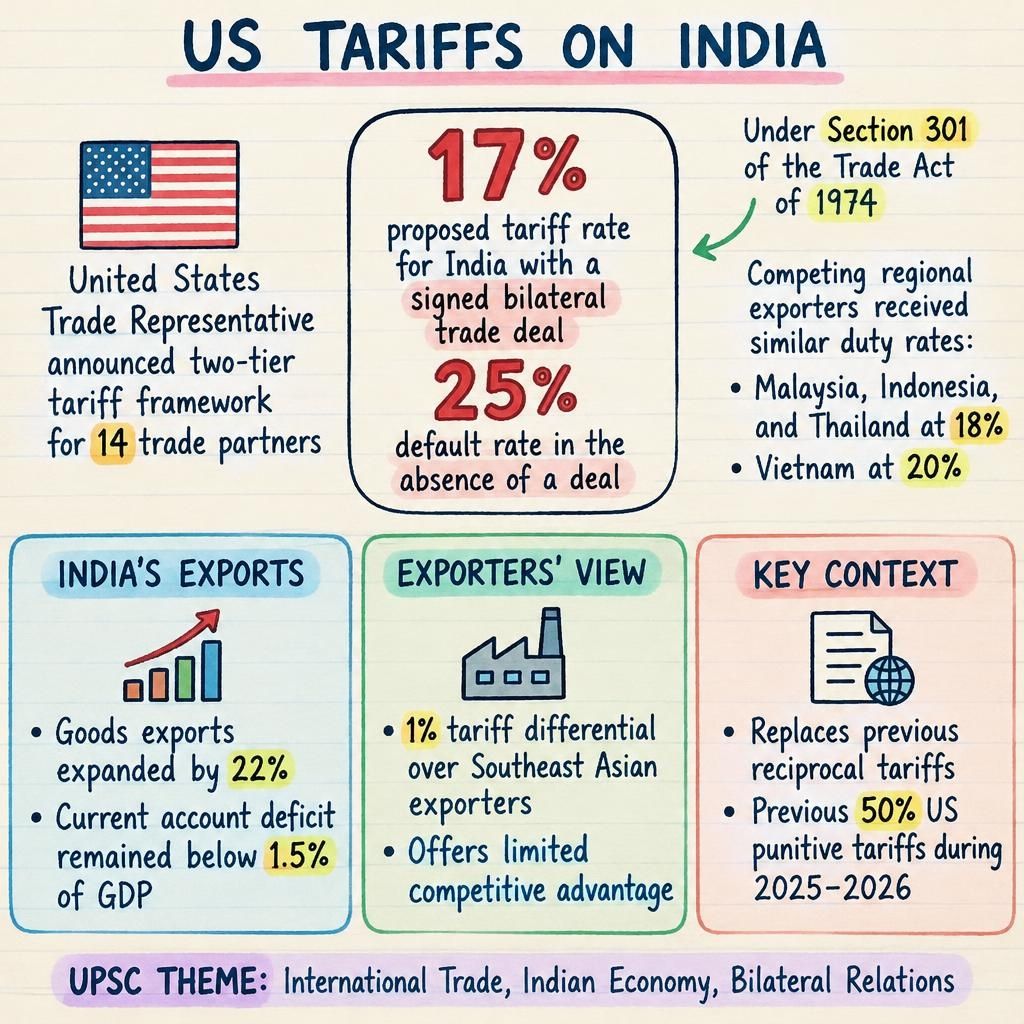
- The United States Trade Representative announced a two-tier tariff framework for 14 trade partners following investigations under Section 301 of the Trade Act of 1974.
- India faces a proposed tariff rate of 17% with a signed bilateral trade deal, and a default rate of 25% in the absence of a deal.
- Competing regional exporters received similar duty rates under bilateral pacts, including Malaysia, Indonesia, and Thailand at 18%, and Vietnam at 20%.
- India's goods exports expanded by 22% during the first seven months of FY27, while the national current account deficit remained below 1.5% of GDP.
- The Engineering Export Promotion Council of India noted that a 1% tariff differential over Southeast Asian exporters offers limited competitive advantage.
US Section 301 of Trade Act
Detailed Insights:
- The new duty framework replaces previous reciprocal tariffs struck down as unlawful under multilateral principles of the World Trade Organization.
- Free trade agreements finalised with the United Kingdom and the European Union provide external buffers against unilateral American trade actions.
- Indian exporters previously weathered 50% US punitive tariffs during 2025–2026, forcing rapid geographic diversification toward non-US export destinations.
- Demands by Washington for concessions on sensitive agricultural and dairy products remain key sticking points for Indian trade negotiators.
- Domestic industry groups are adopting export front-loading strategies to dispatch consignments before the proposed tariff schedule takes formal effect.
Key Concepts Involved:
- Section 301 of the Trade Act of 1974: A statutory provision permitting unilateral trade sanctions against foreign practices deemed burdensome to commerce.
- Current Account Deficit: The shortfall occurring when a country's total imports of goods, services, and transfers exceed its exports.
- Front-Loading: Accelerating the production and shipment of export consignments ahead of anticipated tariff hikes or policy shifts.

SuperKalam is your personal mentor for UPSC preparation, guiding you at every step of the exam journey.
Download the App


STUDY RESOURCES
CONTACT US
ⓒ Snapstack Technologies Private Limited