GS 3: Science & TechnologyGS 2: Social JusticePrelimsGS 3: Science and Technology in Everyday LifeGS 2: Health Sector
ICMR Study Reveals Widespread Vitamin B12 Deficiency Among Indian Adolescents
ICMR's SAMPADA survey reveals severe vitamin B12 deficiency in over 65% of Indian adolescents, urging expanded national nutritional interventions.
Source: The Hindu (Pg. 14)
Practice MCQs
811 Students attempted
Key Highlights:
- A national survey by the Indian Council of Medical Research revealed that nearly two-thirds of Indian adolescents are deficient in vitamin B12.
- The National Institute of Nutrition conducted the assessment under the SAMPADA survey during 2023–25 across 183 districts in 35 States and Union Territories.
- The study evaluated over 1.7 lakh blood samples and defined deficiency as serum vitamin B12 concentrations below 203 pg/mL.
- Vitamin B12 deficiency was recorded in 66.1% of adolescent boys, 65.4% of adolescent girls, and 63.1% of pregnant women.
- Among children aged five to nine years, 46.5% were deficient, while 60.4% of adult men and 57.4% of women of reproductive age showed low levels.
- Experts recommended broadening existing national health interventions like Anemia Mukt Bharat beyond iron and folic acid to include physiological doses of vitamin B12.
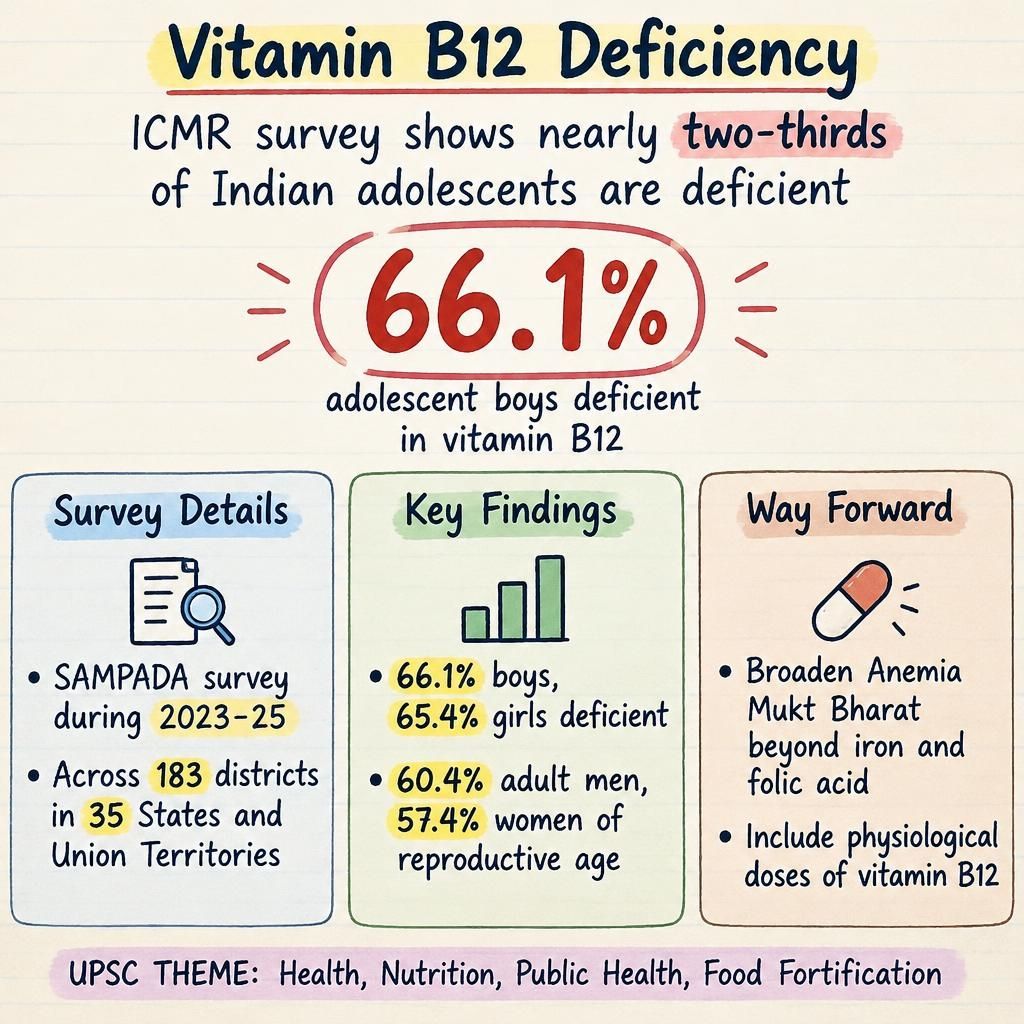
Vitamin B12 Deficiency
Detailed Insights:
- India’s predominantly plant-based dietary pattern and limited intake of dairy or animal-source foods serve as the primary drivers of widespread cobalamin deficiency.
- Low maternal B12 paired with high folate induces epigenetic changes in foetuses, increasing risks of childhood adiposity and adult type 2 diabetes.
- Prolonged deficiency degrades myelin sheaths, precipitating irreversible peripheral neuropathy, ataxia, and severe subacute combined degeneration of the spinal cord.
- Unlike water-soluble B-complex vitamins, vitamin B12 requires gastric intrinsic factor for ileal absorption, making gastrointestinal malabsorption an underdiagnosed secondary driver.
- Expanding targeted food fortification mandates under the Food Safety and Standards Authority of India can mitigate widespread micronutrient malnutrition across vulnerable cohorts.
Scientific/Technical Concepts Involved:
- Cyanocobalamin (Vitamin B12): A water-soluble, cobalt-containing micronutrient vital for cellular DNA synthesis, erythrocyte maturation, and myelin sheath maintenance.
- Megaloblastic Anaemia: A blood disorder caused by B12 or folate deficiency, leading to abnormally large, immature red blood cells.
- Intrinsic Factor: A glycoprotein secreted by gastric parietal cells essential for the physiological absorption of vitamin B12 in the terminal ileum.
- Epigenetic Programming: Heritable changes in gene expression without altering the underlying DNA sequence, often driven by maternal nutritional imbalances.

SuperKalam is your personal mentor for UPSC preparation, guiding you at every step of the exam journey.
Download the App


STUDY RESOURCES
CONTACT US
ⓒ Snapstack Technologies Private Limited