GS 2: GovernanceGS 2: Social JusticeGS 3: EconomyPrelimsGS 4: Corporate Governance
What Is the Significance of New York City’s ‘Click to Cancel’ Rule?, Pg9
New York City enforces 'Click to Cancel' rule to combat digital dark patterns, ensuring easy subscription cancellation and protecting consumers.
Practice MCQs
804 Students attempted
Key Highlights:
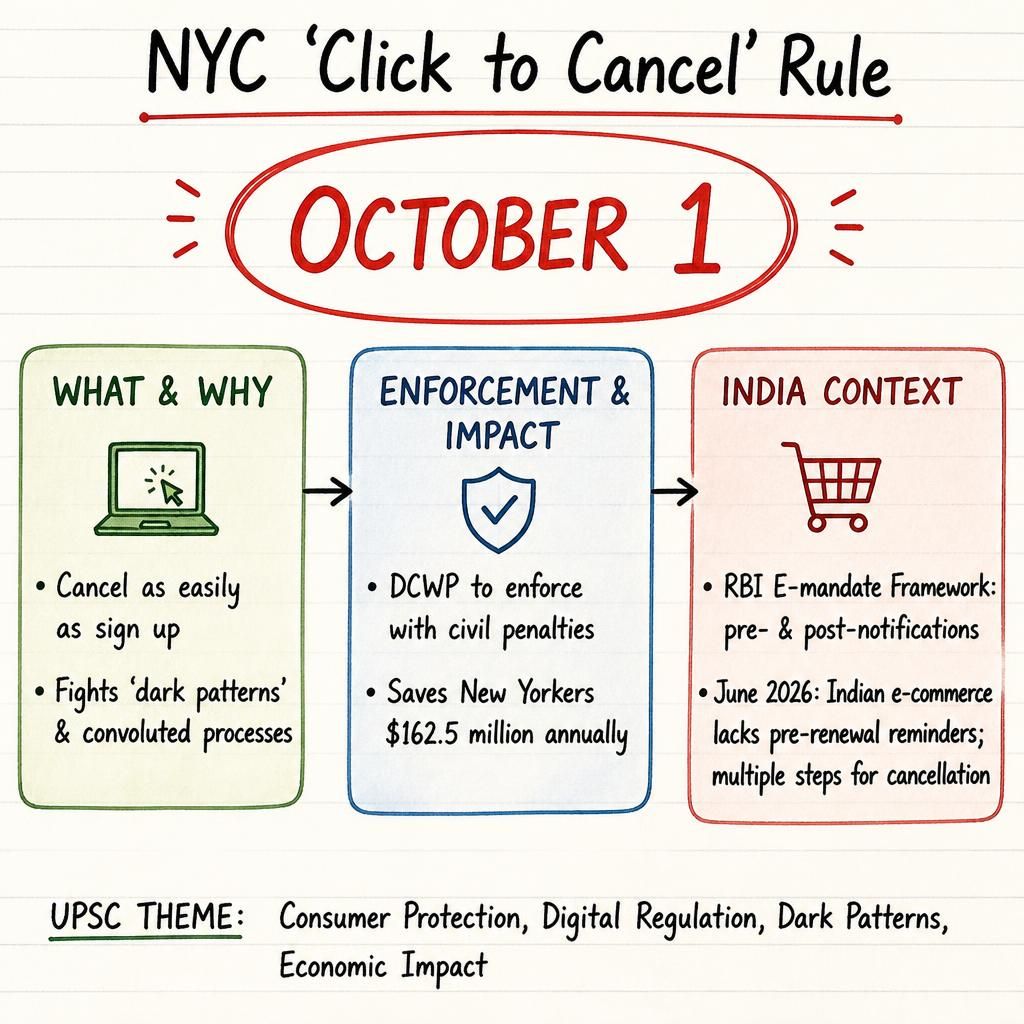
- New York City Mayor Zohran Mamdani announced the enforcement of the ‘Click to Cancel’ rule on October 1.
- The rule mandates that consumers should be able to cancel subscriptions as easily as they sign up, ideally with a single click.
- It aims to combat "dark patterns" and convoluted cancellation processes used by businesses.
- The Department of Consumer and Worker Protection (DCWP) is tasked with enforcing the rule, with provisions for civil penalties.
- The initiative is projected to save New Yorkers an estimated $162.5 million annually by preventing unwanted subscriptions.
Click to Cancel.jpg
Detailed Insights:
- The ‘Click to Cancel’ rule requires that the mechanism for cancellation must be as simple and in the same medium as the initial sign-up process.
- This regulation protects various consumer groups, including vulnerable adults, senior citizens, and time-pressed workers, from unethical retention practices.
- The widespread issue of difficult cancellations has led some consumers to use AI agents to manage their subscriptions.
- In India, the Reserve Bank of India’s ‘Digital Payments – E-mandate Framework’ ensures pre- and post-transaction notifications for recurring payments.
- However, India currently lacks specific regulations to address "dark patterns," leaving consumers susceptible to manipulative online practices.
- A June 2026 study by Datum Intelligence revealed that several major Indian e-commerce platforms did not provide pre-renewal reminders and required multiple steps for cancellation.
Key Concepts Involved:
- Click to Cancel Rule: A regulation requiring businesses to provide an easy, often single-click, method for consumers to cancel subscriptions.
- Dark Patterns: User interface designs that intentionally mislead or manipulate users into making choices that are not in their best interest.
- Automatic Renewal/Continuous Service Offer: A subscription model where services automatically renew and charge the customer unless explicitly canceled.
- E-mandate Framework: A regulatory guideline by the Reserve Bank of India for digital payments, focusing on transparency and consent for recurring transactions.

SuperKalam is your personal mentor for UPSC preparation, guiding you at every step of the exam journey.
Download the App


STUDY RESOURCES
CONTACT US
ⓒ Snapstack Technologies Private Limited