GS 2: GovernanceGS 3: Environment & EcologyGS 3: EconomyPrelimsGS 3: Indian Economy, Planning, Mobilization of Resources, Growth, Development and Employment
To Ease Energy Transition, Ramp Up Storage, Strengthen Transmission, Pg10
India's power sector grapples with renewable energy glut and night deficits, necessitating urgent investment in storage, transmission, and market reforms for a smooth energy transition.
Practice MCQs
804 Students attempted
Key Highlights:
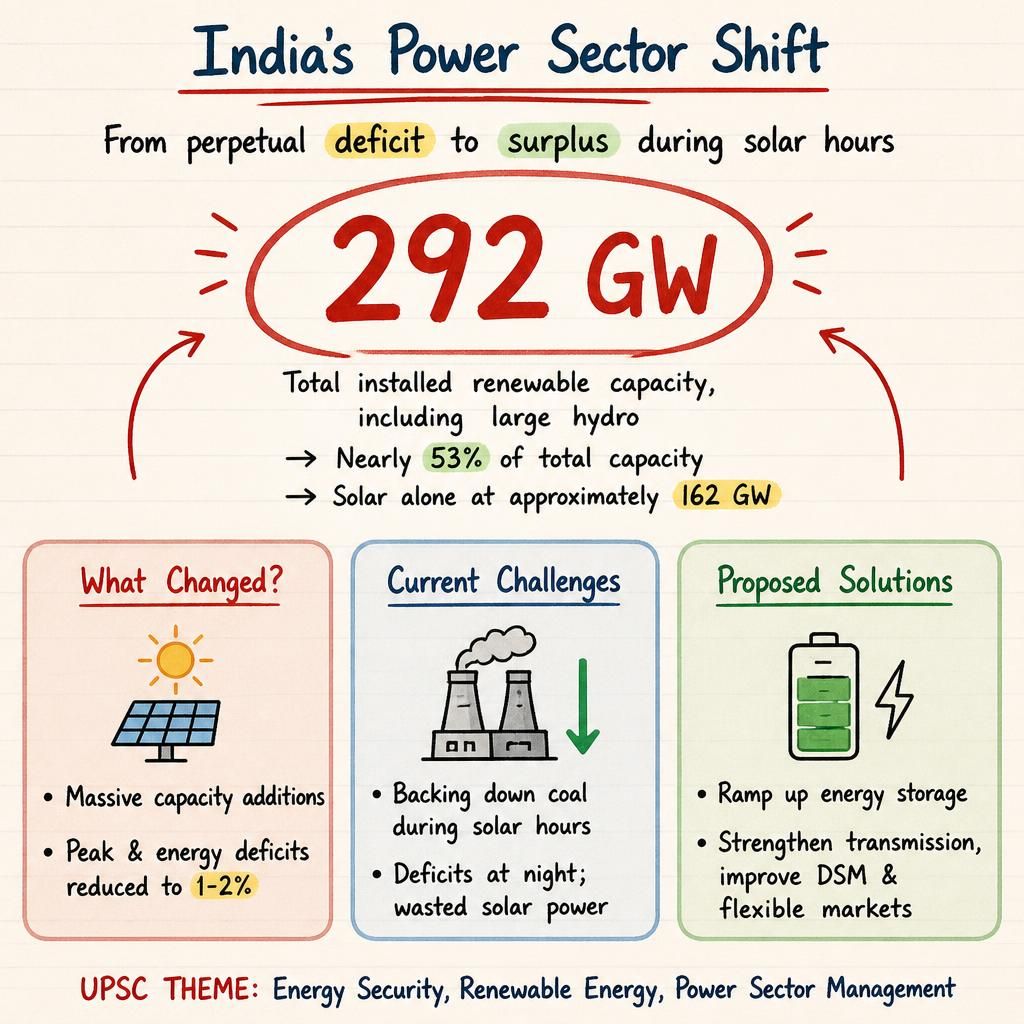
- India's power sector has transitioned from a perpetual deficit to a surplus during solar hours, primarily due to massive capacity additions.
- Total installed renewable capacity, including large hydro, is nearly 292 GW, constituting about 53% of the total, with solar alone at approximately 162 GW.
- This growth has reduced peak and energy deficits to 1-2%, but created new challenges like wasting solar power and grid instability.
- Current issues include backing down coal generation during solar hours and facing deficits at night due to various factors.
- Solutions proposed involve ramping up energy storage, strengthening transmission infrastructure, improving demand-side management, and creating flexible market mechanisms.
Power Sector Shift.jpg
Detailed Insights:
- Historically, from 1990-2000, installed capacity grew at 5% while demand increased by 7-8%, leading to significant power deficits.
- The Electricity Act, 2003, aimed to dismantle State Electricity Boards (SEBs) and establish separate entities for generation, transmission, and distribution.
- Post-2008, electricity exchanges boosted investment, adding over 100,000 MW of coal-based capacity between 2010 and 2020.
- Unbacked loans for power projects led to thousands of megawatts becoming stranded and an increase in Non-Performing Assets (NPAs) for banks.
- The surplus in solar generation necessitates backing down coal plants, leading to wasted renewable energy and reduced longevity of thermal assets.
- Building energy storage, particularly pump storage, is time-consuming and faces challenges with non-remunerative pricing from competitive bids.
- Strengthening the transmission system is crucial to efficiently integrate and distribute the growing renewable energy capacity across the grid.
- Effective demand-side management can help balance the grid by influencing consumer electricity consumption patterns.
Key Concepts Involved:
- Energy Transition: The global shift from fossil fuel-based energy production to renewable energy sources.
- Grid Balancing: The process of matching electricity supply with demand in real-time to maintain grid stability.
- Power Purchase Agreements (PPAs): Long-term contracts between electricity generators and buyers for the sale and purchase of power.
- Non-Performing Assets (NPAs): Loans or advances for which the principal or interest payment remained overdue for a period of 90 days.

SuperKalam is your personal mentor for UPSC preparation, guiding you at every step of the exam journey.
Download the App


STUDY RESOURCES
CONTACT US
ⓒ Snapstack Technologies Private Limited