GS 2: International RelationsGS 3: Disaster ManagementPrelimsGS 3: Disaster and Disaster ManagementGS 2: India and its Neighbourhood Relations
Modi speaks to Balen, offers all assistance, India airlifts relief material, Pg1
PM Modi offers Nepal full assistance after devastating floods; India airlifts 10 tonnes of HADR material, including medicines, to the affected nation.
Practice MCQs
789 Students attempted
Key Highlights:
- Prime Minister Narendra Modi offered India's "all possible humanitarian assistance" to Nepal following devastating floods.
- India dispatched approximately 10 tonnes of relief material, including medicines, via an Indian Air Force (IAF) C-130J aircraft.
- The relief package included temporary shelters, blankets, hygiene kits, solar lamps, and essential medicines.
- External Affairs Minister S Jaishankar confirmed the dispatch of Humanitarian Assistance and Disaster Relief (HADR) aid.
- Flood alerts were issued in the Indian states of Uttar Pradesh and Bihar, bordering Nepal, with additional National Disaster Response Force (NDRF) teams deployed.
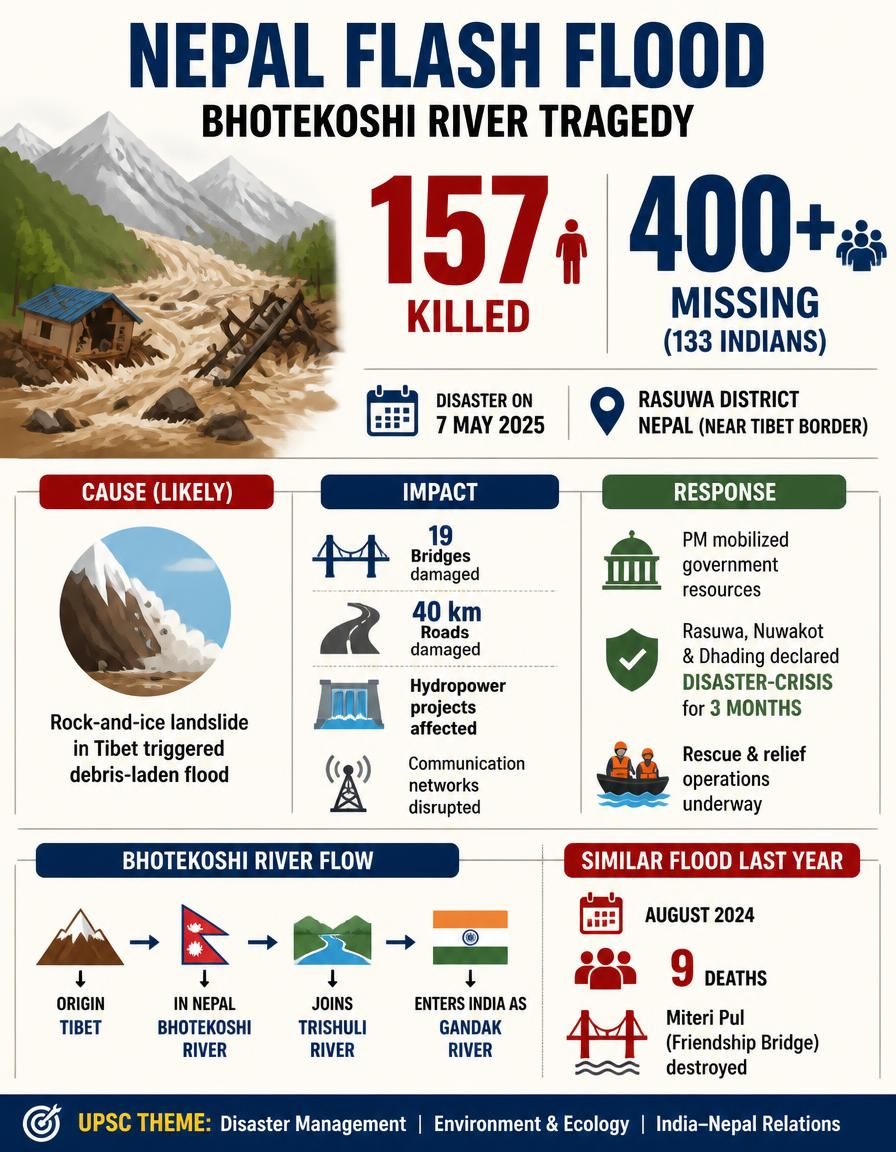
Nepal Flash Flood.jpg
Detailed Insights:
- PM Modi conveyed condolences to Nepal's Prime Minister Balendra Shah, emphasizing India's solidarity with the affected people.
- Nepal's Foreign Minister Shishir Khanal acknowledged India's "generous humanitarian aid" and "swift response," highlighting bilateral partnership.
- Over 100 Indian nationals, including tourists, pilgrims, and workers at the Trishuli hydropower project, were reported missing in Nepal.
- The Indian Embassy in Nepal and Beijing issued helpline numbers for Indian nationals affected by the flash floods.
- The swelling waters from Nepal are expected to flow downstream into the Gandak river, impacting border regions in India.
- A total of 9 NDRF teams are deployed in Bihar and 11 in Uttar Pradesh to manage potential flood situations.
Key Concepts Involved:
- Humanitarian Assistance and Disaster Relief (HADR): Coordinated efforts by states, armed forces, and agencies to save lives and alleviate suffering during disasters.
- National Disaster Response Force (NDRF): India's specialized force constituted under the Disaster Management Act, 2005, for disaster response and relief operations.
- Trishuli hydropower project: A significant hydropower station in Nepal, jointly developed by India and Nepal, where Indian nationals were working.

SuperKalam is your personal mentor for UPSC preparation, guiding you at every step of the exam journey.
Download the App


STUDY RESOURCES
CONTACT US
ⓒ Snapstack Technologies Private Limited