GS 2: International RelationsGS 3: EconomyPrelimsGS 3: Indian Economy, Planning, Mobilization of Resources, Growth, Development and EmploymentGS 2: Effect of Policies and Politics of Developed and Developing Countries on India's Interests
As US Debt Hits $40 Trillion, All Eyes On Fed's Warsh At Jackson Hole, Pg15
US debt soars to $40 trillion, triggering bond buybacks and currency interventions; Fed's Warsh speech at Jackson Hole crucial for global markets.
Practice MCQs
789 Students attempted
Key Highlights:
- The annual Jackson Hole Economic Policy Symposium is currently underway in Wyoming, bringing together global policymakers and economists.
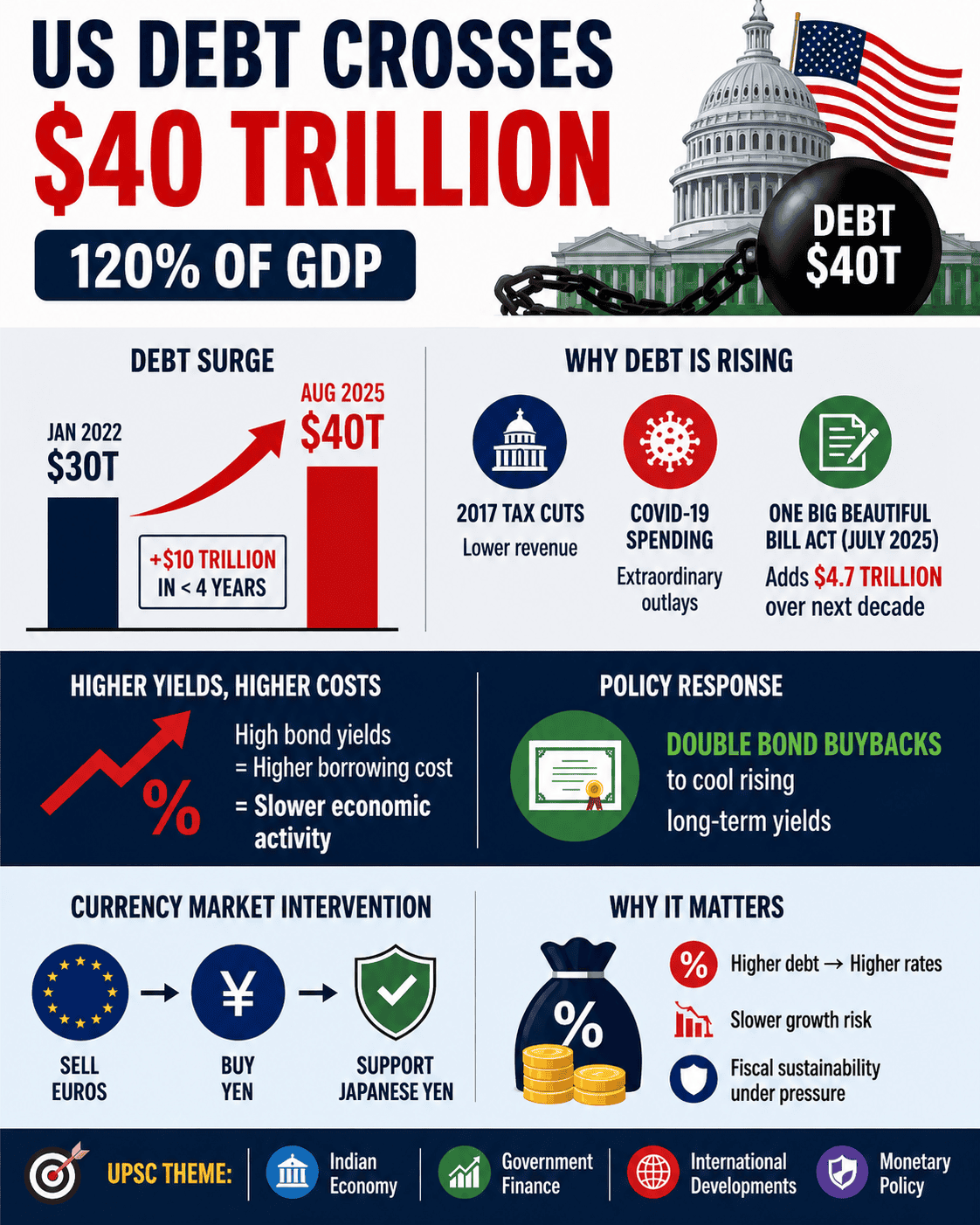
- The US national debt has recently surpassed $40 trillion, representing approximately 120% of its Gross Domestic Product (GDP).
- Kevin Warsh, the new Chairman of the US Federal Reserve, is scheduled to deliver his first keynote address at the symposium.
- Treasury Secretary Scott Bessant announced a plan to double government bond buybacks in an effort to cool rising long-term yields.
US Debt.jpg
Detailed Insights:
- The US national debt has increased by $10 trillion in less than five years, having crossed $30 trillion in January 2022.
- This surge in debt is attributed to factors such as President Donald Trump's 2017 tax cuts and increased government spending during the Covid-19 pandemic.
- The One Big Beautiful Bill Act, signed in July 2025, is projected to add an estimated $4.7 trillion to the national debt over the next decade.
- High bond yields, which signify the government's cost of borrowing, contribute to elevated interest rates across the economy, potentially hindering economic activity.
- The US recently intervened in currency markets by selling euros and purchasing yen to support the Japanese currency, aiming to prevent Japan from selling its holdings of US government bonds.
- A potential consequence of yield curve management and currency intervention is a weaker dollar, which could lead to dollar debasement and impact inflation.
- Economists emphasize that a long-term solution to high bond yields requires a credible strategy to improve government finances, such as increasing taxes or reducing expenditure.
Key Concepts Involved:
- Jackson Hole Economic Policy Symposium: An annual conference hosted by the Federal Reserve Bank of Kansas City for central bankers, economists, and policymakers to discuss critical economic issues.
- US Federal Reserve (Fed): The central banking system of the United States, responsible for conducting monetary policy and ensuring financial stability.
- Bond Buyback: A government or corporate action to repurchase its own bonds from the open market, typically to reduce outstanding debt or influence interest rates.
- Bond Yield: The return an investor receives on a bond, which moves inversely to its price and reflects the cost at which the government borrows money.
- Fiscal Credibility: The confidence held by markets and the public in a government's ability to manage its finances responsibly and meet its financial commitments.
- Dollar Debasement: A reduction in the purchasing power or value of the US dollar, often resulting from an excessive increase in money supply or a loss of confidence in the currency.

SuperKalam is your personal mentor for UPSC preparation, guiding you at every step of the exam journey.
Download the App


STUDY RESOURCES
CONTACT US
ⓒ Snapstack Technologies Private Limited