GS 2: International RelationsGS 2: Effect of Policies and Politics of Developed and Developing Countries on India's InterestsGS 2: India and its Neighbourhood Relations
Trump’s hubris and the cost to the world order, Pg8
Trump's foreign policy decisions destabilize global order; Pakistan emerges as key negotiator amid US-Iran tensions, impacting regional dynamics.
Practice MCQs
760 Students attempted
Key Highlights:
- Donald Trump's actions in Venezuela and West Asia are seen by many as arrogant and overconfident, fitting the description of hubris.
- A fragile peace in West Asia emerged after conflict, with Pakistan playing a role in truce talks between Iran and other parties.
- Trump's initial strategy to quickly achieve victory in West Asia failed, despite claims of success and preventing a larger war.
- Pakistan has emerged as a key conciliator in the West Asia conflict, a development that may be concerning for India.
Detailed Insights:
- The conflict in West Asia has exposed the ability of smaller armies to challenge major powers using cost-effective weapons and tactics.
- Israel's objective of dismantling Iran's war machine was not achieved, leading to regional suspicion about its tactics and policies.
- Despite a ceasefire, Iran is acting as a spoiler by seizing ships in the Strait of Hormuz, creating uncertainty about future talks.
- Trump's administration is exploiting the historical significance of the Strait of Hormuz to impose a naval blockade, impacting global oil flow.
- Pakistan's role as a peacemaker, facilitated by the relationship between Field Marshal Asim Munir and the U.S. President, marks a shift in regional dynamics.
- India needs to exercise caution and patience, as attempts to undermine Pakistan's role could be counterproductive in the current scenario.
Key Concepts Involved:
- Illiberal International: A trend where countries prioritize national interests over international cooperation and liberal values.
- Strait of Hormuz: A narrow waterway of strategic importance for global oil supply, connecting the Persian Gulf to the Gulf of Oman.
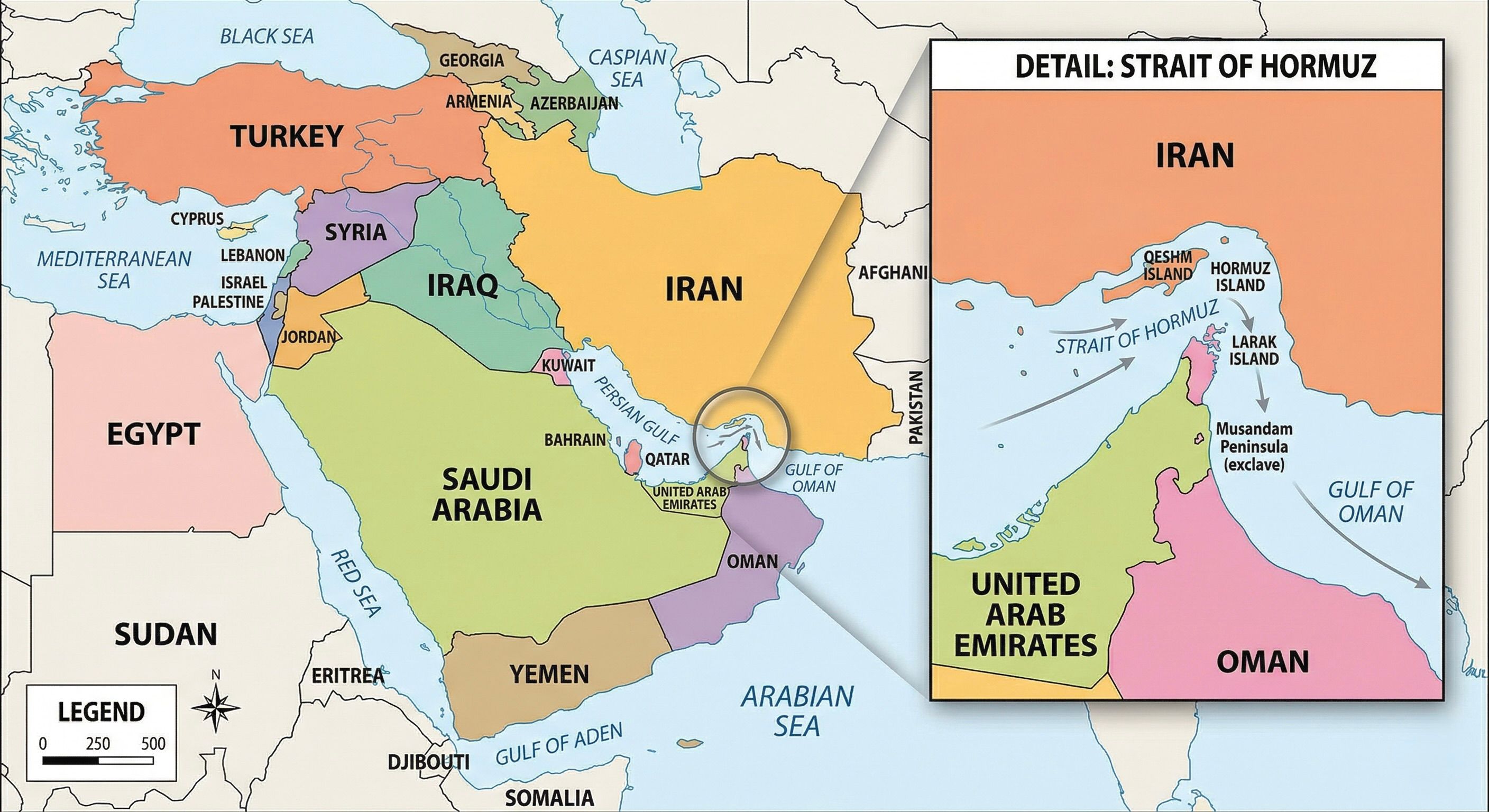
Strait of Hormuz

SuperKalam is your personal mentor for UPSC preparation, guiding you at every step of the exam journey.
Download the App


STUDY RESOURCES
CONTACT US
ⓒ Snapstack Technologies Private Limited