GS 1: Indian GeographyGS 1: Physical GeographyGS 3: Science & TechnologyGS 3: Disaster ManagementPrelims
Wicked Surprise, Pg6
IMD forecasts 'normal' Northeast Monsoon for south India despite El Niño, urging states to prepare for potential extreme rainfall events.
Practice MCQs
796 Students attempted
Key Highlights:
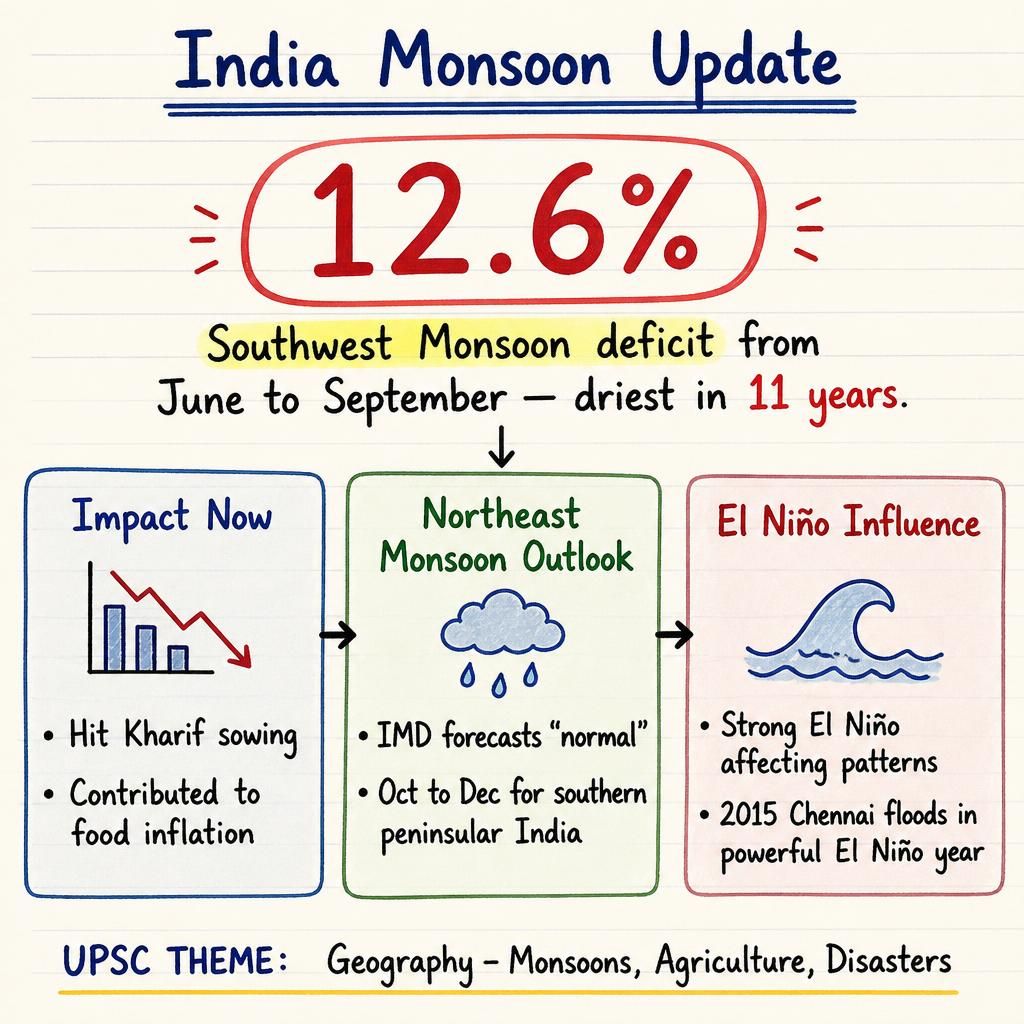
- India experienced a Southwest Monsoon deficit of 12.6% from June to September, making it the driest in 11 years.
- This deficit has negatively impacted Kharif sowing and contributed to food inflation.
- The India Meteorological Department (IMD) forecasts a "normal" Northeast Monsoon for October to December, particularly for southern peninsular India.
- A strong El Niño phenomenon is influencing current weather patterns, historically linked to both Southwest Monsoon deficits and sometimes vigorous Northeast Monsoon activity.
- The 2015 Chennai floods, which caused significant loss of life and displacement, occurred during a powerful El Niño year.
Monsoon.jpg
Detailed Insights:
- The Northeast Monsoon, also known as the winter or retreating monsoon, contributes about 11-25% of India's annual rainfall.
- It is crucial for the southeastern peninsular regions, including Tamil Nadu, Puducherry, coastal Andhra Pradesh, Rayalaseema, south interior Karnataka, and Kerala, where it accounts for 30-60% of annual rainfall.
- The Southwest Monsoon, occurring from June to September, is responsible for approximately 75% of India's total annual rainfall and is vital for the country's agriculture.
- El Niño typically leads to reduced rainfall during the Southwest Monsoon due to atmospheric circulation changes in the Pacific Ocean.
- However, the relationship between El Niño and the Northeast Monsoon is complex; while some El Niño years have seen above-normal rainfall in Tamil Nadu, others have experienced poor Northeast Monsoon activity.
- The 2015 Chennai floods were exacerbated by extreme El Niño conditions and a warming trend in the Bay of Bengal.
- States are advised to undertake precautionary measures such as clearing stormwater drains, fortifying shelters, and improving weather warning systems to prepare for potential heavy rainfall.
Key Concepts Involved:
- Northeast Monsoon: Seasonal winds blowing from the northeast to southwest (October-December), bringing rainfall primarily to India's southeastern coast.
- Southwest Monsoon: Seasonal winds blowing from the southwest to northeast (June-September), responsible for the majority of India's annual rainfall.
- El Niño: A climate pattern characterized by the unusual warming of surface waters in the central and eastern equatorial Pacific Ocean, impacting global weather.
- India Meteorological Department (IMD): The primary government agency responsible for meteorological observations, weather forecasting, and seismology in India.
- Kharif Crops: Crops sown at the beginning of the Southwest Monsoon (June-July) and harvested in September-October, such as rice, maize, and cotton.

SuperKalam is your personal mentor for UPSC preparation, guiding you at every step of the exam journey.
Download the App


STUDY RESOURCES
CONTACT US
ⓒ Snapstack Technologies Private Limited