GS 2: GovernanceGS 2: PolityGS 3: Science & TechnologyPrelimsGS 2: Government policies and interventions for development in various sectors
India needs to train its clinical staff before erecting data shields, Pg II
India's DPDP Act faces significant healthcare implementation hurdles, demanding urgent staff training, shared infrastructure, and policy support to protect patient data effectively.
Practice MCQs
796 Students attempted
Key Highlights:
- The Digital Personal Data Protection (DPDP) Act 2023 was enacted to safeguard digital personal data across all sectors, including healthcare.
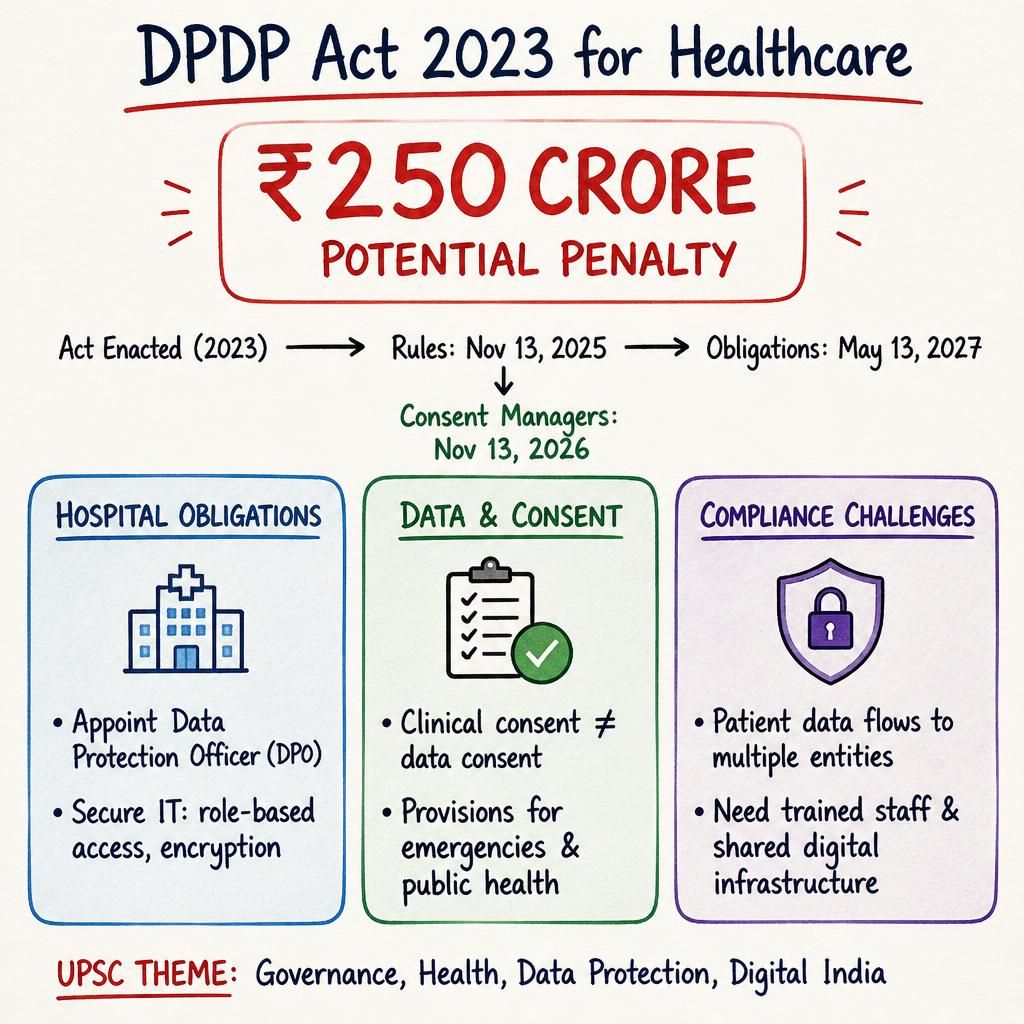
- Rules for the Act were notified on November 13, 2025, with provisions for consent managers becoming effective from November 13, 2026.
- Substantive obligations under the Act, impacting data handling in healthcare, are set to apply from May 13, 2027.
- Hospitals, designated as data fiduciaries, face unique challenges in compliance due to the intimate and continuously generated nature of patient data.
- Non-compliance with the Act's reasonable safeguards can result in significant penalties, potentially up to ₹250 crore.
- There is a critical need for trained clinical staff and a shared digital infrastructure to ensure effective implementation and compliance within the healthcare sector.
DPDP Act For Healthcare.jpg
Detailed Insights:
- The DPDP Act distinguishes between clinical consent and data consent, ensuring that patient agreement for medical procedures does not automatically imply consent for all data uses.
- The Act also provides provisions for data processing during emergencies and specific medico-legal or public health situations.
- Hospitals, as data fiduciaries, are required to appoint a Data Protection Officer (DPO) and implement secure IT systems with features like role-based access and data encryption.
- Patient information frequently flows beyond hospitals to insurers, laboratories, cloud vendors, and telemedicine services, increasing the complexity of data protection.
- Compliance costs are substantial, as evidenced by U.S. HIPAA estimates and Indian studies on Primary Health Centres (PHCs), potentially leading to increased patient expenses.
- A significant challenge is the absence of uniform, DPDP-oriented training for medical, nursing, allied health, and hospital administration professionals.
- The government is encouraged to facilitate compliance by enabling a shared infrastructure through the Unified Health Interface of the Ayushman Bharat Digital Mission.
- This shared ecosystem should provide model consent forms, vendor agreements, and affordable cybersecurity support to healthcare providers.
Key Concepts Involved:
- Digital Personal Data Protection (DPDP) Act 2023: A comprehensive Indian law designed to protect the digital personal data of individuals.
- Data Principal: The individual to whom the personal data relates, who is considered the owner of their data.
- Data Fiduciary: Any entity that determines the purpose and means of processing personal data, such as a hospital.
- Data Processor: An entity that processes personal data on behalf of a data fiduciary, like a cloud service provider.
- Unified Health Interface (UHI): An open-source digital platform under Ayushman Bharat Digital Mission facilitating healthcare service discovery and transactions.
- Ayushman Bharat Digital Mission (ABDM): A flagship government initiative aimed at developing the digital health infrastructure for India.

SuperKalam is your personal mentor for UPSC preparation, guiding you at every step of the exam journey.
Download the App


STUDY RESOURCES
CONTACT US
ⓒ Snapstack Technologies Private Limited