GS 2: International RelationsGS 3: EconomyPrelimsGS 2: Bilateral, Regional and Global Groupings and AgreementsGS 2: Effect of Policies and Politics of Developed and Developing Countries on India's Interests
Iran Proposes 7-Day Plan to End War, Reopen Strait of Hormuz, Revive N-Talks, Pg1
Iran proposes a 7-day plan to US to end war, reopen Strait of Hormuz, lift sanctions, and revive nuclear talks.
Practice MCQs
789 Students attempted
Key Highlights:
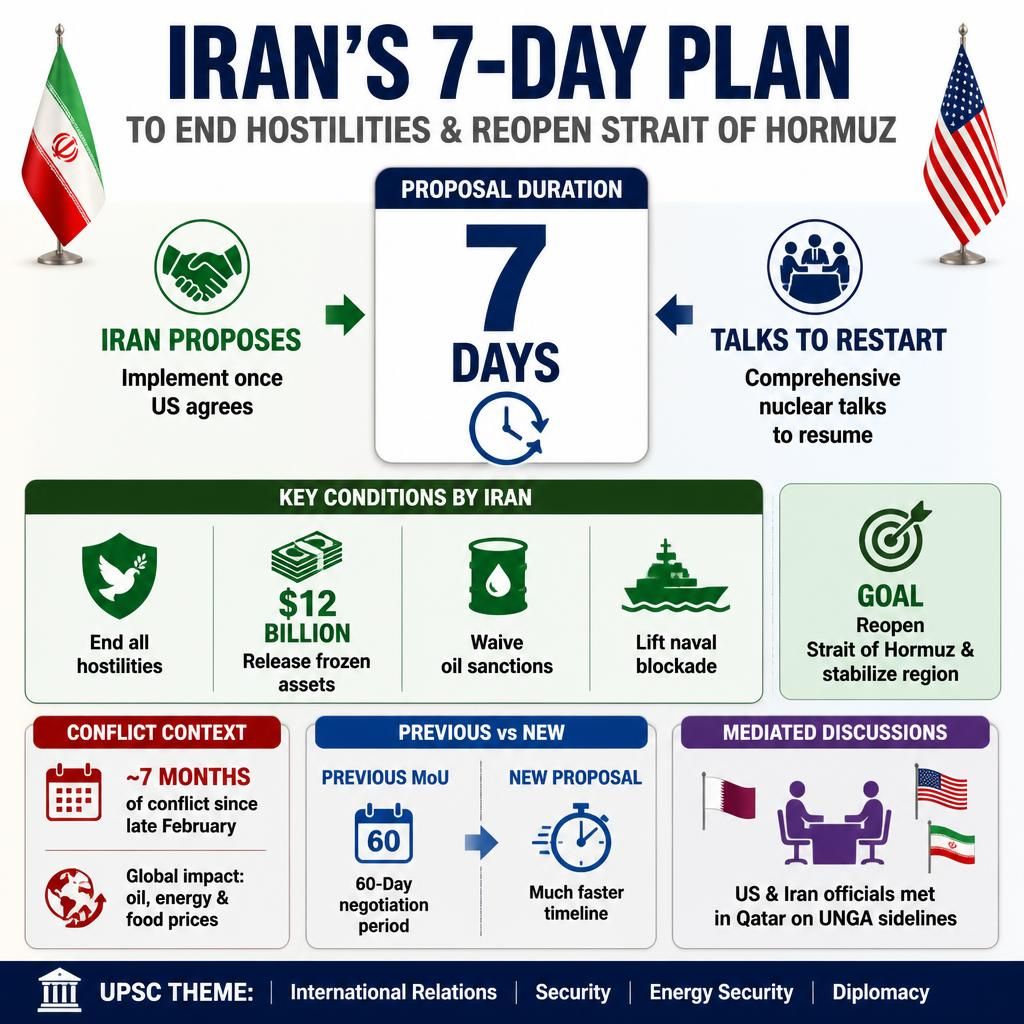
- Iran proposed a seven-day plan to the United States at the United Nations General Assembly to end hostilities and reopen the Strait of Hormuz.
- The plan also aims to restart comprehensive talks on Iran's nuclear program.
- The proposal closely mirrors a previous Memorandum of Understanding between the two nations from June that quickly unraveled.
- Iran's conditions include ending all hostilities, releasing its frozen assets (estimated at $12 billion), waiving oil sanctions, and lifting the naval blockade.
- The US and Iran have been engaged in conflict for nearly seven months, beginning in late February.
Iran Plan.jpg
Detailed Insights:
- The Iranian Foreign Minister Abbas Araghchi presented the plan, stating Iran is ready to implement it once Washington agrees.
- The previous Memorandum of Understanding had a 60-day timeframe for nuclear negotiations, while the new proposal aims for a much faster pace.
- The proposed plan includes ending hostilities in Lebanon as part of the seven-day period.
- The conflict has led to widespread global repercussions, impacting oil, energy, and food prices.
- Mediated discussions between US and Iranian officials, facilitated by Qatar, took place on the sidelines of the United Nations General Assembly.
- Iran's economy is under severe strain due to sanctions, leading to high inflation, medicine shortages, and commercial disruptions.
Key Concepts Involved:
- Memorandum of Understanding (MoU): A formal agreement between two or more parties outlining their intentions and mutual understanding.
- Sanctions: Economic or political penalties imposed by one or more countries against another to compel a change in policy.
- Strait of Hormuz: A narrow, strategically vital waterway connecting the Persian Gulf to the Arabian Sea, crucial for global oil shipments.

SuperKalam is your personal mentor for UPSC preparation, guiding you at every step of the exam journey.
Download the App


STUDY RESOURCES
CONTACT US
ⓒ Snapstack Technologies Private Limited