GS 3: Science & TechnologyGS 1: Indian SocietyPrelimsGS 3: BiotechnologyGS 2: Health Sector
Urban food habits rewriting gut microbiome in India, says study, Pg11
New study reveals urban Indian diets are rewriting gut microbiomes, fueling a dramatic surge in diabetes, obesity, and hypertension rates.
Practice MCQs
775 Students attempted
Key Highlights:
- A three-year study revealed that urban food habits are significantly altering the gut microbiome in India.
- This change in gut bacteria is linked to the rising rates of non-communicable diseases like diabetes, obesity, and hypertension among urban Indians.
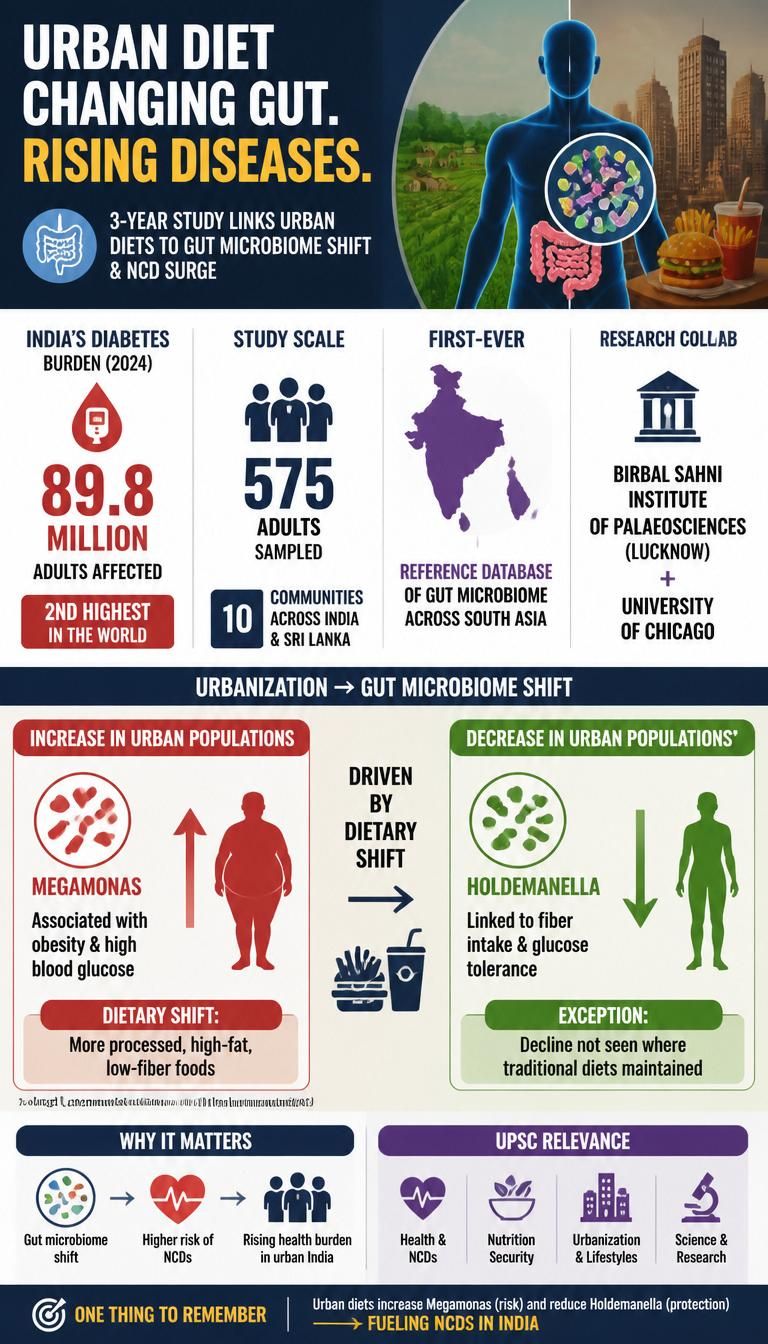
- The study, published in Gut Microbes, established the first reference database of the gut microbiome across South Asia.
- Researchers from Birbal Sahni Institute of Palaeosciences, Lucknow, and the University of Chicago led this collaborative work.
- India currently has the second-largest burden of diabetes globally, with an estimated 89.8 million adults affected as of 2024.
Urban Diet.jpg
Detailed Insights:
- The research involved sampling 575 adults from 10 communities across India and Sri Lanka to profile their gut bacteria.
- India provided a unique setting to compare genetically similar rural and urban populations with distinct dietary environments.
- The bacterium Megamonas, associated with obesity and high blood glucose, was found to be more abundant in urban individuals due to dietary shifts.
- Conversely, Holdemanella, linked to fiber intake and glucose tolerance, was observed to decline with urbanization, except where traditional diets were maintained.
- The study highlighted that food processing, rather than meat consumption, is a primary driver of urban dietary changes impacting the gut microbiome.
- The International Diabetes Federation projects India's diabetes cases to increase by 75% to 156.7 million by 2050.
- The ongoing research phase involves metabolomics to identify specific molecules produced by these bacteria and link them to particular diseases.
Scientific/Technical Concepts Involved:
- Gut Microbiome: The complex community of microorganisms, including bacteria, fungi, and viruses, residing in the human digestive tract.
- Metabolomics: The comprehensive study of metabolites, which are small molecules produced during metabolic processes, to understand biological systems.
- Genome Sequencing: The process of determining the complete DNA sequence of an organism's genome to understand genetic makeup.
- Non-communicable Diseases (NCDs): Chronic diseases like diabetes, obesity, and hypertension that are not infectious and cannot be spread from person to person.

SuperKalam is your personal mentor for UPSC preparation, guiding you at every step of the exam journey.
Download the App


STUDY RESOURCES
CONTACT US
ⓒ Snapstack Technologies Private Limited