GS 2: International RelationsGS 3: EconomyPrelimsGS 3: Indian Economy, Planning, Mobilization of Resources, Growth, Development and EmploymentGS 2: Bilateral, Regional and Global Groupings and Agreements
U.S.’s new 10% tariffs will not affect 45% of exports: Centre, Pg1
US imposes 10% tariffs on Indian goods over forced labor; Centre confirms 45% of exports remain exempt, pursuing bilateral trade agreement.
Practice MCQs
775 Students attempted
Key Highlights:
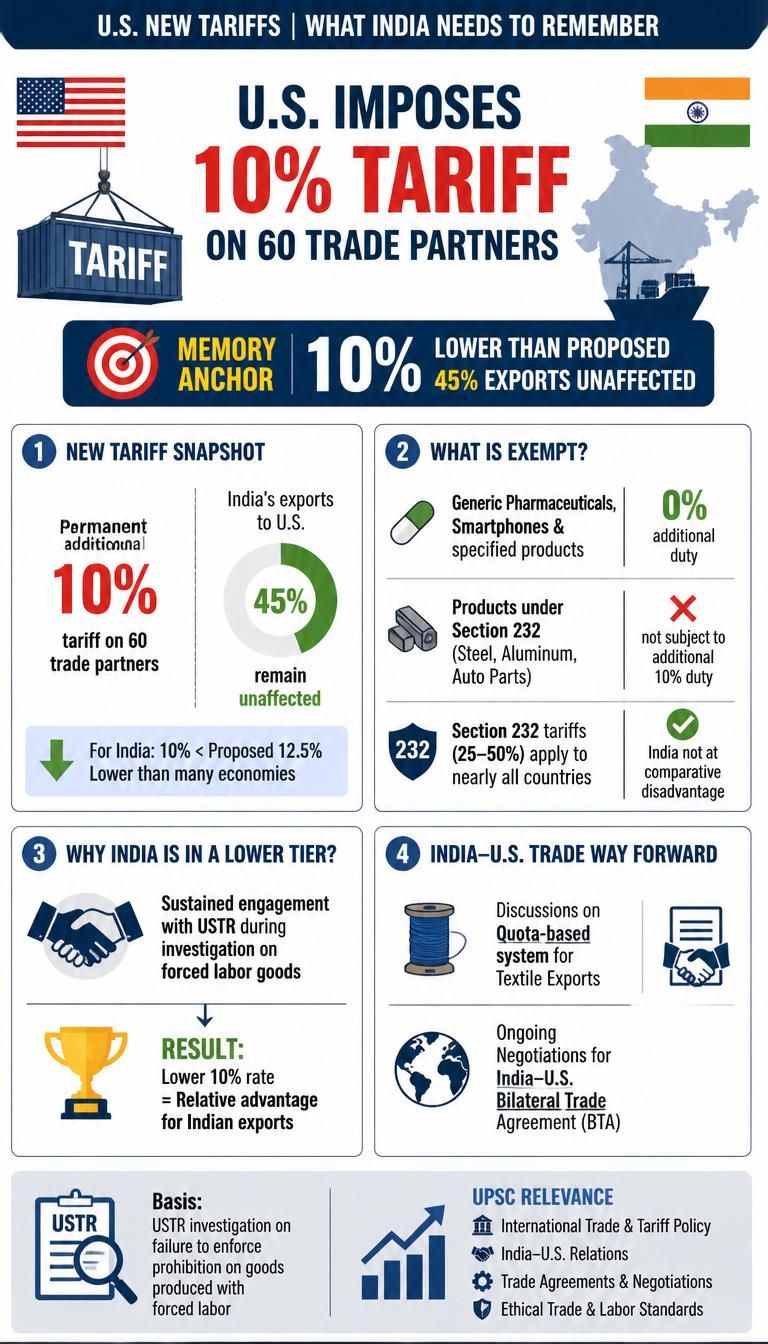
- The U.S. has imposed new permanent tariffs of 10% on imports from 60 trading partners, including India, citing concerns over forced labor goods.
- India's Ministry of Commerce and Industry announced that approximately 45% of India's exports to the U.S. will remain unaffected by these new tariffs.
- The 10% tariff rate applied to India is lower than the initially proposed 12.5% and also lower than the rates for many other economies.
- India is actively engaging with the U.S. regarding a quota-based system for textile exports and the ongoing negotiations for the India-U.S. Bilateral Trade Agreement (BTA).
US Tariff.jpg
Detailed Insights:
- The new tariffs were implemented following an investigation by the U.S. Trade Representative (USTR) into the failure of various economies to enforce prohibitions on goods produced with forced labor.
- Exports such as generic pharmaceuticals, smartphones, and other specified products that currently attract zero additional duties are exempt from the new 10% tariff.
- Products already covered under Section 232 of the U.S. Trade Expansion Act, including steel, aluminum, and auto parts, are also not subject to the additional 10% duty.
- Tariffs under Section 232, which range from 25-50%, are applied broadly to nearly all countries, ensuring India is not at a comparative disadvantage.
- India's sustained engagement with the USTR during the investigation contributed to its placement in a lower tier of additional tariffs, providing a relative advantage to Indian exports.
- The USTR proposed a "textile mechanism" involving Tariff-Rate Quotas (TRQs) for some countries to reduce reliance on forced labor inputs, but India was not included in this specific mechanism.
- India continues to work with the U.S. government on matters related to its textile exports and the early conclusion of the India-U.S. Bilateral Trade Agreement (BTA).
Key Concepts Involved:
- U.S. Trade Representative (USTR): An agency within the Executive Office of the President responsible for developing and coordinating U.S. international trade policy and negotiations.
- Section 232 of the U.S. Trade Expansion Act: Authorizes the U.S. President to impose tariffs or other restrictions on imports if they are deemed a threat to national security.
- Tariff-Rate Quotas (TRQs): A two-tiered tariff system allowing a specified quantity of goods to be imported at a lower tariff rate, with higher tariffs applied to imports exceeding that quantity.
- India-U.S. Bilateral Trade Agreement (BTA): An ongoing negotiation between India and the U.S. aimed at strengthening bilateral trade, increasing market access, and reducing trade barriers.
- Forced Labour Goods: Products mined, produced, or manufactured wholly or in part by convict, indentured, or forced labor, which the U.S. prohibits from importing.

SuperKalam is your personal mentor for UPSC preparation, guiding you at every step of the exam journey.
Download the App


STUDY RESOURCES
CONTACT US
ⓒ Snapstack Technologies Private Limited